
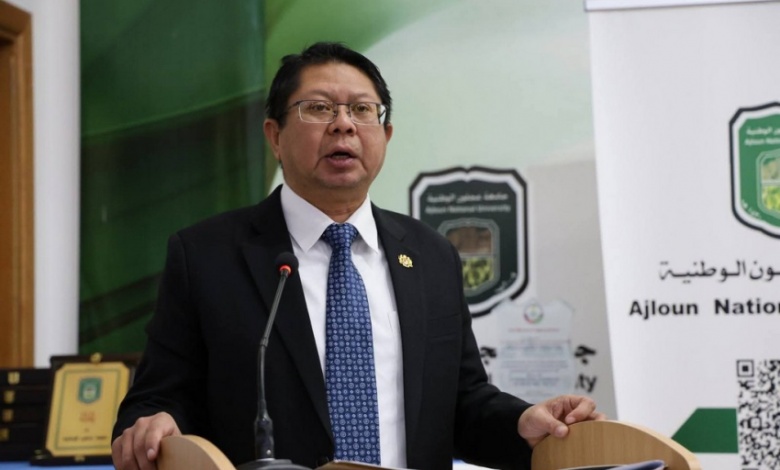
Jordan Daily – Scholars and policymakers from Asia and the Middle East gathered at Ajloun National University on Wednesday for the Second International Conference on Asian Studies, focusing on how artificial intelligence is reshaping research, education and sustainable development.
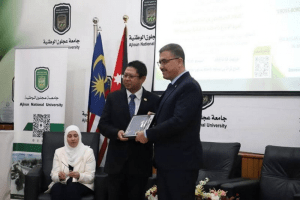
The conference, organised by the Malaysian Universities Alumni Association in Jordan (MUAJ) and Education Malaysia Jordan, was held under the theme “Cross-Border: Artificial Intelligence in Asian Studies as a Driver of Creativity, Innovation, and Sustainable Development,” and hosted by Ajloun National University and its Artificial Intelligence Centre, under the patronage of Malaysia’s ambassador to Jordan, Dato’ Mohamad Nasri Abdul Rahman.
The event drew diplomats, senior officials and academics, government officials and researchers from Jordan, Malaysia and other countries.
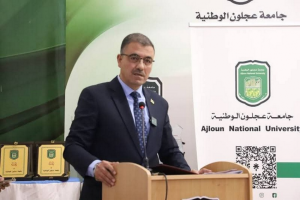
In his opening address, the president of Ajloun National University, Prof. Firas Al-Hanandeh reaffirmed the University’s commitment to embracing emerging technologies and strengthening interdisciplinary research, noting that artificial intelligence is no longer a distant future concept, but a practical tool shaping education, culture, and sustainable development. He also emphasised that partnerships with Malaysian institutions reflect a shared vision of academic excellence, innovation, and global engagement.

MUAJ’s president Dr. Mohammed Abu Shquier underscored the Association’s pivotal role as a bridge connecting the higher education ecosystems of Malaysia and Jordan. He explained that integrating artificial intelligence into Asian studies opens new horizons for understanding cultures, languages, and societies through innovative research methodologies.
He reiterated MUAJ’s commitment to strengthening cross-border academic collaboration, preparing future-ready graduates, and supporting research aligned with global sustainability goals.

Ambassador Dato’ Mohamad Nasri Abdul Rahman highlighted the strength of the long-standing bilateral relations between Malaysia and Jordan, particularly in education, higher education, trade, tourism, and research cooperation. He noted that the conference stands as a successful model of constructive collaboration between Jordanian universities and the Embassy of Malaysia in Amman through its active Cultural Attaché Office.
The Ambassador reaffirmed Malaysia’s commitment to the responsible and inclusive development of artificial intelligence, expressing his country’s readiness to further enhance academic exchanges, joint research, and innovation initiatives that contribute to sustainable development and shared prosperity.
He also announced that the third edition of the conference will be hosted in Malaysia, extending an open invitation to participants to attend. He expressed confidence that hosting the conference in Malaysia will further strengthen academic cooperation, open new avenues for joint research and sustainable development, and allow participants to experience Malaysia’s multicultural society and rich heritage, where tradition and modern innovation coexist in harmony.
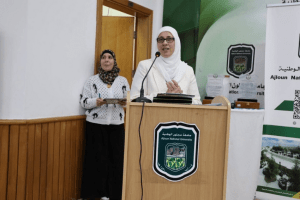
On behalf of the participating researchers, Professor Sukaina Al-Zyoud delivered a keynote address emphasising that artificial intelligence and technological advancement are now undeniable realities that require focused attention in applied research, particularly in vital sectors such as education and medicine.
From her perspective as a medical researcher, she highlighted the vast potential of AI applications in real-life settings to identify previously undetected health problems and diseases, and to support physicians and specialists in developing effective solutions- an area of shared concern for both Jordan and Malaysia.
She called for enhanced research collaboration between the two countries in this field and expressed hope that research outcomes would be taken seriously and translated into effective applications to reduce disease burdens and support the economic resilience of both nations in the face of future challenges.
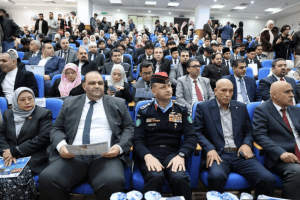
The conference received 73 research submissions from around the world, with 28 papers accepted. Sessions covered AI applications in the humanities and social sciences, digital innovation in Asian studies, ethical issues in artificial intelligence and technology’s role in sustainable development.
Participants concluded with recommendations that included expanding joint research projects, integrating AI into academic curricula, establishing a permanent academic network, promoting ethical AI use and investing in training and innovation centres.
The conference reaffirmed artificial intelligence as a key driver of creativity, cross-cultural understanding and sustainable development, with momentum set to continue at the next meeting in Malaysia.