
By : Farrah Al Abdallat
Research Analyst at NAMA Strategic Intelligence Solutions
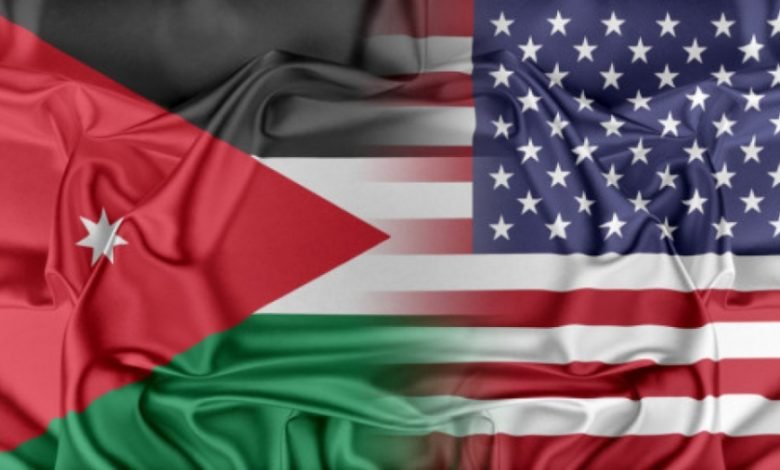
Jordan Daily – The Hashemite Kingdom of Jordan is considered to be a key ally to Washington in the middle east, the extensive and strategic cooperation on various international and regional issues over the past few years highlights that. One of the most critical areas of cooperation is counterterrorism. Jordan is a member of the Global Coalition to defeat ISIS, an initiative formed in 2014 comprising more than 90 states committed to defeating the influence and threats posed by ISIS [1]. This longstanding cooperation is set to continue, with discussions underway on resuming the Eager Lion exercises in Jordan at the beginning of summer 2026, marking the 12th iteration of the exercise since its launch in 2011.[2]
The fourth Memorandum of Understanding (MoU) governing U.S. foreign aid to Jordan was signed between the US and Jordan in September of 2022. The seven-year agreement covering FY2023–FY2029, contingent on congressional appropriations, commits the U.S. administration to pursue a combined total of $1.45 billion per year in economic and military assistance for Jordan.
The United States and Jordan are also bound by a series of defense related agreements, including a 1996 status of forced agreement, a 2006 acquisition and cross serving agreement in addition to a Defense Cooperation Agreement (DCA) in 2021- according to the U.S. State Department. The 2021 DCA, a long-standing pattern of U.S.–Jordanian military cooperation that came into sharper public focus with the launch of the U.S.-led campaign against the Islamic State in 2014. That cooperation was reaffirmed in May 2024, when Jordan and the United States joined the 11th iteration of Eager Lion, the largest multinational military exercise ever hosted by the Kingdom.[3] Yet even as this cooperation is presented as routine and stabilizing, it has surfaced in Jordan’s domestic political discourse.[4]
A recent debate in the House of parliament has brought renewed attention to questions surrounding US–Jordan security cooperation and how such issues are discussed in the public sphere. During a parliamentary session, MP Saleh Armouti raised concerns regarding foreign military involvement to potential risks to Jordanian security. The Speaker of Parliament firmly rejected this framing, emphasizing that Jordan’s security arrangements do not pose a threat to national stability.
The exchange itself was not unprecedented. Jordan’s security partnerships-particularly with the United States- long been a subject of periodic political debate, often resurfacing during moments of heightened regional tension. What made this moment notable, however, was not the substance of the disagreement as much as the fact that it unfolded publicly, highlighting how questions of security cooperation continue to occupy space in both parliamentary discourse and public conversation.
The issue of US –Jordan security cooperation appears to be a double-edged sword in the public mind. On the one hand, most Jordanians view the United States as a preferred partner in strengthening Jordan’s military capabilities, seeing the relationship as a source of strategic leverage and international standing. On the other, the presence of US forces in Jordan is perceived by some as increasing the Kingdom’s vulnerability rather than enhancing its security, an ambivalence reflected in a nationally representative poll conducted by NAMA Strategic Intelligence Solutions.
When Jordanians were asked about the extent to which they support Jordan enhancing its military capabilities, an overwhelming 91.7% expressed full support, while a further 6.9% indicated partial support, pointing to near-universal approval. Opposition remains marginal, with just 1.2% falling into the categories of partial or full opposition. The pattern of responses suggests a broad convergence of views, with limited variation across levels of support. Overall, the findings indicate strong public endorsement of efforts to strengthen Jordan’s defense capabilities amid a volatile regional environment. Building on this Jordanians were asked which country they would prefer to support Jordan in strengthening its military capabilities, the United States ranked first at 24.2%, reflecting confidence in its military expertise and strategic influence. Regional actors also featured strongly, with Saudi Arabia cited by 16.1% and Egypt by 14.7%, pointing to trust in neighboring states with established security roles.
Jordanian caution toward the presence of US military forces on the ground is shaped by regional experience. The attack on Qatar offers an illustrative example: despite hosting a major US military base, Qatar was still targeted by one of Washington’s adversaries. This has reinforced the perception that foreign military deployments can, in certain contexts, increase exposure rather than guarantee protection. From this perspective, the presence of US forces may carry higher security costs, as host countries can become indirect targets, complicating the balance between the strategic benefits of close military cooperation and the risks associated with regional confrontation.
US–Jordan security cooperation continues to operate within a well-established strategic and legal framework shaped by longstanding agreements and joint activities. As regional conditions evolve, discussions around security cooperation remain part of broader policy and public conversations in Jordan. In this context, perceptions of security arrangements are influenced by regional developments rather than by any single event or statement.
[1] The Global Coalition Against Daesh, “About the Global Coalition,” accessed December 18, 2025, https://theglobalcoalition.org/en/
[2] Jordanian Armed Forces – Arab Army, “Initial Planning Conference for Eager Lion 2026 Exercise Kicks Off in Amman,” October 19, 2025,
[3] U.S. Department of State, “U.S. Security Cooperation With Jordan,” fact sheet, May 21, 2021, https://www.state.gov/u-s-security-cooperation-with-jordan/.
[4] Jeremy M. Sharp, Jordan: Background and U.S. Relations, CRS Report RL33546 (Washington, DC: Congressional Research Service, May 19, 2025), https://www.congress.gov/crs-product/RL33546.