

By: Dr Jordan Al-Zu'Bi
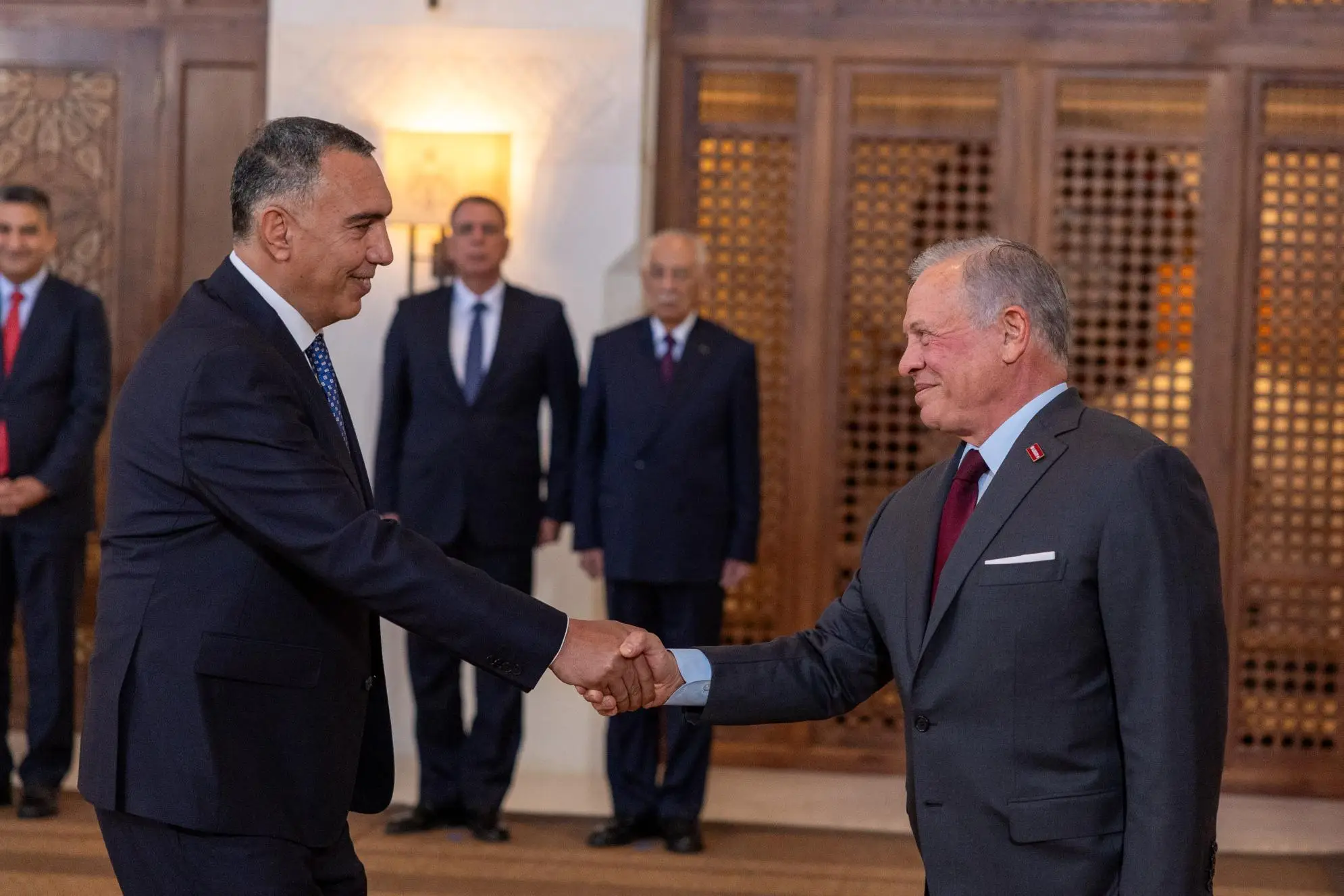
Jordan Daily - His Majesty King Abdullah II's current visit to mainland China and engagement with President Xi Jinping come at an important moment for a relationship that became a strategic partnership in 2015. Yet the foundation is deeper than modern diplomacy. Both societies are shaped by long histories, strong family structures and respect for education. For an economist, the most consequential common asset is human capital: diplomacy can open doors and investment can finance projects, but people determine whether cooperation becomes productive and durable.
Economic modernization is also risk modernization
His Majesty's Economic Modernisation Vision seeks higher productivity, stronger industries, greater investment, better healthcare, digital transformation, green growth and stronger human capital. Seen through the lens of insurance economics, these ambitions share a common feature: each changes Jordan's exposure to uncertainty. Digitalization creates cyber risk; renewable energy changes engineering and climate exposures; advanced industry changes liability and supply-chain risk; better health protection brings longevity and medical-cost risk into sharper focus. Jordan is modernizing in what I describe as a New Era of Risk, in which climate, technology, health, geopolitics and finance increasingly interact.
That is why insurance should be treated as economic infrastructure, not merely as compensation after a loss. Economic development is ultimately a process of taking risk. The role of sophisticated risk institutions is to understand risk earlier, price it accurately, prevent what can be prevented and transfer what should be transferred. A modern economy prospers by taking productive risk without allowing uncertainty to become disorder.
China has built something Jordan should study, not copy
China offers an important laboratory. Figures presented in July 2026 by Zhao Yulong, President of the Insurance Association of China, put 2025 premium income at RMB6.12 trillion, about US$908 billion, and insurance-sector assets at RMB41.3 trillion, about US$6.13 trillion. It also reports RMB8 trillion, about US$1.19 trillion, in technology-related risk protection and RMB5.32 trillion, about US$789 billion, in agricultural-insurance protection. The lesson for Jordan is not scale itself, but the close connection between insurance, engineering, data, technology and national economic priorities.
Start where the relationship is changing fastest: electric vehicles
By 2025, China's automobile exports had exceeded 7 million vehicles, ranking first globally for a third consecutive year, including 2.615 million new-energy vehicles. The momentum accelerated again in 2026: in the first half alone, automobile exports surpassed 5 million vehicles, up 65.3% year on year. These figures reveal the scale of the insurance and risk-management economy developing around Chinese mobility.
The internationalization of Chinese vehicles will inevitably create demand for the internationalization of the risk infrastructure surrounding them. A vehicle does not cross a border alone; its collision risk, battery, software, spare-parts requirements, repair protocols, warranty obligations and claims uncertainty travel with it. When a Jordanian insurer has limited experience with a relatively new Chinese model, it is pricing not only expected losses but also uncertainty about repair severity, parts availability, salvage values and local technical capability. China's comparative advantage is therefore not simply reinsurance capital; it is the possibility of converting superior knowledge of the vehicle into superior knowledge of the risk.
Build a China-Jordan EV Risk and Insurance Laboratory
Jordan could bring together local insurers, Chinese insurers and reinsurers, manufacturers, repair networks, technology companies and regulators in a structured pilot. Jordanian insurers would retain locally regulated contracts, while Chinese partners could contribute engineering data, battery knowledge, claims experience and technical risk capacity. They could also provide reinsurance capacity and tiered warranty solutions, allowing different layers of battery, component and vehicle risk to be transferred to the parties best able to understand and absorb them. The objective should be better insurance: lower informational uncertainty, stronger underwriting, more efficient claims and premiums closer to risk.
This also creates an opportunity to modernize Jordan's approach to motor insurance. Fairness does not mean sameness. If materially different risks are charged the same price, lower-risk insureds end up subsidizing higher-risk insureds. Jordan should therefore work to reduce such cross-subsidization by preserving the core insurance principle of risk-based pricing, supported by evidence-based pricing that uses credible data on loss experience, driving behavior, vehicle characteristics and other relevant risk factors. Telematics can strengthen this approach through measures such as mileage, speeding and braking, allowing premiums to reflect risk more accurately while maintaining appropriate consumer protection.
The next frontier is not simply insuring the driver; it is insuring the intelligence
As vehicles become increasingly autonomous, liability becomes harder to locate. If an automated system contributes to a collision, who is liable: the insured driver, the manufacturer, the software developer, the provider of the autonomous-driving system, or some combination of them? Must the person behind the wheel remain attentive? At what level of autonomy does a conventional driving licence cease to be an adequate regulatory instrument? These are questions of insurance, tort law, product liability and technology governance.
The most valuable asset in answering them will be data. The mobility-risk architecture I have been developing begins with data and ends with more data: vehicle behavior, battery condition, route exposure, repairs, near misses and claims feed risk models; those models improve underwriting, prevention, claims and warranty decisions; each new trip and claim generates additional information. More data improves risk measurement, better measurement improves decisions, and better decisions generate more data. The strategic asset is not merely the vehicle, but the risk intelligence accumulating around it.
Health insurance and climate risk should be the next pillars
His Majesty's Economic Modernisation Vision is ultimately about productive human capital, which makes health protection an economic issue as much as a social one. Jordan already possesses important foundations: the Social Security Corporation's employer infrastructure, Central Bank insurance supervision, private insurers, healthcare providers, pharmaceuticals and digital capabilities. China can contribute experience in digital health, claims analytics, fraud detection, chronic-disease management and multi-layer health protection. The principle should be adaptation rather than imitation: a system that works in China must be redesigned around Jordan's incentives, culture, labor market and regulatory structure.
Climate and agricultural risk require the same discipline. Jordan should not begin by asking which insurance product to sell; it should first understand the hazard, map the exposure and estimate vulnerability. Chinese catastrophe-modeling and reinsurance expertise can help Jordan build local risk intelligence for agriculture, renewable energy, infrastructure and parametric protection. Risk intelligence first, insurance product second.
Insurance can also strengthen Chinese investment in Jordan
Infrastructure, energy, manufacturing, transport and technology projects create construction, engineering, cyber, supply-chain, business-interruption, catastrophe and sometimes political risks. Those risks affect financing costs and bankability. Insurers, reinsurers and risk engineers should therefore enter major China-Jordan investment discussions earlier. Insurance cannot rescue weak economics, but it can allocate legitimate uncertainty more efficiently.
Build a China-Jordan Insurance and Risk Dialogue
The next institutional step should be a permanent dialogue connecting the Central Bank of Jordan, the Jordan Insurance Federation, the Insurance Association of China, insurers, reinsurers, manufacturers, technology firms, healthcare institutions, universities and the Social Security Corporation. Its legitimacy should come from projects, not ceremony: electric mobility and autonomous liability; workforce health protection; climate, agriculture and catastrophe risk; and the risk architecture supporting Chinese investment. Human-capital exchanges among regulators, actuaries, insurance economists, data scientists and catastrophe modelers should run through all four.
The partnership should move from exchanging products to exchanging risk intelligence
I write this while in China and while engaging with Chinese insurance, academic and technology stakeholders on these questions. Jordan should not ask only what it can import, just as China should not ask only what it can export. The more important question is what the two countries can build more effectively together. Chinese vehicle knowledge combined with Jordanian claims experience can create regional mobility-risk models; Chinese insurance technology combined with Jordanian health institutions can strengthen workforce resilience; Chinese risk-modeling capabilities combined with Jordanian climate and agricultural data can improve national resilience.
The strategic partnership created the political foundation. His Majesty's current visit provides an opportunity to define its next economic chapter. Trade, infrastructure, energy and technology will remain essential, but all of them sit on top of a less visible institution: the management of uncertainty.
In the New Era of Risk, insurance may be the missing pillar of the China-Jordan strategic partnership.
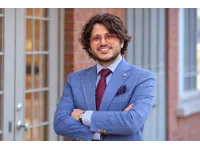
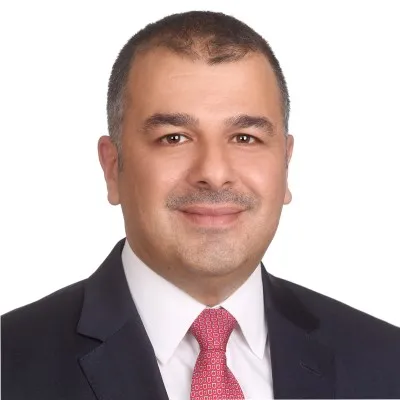
Dr Jordan Al-Zu'Bi is a leading insurance economist specializing in insurance regulation, InsurTech, AI-driven innovation, healthcare insurance, fraud detection, and climate change risks. He is the first Jordanian and only the second Arab to earn a Ph.D. in Risk Management & Insurance (RMI) through a prestigious research partnership between Emory University and The University of Queensland.