
Dr. Ahmad “Jordan” Al-Zu'Bi
Jordan Daily - From weddings and kindergarten graduations to football victories and national mourning, Jordan's patriotic songs reveal the surprising economics of belonging.
Imagine attending a wedding in Jordan. The bride and groom are dancing, families are celebrating, and suddenly a song about Jordan begins to play. Guests sing along, wave flags, and celebrate their country as enthusiastically as the newlyweds.
The same happens at engagements, kindergarten graduations, university ceremonies, concerts, and football victories. A child's graduation becomes an occasion to celebrate Jordan. A football goal becomes a national achievement. Even a wedding becomes a patriotic gathering. But what happens when celebration turns into mourning?
Following the October 23, 2026, attack on a church in Humoud, Karak, which reportedly killed nine Jordanians, Omar Al-Abdallat released Ya Ain Humoud La Tabki, a song of grief and solidarity. Why does a country sing about itself when its people are happiest, and again when they are grieving?
Who Invited the Nation to the Wedding?
Economists examine weddings through consumption: venues, food, clothing, and entertainment. Graduations represent returns on educational investment. Football victories stimulate spending. Yet Jordanian celebrations involve something less tangible: national identity.
A wedding celebrates two people, but a patriotic song transforms private happiness into collective pride. Gary Becker's analysis of social behavior helps explain why people derive utility not merely from consumption, but also from relationships and social interactions.
In Jordan, patriotism is not reserved for national holidays. It is invited into the ordinary moments of life and sometimes into its most painful ones.
The Song Is Free. The Feeling Is Priceless.
A national song is an unusual economic asset. Millions can enjoy the same recording without diminishing anyone else's experience. Economists call this non-rivalry. The more people recognize a song, the greater its potential to bring them together.
That resembles a network effect: a shared cultural symbol becomes more valuable with familiarity. There are also positive externalities. A family chooses a song for its wedding, but guests may experience belonging, nostalgia, or collective pride.
The value of a national song is not simply in how many people hear it, but in how many people recognize themselves in it.
Why Happiness Sounds Better Together
Daniel Kahneman showed how psychology, attention, and context shape human decisions. Music changes the emotional context of an occasion. At graduations, patriotic songs connect individual achievement with national identity; at football matches, they unite strangers in celebration.
Thomas Schelling's focal points offer another explanation. People coordinate around common signals. A familiar melody serves that purpose: nobody needs instructions to sing along.
But does music create solidarity, or does existing solidarity explain the choice of music? Both mechanisms may operate. Shared experiences may reinforce identity, although causality remains difficult to establish.
One Flag, Millions of Voices
Jordanian patriotic songs express attachment to the country's history, armed forces, institutions, and Hashemite monarchy, including King Abdullah II, Queen Rania, and Crown Prince Hussein.
Douglass North explained why informal institutions matter. Societies depend not only on laws but also on shared norms, traditions, and expectations. Music can transmit these symbols across generations.
Yet not every patriotic performance demonstrates deep conviction. Some reflect custom or social expectations. National unity does not require identical political opinions, and music cannot substitute for good governance.
When Eleven Players Become a Nation's Dreams
When Jordan qualified for the 2026 FIFA World Cup, millions celebrated an achievement belonging to eleven players and their teammates. Why should someone who never touched the ball feel such pride?
Social identity theory suggests people derive satisfaction from group achievements. Omar Al-Abdallat's Hayna Jeena, produced with Jordan Kuwait Bank, illustrates how national pride intersects with commercial sponsorship.
A bank can sponsor a patriotic song, but it cannot own the national pride the song inspires. Sponsorship may generate private returns through brand recognition while creating cultural benefits beyond customers.
The match ends. The campaign ends. But the music may endure. Months later, the same voice celebrating Jordan's football triumph would express a very different national emotion.
The Man Who Sings When Jordan Celebrates—and Mourns
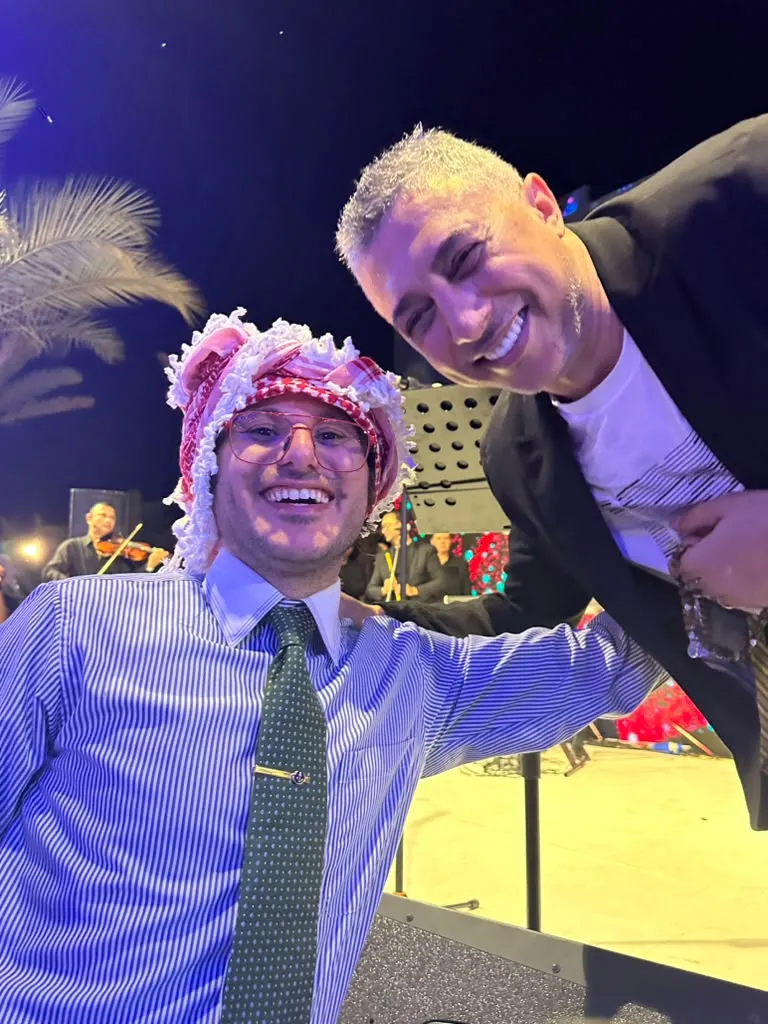
Having lived and traveled across five continents, I have encountered people beyond Jordan who recognize Omar Al-Abdallat's music. I met him briefly once and was struck by his humility. His significance, however, extends beyond celebrity: his songs accompany moments of national pride and grief.
Ya Ain Humoud La Tabki mourned the Karak victims, invoking solidarity among Jordanians, Muslims and Christians alike, united in grief and belonging.
The solidarity extended beyond music. Jordanians rushed to donate blood following the attack, turning expressions of national belonging into practical assistance. For economists, that distinction matters: shared identity becomes especially consequential when people are willing to bear costs for others.
Here, risk economics offers an important distinction. Insurance can compensate for financial losses. But when tragedy strikes, no insurance policy can replace the value of a nation standing together.
Elinor Ostrom's research shows how shared norms can support cooperation. A song cannot reverse death, replace compensation, or deliver justice. But it can express that another person's loss matters beyond their immediate family.
Can You Hear the Wealth of a Nation?
Economists measure prosperity through income, productivity, investment, and employment. Yet societies also possess less visible resources: trust, cooperation, shared identity, and collective memory—elements of social capital.
Patriotic songs cannot eliminate unemployment, inequality, or institutional weaknesses. Singing together does not prove economic success. But shared cultural practices may sustain relationships on which cooperation depends.
At weddings, songs connect happiness with national pride. At graduations, achievement with belonging. At football victories, strangers with collective celebration. Following tragedy, they provide a language for mourning.
A nation's wealth is not only what its people produce, but also what they are willing to share, especially when no contract requires them to care.
At a wedding, Jordanians sing because they are happy. Following the tragedy in Karak, a song gave voice to their grief.
The emotions were different. The country they were singing about was the same.