
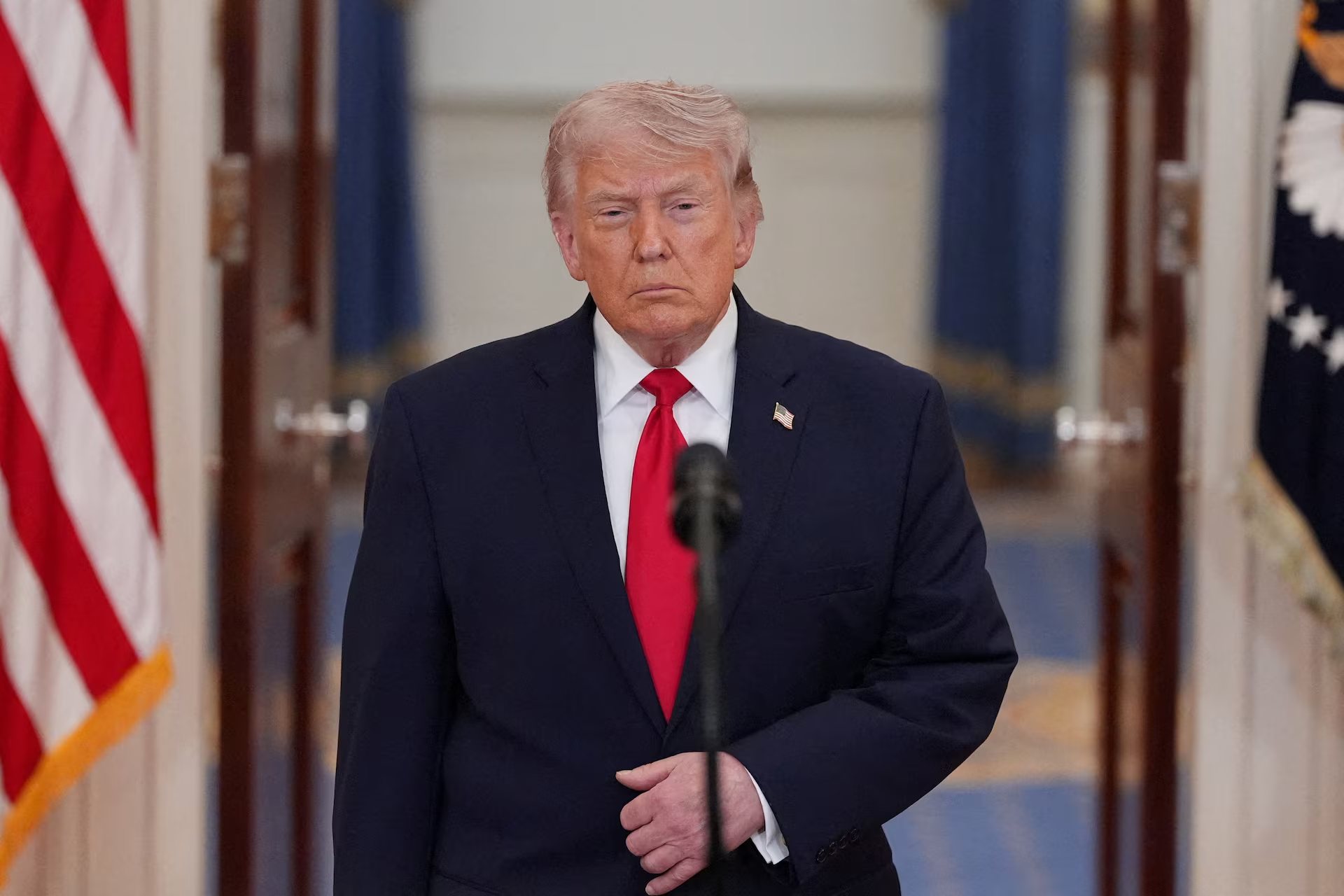
Reuters - The United States will carry out aggressive strikes on Iran over the next two to three weeks and is nearing completion of its main strategic objectives in the war, President Donald Trump said in a prime-time address to the nation on Wednesday.
Addressing a war-weary U.S. public, Trump said his military had delivered "swift, decisive, overwhelming victories on the battlefield," during 32 days of military strikes and that Iran was no longer a security threat.
"I can say tonight that we are on track to complete all of America's military objectives shortly, very shortly," Trump said in a nationally televised address.
"We're going to hit them extremely hard over the next two to three weeks. We're going to bring them back to the Stone Ages where they belong."
Thousands of people have been killed across the Middle East since February 28, when the U.S. and Israel struck Iran, triggering Iranian attacks on Israel, U.S. bases and the Gulf states, while opening a new front in Lebanon.
The conflict, which prompted Iran to shut the Strait of Hormuz -- a key waterway carrying about a fifth of global oil supplies -- has rattled financial markets and weighed on Trump's sagging approval ratings months ahead of pivotal midterm congressional elections.
Stocks fell and oil prices rose sharply after Trump's speech, with investors disappointed that a clearer path to swiftly ending the conflict was not spelled out.
Trump said the United States does not need the Strait of Hormuz and he challenged U.S. allies who rely on oil in the region to work toward reopening it.
"Many Americans have been concerned to see the recent rise in gasoline prices here at home," Trump said. "This short-term increase has been entirely the result of the Iranian regime launching deranged terror attacks against commercial oil tankers of neighboring countries that have nothing to do with the conflict."
The International Monetary Fund, World Bank and International Energy Agency on Wednesday warned the war was having "substantial, global and highly asymmetric" effects and said they would coordinate their response, including through potential financial support to those countries hit hardest.