
Nedal Zubeidi
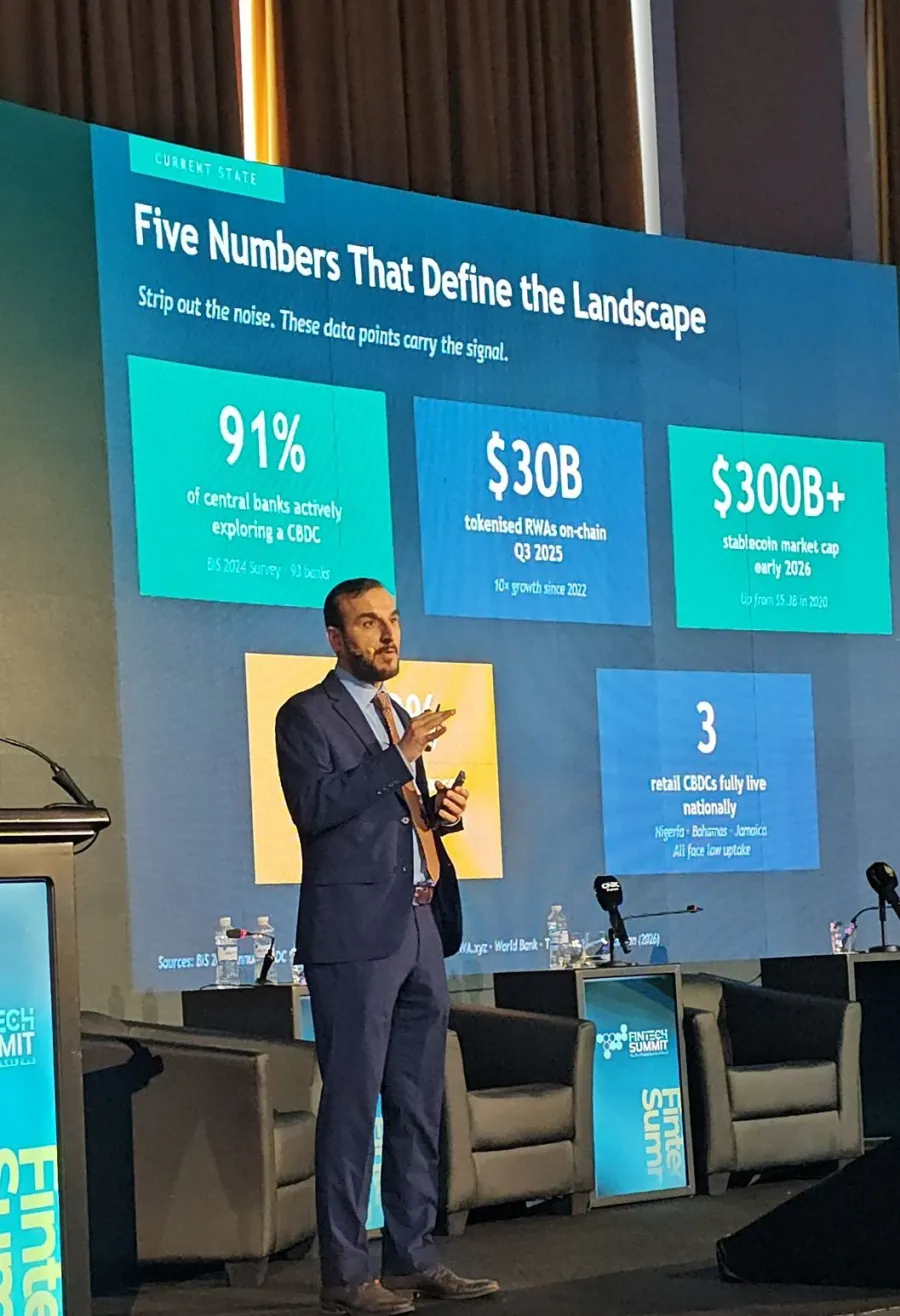
Jordan Daily - Fahim uz Zaman, Executive Director of 3A Ventures International, called for a more pragmatic approach to digital assets and financial innovation during remarks at the Fintech Summit Middle East 2026 in Jordan, urging banks and fintech firms to focus on measurable outcomes rather than industry hype.
Speaking in Amman, Zaman said the financial services sector is entering a phase where institutions must distinguish between technologies that deliver real returns and those that remain largely speculative.
“The honest conversation about digital assets has been missing from most of these events. We have had years of promises, and now institutions need to know what has actually delivered a return - and what has been theatre. That is what I wanted to bring to Amman.”
Zaman highlighted that while digital assets continue to attract global attention, their practical value has so far been concentrated in specific use cases, particularly in cross-border payments, trade finance, and certain forms of tokenisation. Beyond these areas, he cautioned, much of the activity remains experimental.
His remarks come as Middle Eastern regulators and financial institutions accelerate efforts to build frameworks for digital finance, with countries such as the United Arab Emirates, Bahrain and Saudi Arabia advancing regulatory clarity to attract investment and innovation.
Zaman said the region is not merely catching up with global markets but, in some areas, is moving ahead.
“This region is not catching up. In several areas - real-time payments, digital identity, open banking infrastructure - parts of the Middle East are ahead of markets that consider themselves more mature. The pace of change here is real, and the appetite for getting it right is serious.”
He also stressed the importance of collaboration between traditional banks and fintech companies, arguing that the most successful institutions will be those that combine the strengths of both.
“Banks bring trust, regulatory standing, and customer relationships. Fintechs bring speed and a willingness to experiment. The institutions that figure out how to combine both - rather than treating it as a competition - are the ones that will lead the next decade of financial services.”
Zaman’s visit to Jordan reflects growing interest in smaller but strategically positioned markets within the Middle East. He described Amman as an example of a market where foundational digital finance infrastructure is still being developed, offering opportunities for early engagement.
“Amman is not the obvious choice for a fintech summit, and that is exactly what makes it interesting. The markets that are building their digital finance infrastructure right now - not the ones that already have it - are where the most consequential decisions are being made.”
Through his advisory work at 3A Ventures International, Zaman focuses on helping financial institutions navigate digital transformation, market entry strategies and execution challenges across emerging markets in the Middle East, Africa and Southeast Asia.
He noted that while many banks have well-developed strategic plans, execution remains a persistent challenge.
“The strategy documents in financial services are often excellent. The implementation track record is considerably more mixed. Our work is really about closing that gap - helping institutions move from a well-written plan to something that actually runs.”
Zaman also underscored the value of candid, closed-door discussions among senior executives, saying that peer-level exchanges often reveal more practical insights than public panels.
“What executives tell each other in a closed room is very different from what they say on a conference panel. The value of The Leaders Roundtables is that we create the conditions for the real conversation - the one about what is not working, what they wish they had known earlier, and what they are genuinely uncertain about.”