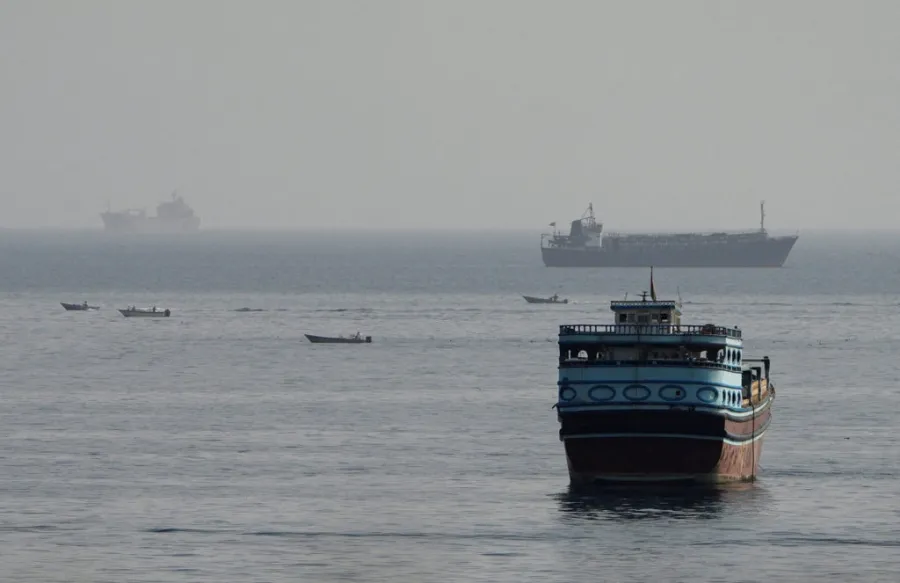

Reuters - Iran said it was tightening control over the Strait of Hormuz on Saturday, warning mariners the vital energy route was again closed, but President Donald Trump said Tehran could not blackmail the United States by shutting the waterway.
Tehran said it was responding to a continued US blockade of Iranian ports, calling it a violation of their ceasefire, while Supreme Leader Mojtaba Khamenei said Iran’s navy was ready to inflict “new bitter defeats” on its enemies.
Shipping sources said at least two vessels reported coming under fire while trying to transit the waterway. In Mumbai, Tehran’s ambassador to New Delhi, Mohammad Fathali, was called in for a meeting with India’s Foreign Secretary Vikram Misri during which Misri conveyed India’s deep concern at the shooting incident.
Misri urged the ambassador to convey India’s views to the authorities in Iran and resume at the earliest the process of facilitating India-bound ships across the Strait.

Tehran’s renewed tough messaging injected fresh uncertainty around the Iran conflict, raising the risk that oil and gas shipments through the strait could remain disrupted just as Washington weighs whether to extend the fragile ceasefire.
In Washington, Trump said the US was having “very good conversations” with Iran but that Tehran wanted to close the strait again. Iran could not blackmail the US, he said.
Maritime security and shipping sources said some merchant vessels received radio messages from Iran’s navy saying no ships were allowed through the waterway, reversing signs earlier on Saturday that traffic might resume.
Iran says it is reviewing new US proposals
Also on Saturday, Iran’s Supreme National Security Council said in a statement that Pakistan’s army chief, serving as an intermediary, presented the proposals to Iran when he recently visited Tehran, and they were still under review.
It was not revealed what was in the proposals.
The council said Iran has yet to respond, but further talks would require the US to abandon “excessive demands and adjust its requests to the realities on the ground.”
It also said that Iran will maintain full control over traffic through the Strait of Hormuz until “the war fully ends and lasting peace is achieved in the region,” adding that it would collect detailed information on passing vessels, issue transit certificates and impose tolls.
There was no confirmation from Washington regarding the new proposals.