
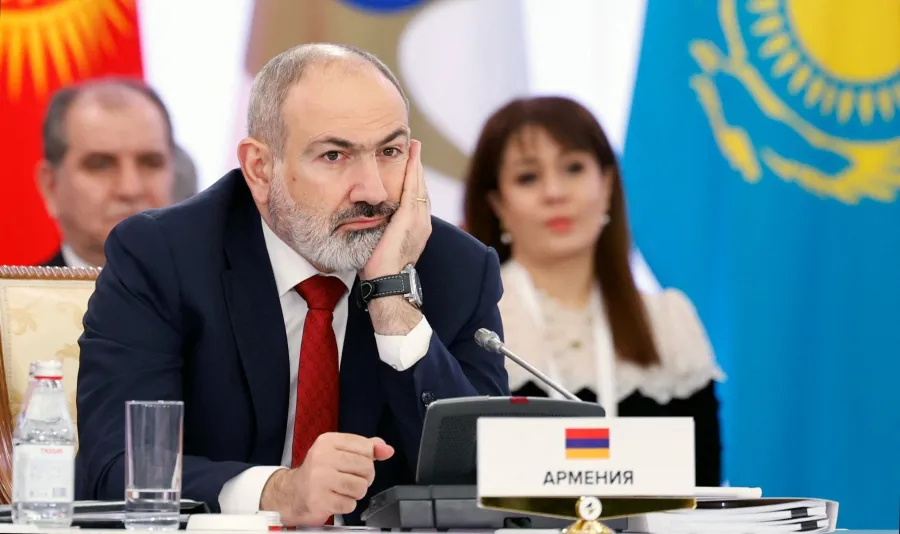
JD - Armenian Prime Minister Nikol Pashinyan, who rose to power during the country's 2018 "Velvet Revolution" on promises of democratic reform, economic development and enhanced security, is facing mounting criticism from political opponents who argue his government has failed to deliver on those pledges.
Pashinyan swept to office after leading mass anti-government protests that ended decades of rule by Armenia's traditional political elite. Supporters hailed him as a reformer committed to combating corruption and strengthening democratic institutions.
However, critics contend that Armenia's security environment and geopolitical position have deteriorated significantly during his tenure, particularly following the 2020 conflict with Azerbaijan over Nagorno-Karabakh and the subsequent displacement of the region's ethnic Armenian population in 2023.
Opposition figures argue that Pashinyan's foreign policy has left Armenia increasingly isolated. They point to Yerevan's cooling relations with Russia, traditionally Armenia's main security partner, and its growing engagement with Western countries, which they say has not translated into concrete security guarantees.
The Armenian government has reduced its participation in the Russia-led Collective Security Treaty Organization (CSTO), accusing the bloc of failing to support Armenia during periods of heightened tensions with Azerbaijan. Moscow has rejected such criticism, while Western governments have expressed support for Armenia's sovereignty and territorial integrity but have stopped short of offering formal security commitments.
Pashinyan's efforts to advance a peace agreement with Azerbaijan have also drawn criticism from opponents, who describe recent territorial and border-related concessions as excessive. The government argues that normalization of relations with Azerbaijan is necessary to secure long-term regional stability and prevent renewed conflict.
Domestically, opposition groups and some civil society activists have accused the government of increasing pressure on political opponents and protesters. They cite arrests during demonstrations and police actions against anti-government rallies as evidence of a shrinking space for dissent.
The government has denied allegations of political repression, saying law enforcement agencies act within the framework of the law and that judicial institutions remain independent.
Critics further argue that Armenia's judiciary has come under political pressure, while government officials maintain that reforms are aimed at improving accountability and public trust in state institutions.
Political analysts say the prime minister's future may depend on whether his government can successfully balance security concerns, diplomatic negotiations and domestic political stability in a region marked by longstanding tensions.