
Dr. Fadi Maayah
Curtin University
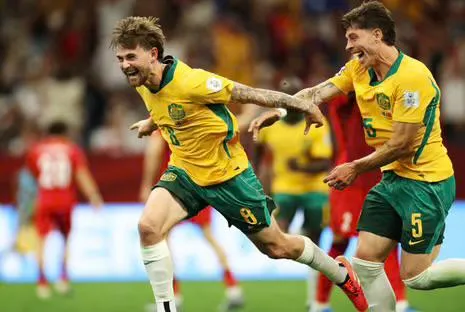
Jordan Daily - The Socceroos opened their 2026 FIFA World Cup campaign with a disciplined and tactically astute 2–0 victory over Turkey, showcasing a clear blueprint of modern football efficiency under head coach Tony Popovic.
In a performance defined by structure, organisation, and belief, Australia demonstrated that football success is not dictated by possession alone, but by effectiveness, discipline, and execution at key moments. Against a technically strong Turkish side that dominated the ball, the Socceroos delivered a performance that highlighted tactical intelligence and collective team culture.
At the core of the victory was a well-executed defensive strategy. Australia maintained a compact, organised defensive block, closing central spaces and denying Turkey the opportunity to penetrate behind the back line. The defensive unit operated with cohesion and discipline, forcing the opposition into low-percentage attempts, often from outside the penalty area. Even when Turkey advanced into dangerous zones, the Australian structure remained intact, limiting clear scoring opportunities.
This defensive resilience was complemented by outstanding goalkeeping. The Australian goalkeeper delivered a series of crucial saves, both from long-range efforts and close-range situations, reinforcing the defensive platform and maintaining control of the game’s key moments.
However, this victory was not only built on defence. It was defined by Australia’s ability to transition effectively. The Socceroos executed counter-attacks with precision and speed, turning defensive recoveries into attacking opportunities. The first goal epitomised this approach, with a rapid transition catching Turkey out of shape and exploiting space in behind. The second goal reinforced the same principle, capitalising on momentum and delivering a decisive moment that secured the match.
From a tactical perspective, this match provided a clear contrast between possession and effectiveness. While Turkey dominated possession, their control lacked penetration and final-third efficiency. In contrast, Australia demonstrated that structured defence combined with purposeful transitions can outperform high possession when it lacks decisiveness and clarity.
Equally important was the influence of team culture. This young Socceroos squad showed resilience, belief, and a collective commitment to the game plan. The balance between emerging talent and tactical discipline reflects a positive team environment and strong leadership from the coaching staff. The willingness of players to execute their roles without compromise was critical to the outcome.
Tony Popovic’s tactical approach can be described as both pragmatic and intelligent. His decisions to prioritise defensive organisation and transitional efficiency were fully justified, with players executing with clarity and confidence. This performance reflected not only tactical preparation but also a clear identity built on discipline, unity, and purpose.
For Australia, this result is more than just three points. It is a statement of intent. It demonstrates that the Socceroos can compete against technically strong opponents by utilising structure, discipline, and strategic efficiency.
As the tournament progresses, this performance provides a strong foundation. If maintained, this tactical identity—combining organised defence, efficient counter-attacks, and strong team cohesion—positions the Socceroos well to challenge in the group stage and beyond.
A “green and gold” start to the 2026 World Cup campaign has not only delivered a result but has reinforced a clear message: disciplined, intelligent football remains one of the most effective ways to succeed at the highest level.