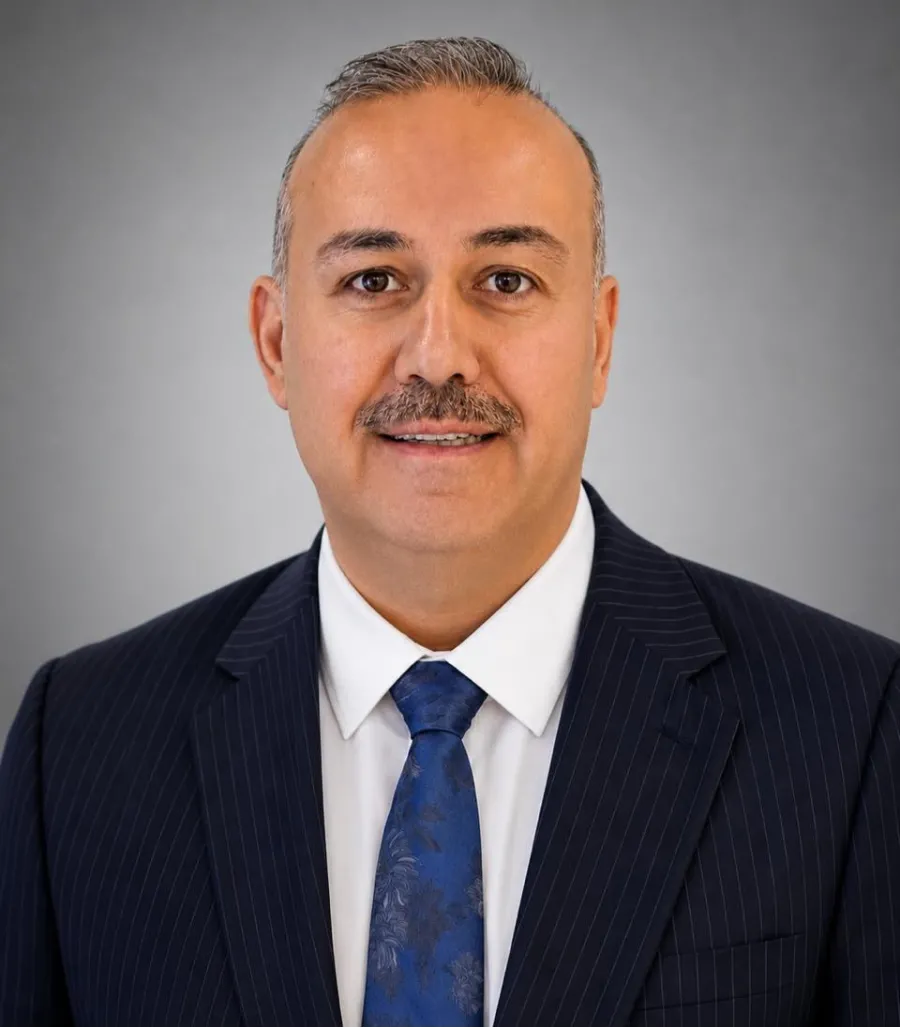


By: Dr. Mohannad Faroun
Jordan Daily - For more than a decade, the international community has approached the mental health of Syrian refugees through a familiar lens: reduce trauma symptoms, and resilience - including the capacity to eventually return home - will follow. Donor strategies, program log frames, and policy papers have quietly assumed that psychological recovery and readiness for return move together. New findings from an integrated mental health program in Jordan suggest this assumption may be wrong, and the implications reach well beyond clinical practice.
The data comes from an in-depth case study of Syrian survivors of gender-based violence who completed a three-phase psychosocial intervention delivered through the Institute for Family Health in Jordan, one of the region's longest-running mental health and protection programs for refugees. The program combined community-based psychological support, structured individual and group intervention, and longer-term case management — a model increasingly held up internationally as best practice for task-shared mental health care in humanitarian settings.
The clinical results were strong. Across nearly all participants, symptom reduction was substantial and consistent: less anxiety, less depression, greater day-to-day functioning. By any conventional clinical measure, the program worked.
But when the same women were asked about their intentions regarding return to Syria, the picture became far more complicated. Psychological improvement showed almost no relationship to whether a woman wanted to return, felt ready to return, or believed return was a realistic option for her family. Women with excellent clinical outcomes were just as likely to say they had no intention of returning as women whose symptoms had improved only modestly.
What did predict return intention was something the mental health field rarely measures directly: economic self-sufficiency. Women who had achieved some degree of financial independence — through stable income, marketable skills, or economic support networks in Jordan — were meaningfully more likely to view return as a viable future step. Women without that economic foundation, regardless of how much their psychological symptoms had improved, largely did not see return as realistic, whatever their formal wellbeing scores suggested.
This is not simply a footnote for clinicians. It is a direct challenge to how the international humanitarian and donor system currently frames refugee return.
Much of the funding architecture around durable solutions for displacement — return, local integration, resettlement — still treats psychological stability as a precondition, or at least a strong contributing factor, for return readiness. Programs are often justified, implicitly or explicitly, on the logic that psychosocial support helps "prepare" refugees for eventual return. If economic self-sufficiency is in fact the operative variable, and psychological recovery is largely decoupled from it, then mental health investment and livelihoods investment are being treated as substitutes when they should be treated as parallel, independent tracks.
This matters practically in at least three ways.
First, for donors and policymakers designing return-oriented strategies, the finding suggests that psychosocial programming alone — however well delivered — is unlikely to move the needle on return intentions if it is not paired with genuine livelihoods and economic inclusion investment. Mental health support remains essential in its own right, but it should not be marketed or budgeted as a return-readiness tool.
Second, for humanitarian actors under pressure to demonstrate program impact against "solutions" indicators, this data is a caution against conflating clinical success with the political and economic outcomes donors ultimately care about. A program can succeed entirely on its own terms — measurably reducing suffering — while having little bearing on the return question at all.
Third, and perhaps most importantly, it reframes what "durable solution" actually requires for refugee women specifically. If economic security, not symptom reduction, is what shapes a woman's sense of a viable future — wherever that future is — then economic empowerment programming deserves to be treated as core protection and durable-solutions work, not a secondary livelihoods add-on.
None of this diminishes the value of psychosocial and mental health support for displaced populations, which remains a basic humanitarian obligation regardless of its effect on return decisions. But as host countries like Jordan continue to carry a disproportionate share of the regional refugee response, and as international attention increasingly turns to questions of return and reintegration in Syria, the region's response strategies would benefit from taking this distinction seriously: healing and homecoming are not the same process, and funding one will not substitute for the other.
Dr. Mohannad Faroun holds a PhD in Counseling Psychology and currently serves as the Head of the Training Section at the King Hussein Foundation. He is also pursuing further studies in migration and return at the University for Continuing Education Krems in Austria.