
Dr Fadi Maayah
Curtin University, Australia
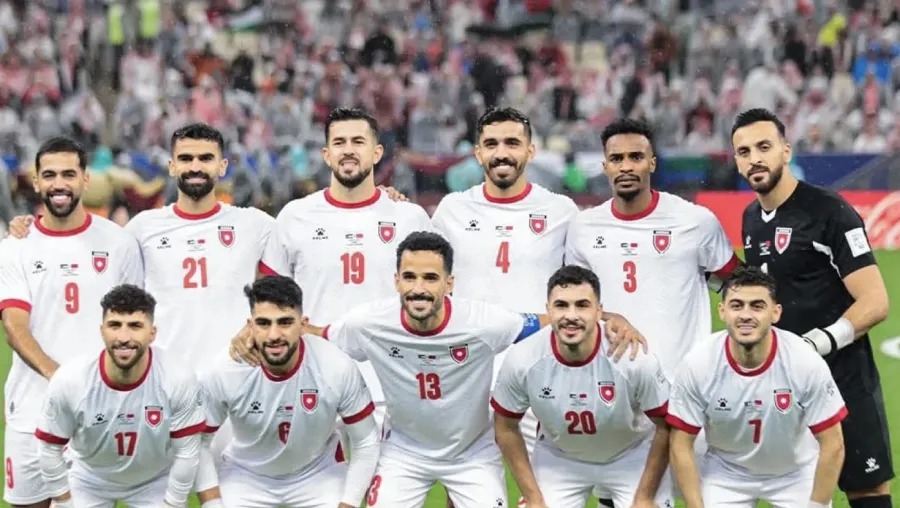
Jordan Daily - Jordan’s national football team, Al Nashama, once again lived up to their name — meaning “the brave” — in their FIFA World Cup 2026 performance against Argentina. Despite a 3–1 result, the performance reflected a team built on discipline, organisation, and collective resilience at the highest level of international football.
From a tactical perspective, Jordan delivered an excellent defensive display. They set up with a well-structured deep and mid-block, maintaining compactness both between and within lines. Their shape remained consistent and highly organised throughout the match, limiting Argentina’s ability to create clear-cut opportunities from open play. Importantly, all three goals conceded came from two set-piece situations and a penalty, rather than from structural breakdowns in open play.
This defensive consistency has been evident across all three matches in the FIFA World Cup 2026, including previous games against Austria and Algeria. Jordan showed excellent control of space, particularly in protecting the area behind the defensive line. Across the tournament, they did not concede goals from balls played in behind the defence, highlighting strong organisation, communication, and tactical awareness.
Equally significant has been Jordan’s effectiveness in transitional play, a defining feature of their performances, with all three goals in the tournament demonstrating their ability to transition with purpose and quality—most notably against Argentina, where a composed 14-pass sequence culminated in a high-quality finish, marking the first time since 1966 that Argentina conceded a goal following such an extended passing move. While the whole team contributed to this goal, Mahmoud Al Mardi played a key role in this attacking phase, switching the point of attack intelligently to Captain Ehsan Haddad. Haddad then delivered a high-quality ball from the right channel into the space behind Argentina’s defensive line. Mousa Al Tamari made a perfectly timed run and finished clinically past Emiliano Martínez, one of the world’s leading goalkeepers, who had little opportunity to prevent the goal. It was a goal of the highest quality, particularly given the calibre of the opposition, and marked a historic moment as Jordan scored against Argentina for the first time at this level. It also makes Jordan the first team to score against the world champions in this tournament.
That moment of quality underlined Jordan’s capacity to compete, even against the world champions. However, the match also demonstrated the difference that elite individuals can make. Argentina’s victory ultimately included moments of brilliance, particularly from Lionel Messi, whose ability to influence the game in key moments remains unmatched at the highest level.
Considering this is Jordan’s first-ever appearance at a FIFA World Cup, the team’s performances carry even greater significance. They have demonstrated a clear tactical identity and cohesion despite operating within a context of limited facilities and comparatively lower levels of investment in football development. Against elite opponents, Jordan remained competitive and consistently difficult to break down.
A defining characteristic of this Jordan side has been the extraordinary commitment and work rate of the players. Across all matches, including the fixture against Argentina, the players demonstrated exceptional intensity, discipline, and collective responsibility, consistently delivering maximum effort in every phase of play. Their defensive organisation and transition efficiency reflect a group that is fully aligned in its tactical approach.
Equally important is the leadership behind the team. Head Coach Jamal Al Salami deserves significant credit for establishing a clear tactical identity based on structure, discipline, and cohesion. His influence is evident in the consistency of Jordan’s performances across all three matches. The players and Head Coach should be very proud of their achievements.
Credit must also extend to the entire coaching staff, support staff, and medical team, who have worked tirelessly behind the scenes to prepare the players for the demands of the tournament. Their contribution has been essential in ensuring that the team could perform physically and tactically at this level.
This achievement also reflects the broader leadership within Jordanian football. The Jordan Football Association, led by HRH Prince Ali Bin Al Hussein president of Jordan FA, and the CEO Samar Nassar, has played a vital role in supporting the national team. In addition, the continued support of HRH Crown Prince Al Hussein bin Abdullah has provided further support and encouragement and belief for the players. Their combined leadership has contributed to this historic moment for Jordanian football, despite ongoing challenges related to infrastructure and investment.
In summary, while the results may not fully reflect their performances, Jordan have proven themselves to be a disciplined, well-organised, and tactically coherent team. They are difficult to break down in open play and capable of competing with higher-ranked nations.
Al Nashama have truly embodied their identity. They have demonstrated courage, resilience, and pride on the world stage — and in doing so, have earned the respect of the global football community.