
Dr Fadi Maayah
Curtin University, Australia
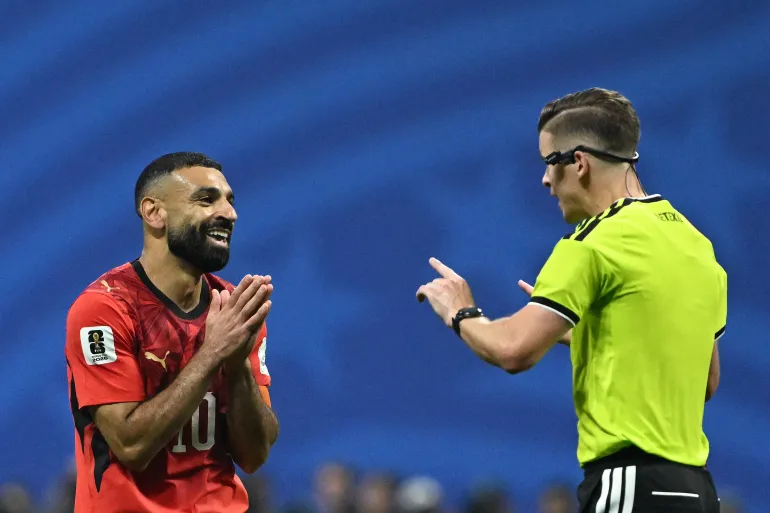
Jordan Daily - The 2026 FIFA World Cup Round of 16 match between Egypt and Argentina will be remembered for its drama, quality and controversy. Egypt came within 11 minutes of one of the greatest victories in its football history before Argentina produced a stunning comeback to win 3–2 and progress to the quarterfinals. Yet long after the final whistle, much of the discussion has focused not on the football itself, but on the consistency of VAR.
The principle is simple: what is good for the goose is good for the gander.
If players from Argentina have the right to request a review and VAR is willing to examine incidents involving Argentina, then Egypt, Jordan, Algeria, Cape Verde and every other nation should be afforded the same consideration. The issue is not whether every review must result in a penalty, foul or overturned decision. The issue is whether the same standard is applied consistently to all teams.
This is why Alan Shearer's comment resonated with so many football supporters around the world: "Either both are fouls, or neither is." His statement captures the heart of the debate.
Against Egypt, VAR intervened to disallow Mostafa Zico's goal after identifying a foul by Marwan Attia on Lisandro Martínez during the attacking phase. The referee was sent to the monitor, reviewed the footage and the goal was cancelled. Under the Laws of the Game, respected referee analyst Andy Davies argued that the intervention was technically correct because Attia pulled Martínez's shirt and stepped on his foot.
However, many observers questioned why VAR was prepared to go back such a significant distance in the attacking sequence to identify a foul yet later did not intervene when Egypt appealed for a penalty involving Mohamed Salah or when Egypt believed Hamdy Fathy had been fouled in the build-up to Argentina's winning goal.
Former England goalkeeper Rob Green voiced similar concerns, stating: "Surely, this is not within VAR's realm to review this. It's a full length of the pitch away."
The concern for many was not necessarily that Egypt's goal was ruled out, but that similar levels of scrutiny were not applied to incidents involving Argentina later in the same match.
This was not the first time such questions emerged during Argentina's World Cup campaign.
In the group-stage match against Jordan, Argentina received a penalty following a VAR review. Meanwhile, Jordan appealed for a handball inside the Argentine penalty area, yet there was no on-field review and play continued. Jordanian players and supporters were left wondering why one incident warranted detailed examination while another did not.
Against Algeria, controversy surrounded a challenge by Lionel Messi on Aïssa Mandi. Many analysts believed at least a yellow card should have been shown, while others argued the challenge could even have warranted stronger punishment. VAR did not intervene. Algeria later questioned several officiating decisions from that match.
Against Cape Verde, Argentina benefited from a closely reviewed offside decision during extra time. VAR eventually confirmed the goal, but supporters and analysts again debated whether comparable incidents involving smaller football nations receive the same degree of examination.
To be absolutely clear, Argentina remains one of the greatest football nations in history and possess extraordinary players led by Lionel Messi. Their comeback against Egypt demonstrated their quality, resilience and championship mentality. However, Egypt were unfortunate to see such a remarkable performance overshadowed by controversy. Football is a beautiful game, and supporters have every right to expect consistency in the application of its laws. The credibility of VAR depends not only on making the correct decisions, but also on ensuring that every team is afforded the same opportunity to have those decisions reviewed fairly and consistently.
Whether the team is Argentina, Egypt, Jordan, Algeria or Cape Verde should be irrelevant. The badge, ranking and reputation of a nation should never determine the level of scrutiny applied by VAR.
That is why Shearer's words will continue to resonate throughout this World Cup.
Either both are fouls, or neither is.
In other words, what is good for the goose must also be good for the gander.