
By: Ibrahim Rihani
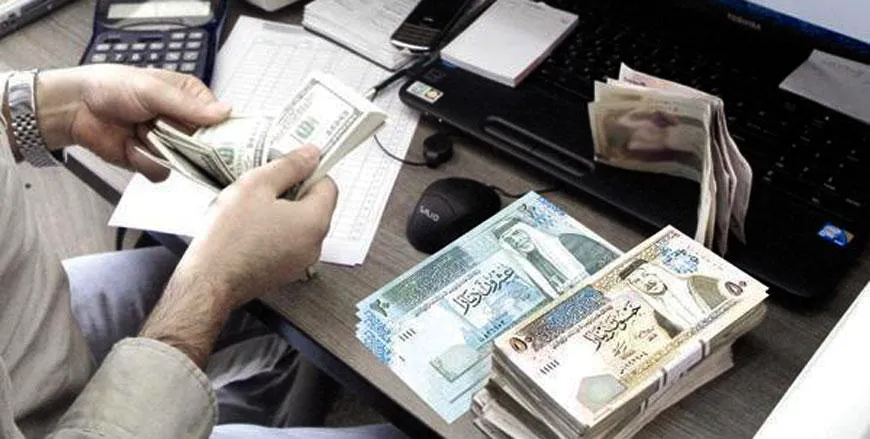
Jordan Daily - Understanding the role remittances play in Jordan is key to understanding the macroeconomic environment the country faces. Remittances are one of the largest external financing channels for the Jordanian economy, running at roughly 8 to 9 per cent of GDP and ranging from $3 to $4.5 billion annually, depending on the year. In 2025, remittances reached $4.5 billion, more than double the $2 billion in foreign direct investment the country attracted the same year. Foreign direct investment is typically prioritised in economic commentary on Jordan, while remittances and their potential fluctuations as a result of various shocks likely play a bigger role.
Remittances are treated as one of Jordan's automatic stabilisers. Jordanians working in the Gulf send money home, household consumption is smoothed, the external account receives an inflow, and the assumption is that this happens exactly when the domestic economy needs it.
To begin, I'll define two important concepts that will be discussed throughout this article. Consumption smoothing refers to households maintaining relatively stable consumption during temporary income shocks through drawing on savings, credit, or remittances.
Second, and more importantly, procyclicality and countercyclicality. A mechanism is countercyclical when it delivers more inflows precisely when the receiving economy is doing worse or is entering a downturn, partially offsetting the downturn, and procyclical when it delivers more inflows precisely when the receiving economy is already doing better, reinforcing the cycle rather than smoothing it. The distinction matters because the same dollar of inflow is not worth the same amount in every state. An inflow arriving when income is already low, and consumption is under pressure, carries far more value than the same inflow arriving when income is already high, and consumption is not constrained. This is why countercyclicality is the property that is actually needed for a stabiliser such as remittances. The whole appeal of remittances as a stabiliser rests on the assumption that they behave in the countercyclical way, however empirical studies on Jordan generally find that remittances respond more strongly to conditions in GCC labour markets than to domestic Jordanian business-cycle fluctuations.
The size of the remittance flow is set by the Gulf, which is a function of oil. When oil demand and prices are elevated, and OPEC+ production is accommodative, Gulf governments spend, construction and services expand, expatriate labour demand strengthens, and the Jordanian expatriate wages from which remittances are generated grow. When oil revenues compress, Gulf fiscal consolidation follows, expatriate hiring freezes, and nationalisation policy is harshly enforced precisely when the labour market tightens for nationals. Remittance supply is procyclical with the Gulf's own cycle, and the Gulf's cycle is the oil cycle.
The states of the world where oil demand is strong are also states where global growth is strong, and global growth lifts Jordan through channels that have nothing to do with remittances. Tourism income rises with global travel demand. Gulf grants and deposits increase because a fiscally comfortable Gulf is a more generous one. Demand for Jordanian exports strengthens with global growth, and debt rollover terms improve with global risk appetite. The state in which remittances surge is the same state in which Jordan's economy is already supported through every other external channel. Remittances and the domestic economy both benefit from the same common factor, global growth, and move together with it procyclically.
The relevant test is not how remittances behave in the good state. It is what happens in a Jordan-specific negative shock: a domestic credit contraction, a fiscal consolidation episode, a local unemployment spike with no connection to Gulf labour markets. There is no mechanical channel through which this increases Gulf remittance supply. Gulf labour demand, Gulf wages, and Gulf fiscal policy respond to oil, not to conditions inside Jordan.
What does move is remittance demand from the Jordanian side. A household facing income loss will ask relatives abroad for support, and the relatives will often respond. This is an altruistic transfer through family networks, not a systematic increase in the inflows of remittances. It depends on the sender having room in their own budget, and it is bounded by an income that is itself set by the Gulf cycle. The response is small relative to the shock it would need to offset. In the state of the world where Jordan needs a countercyclical inflow, the mechanism that would deliver it barely exists.
This has direct implications for the balance of payments and thus has monetary consequences. A large share of remittances are not spent immediately, instead saved in dinar deposits at local banks, so behaviorally the flow also functions as an inflow supporting bank liquidity, increasing foreign reserves at the CBJ. Because the flow is instead tied to the Gulf cycle, it does not strengthen in a Jordan-specific downturn, and foreign reserves receive no offsetting lift precisely when pressure on foreign reserves is highest, pressuring the exchange rate peg.
The CBJ has two ways to defend the peg. One is to let the dinars needed to hold the exchange rate show up on their own, through remittances, Gulf grants, and other inflows that arrive without the central bank having to do anything. The other is to pay for them by raising interest rates high enough above the US rate that foreign capital gets pulled in to cover the shortage.
The first option only works if those inflows show up precisely when the economy is under stress countercyclically, since that's when the peg actually needs defending. But remittances don't behave that way. So when Jordan hits a rough patch for its own reasons, remittances don't increase systematically to help.
That leaves the second option carrying more of the weight. The CBJ ends up having to rely harder on high interest rates to attract the capital instead, keeping the rate differential over the Fed wider than it would need to be if remittances actually moved the way people assume they do.
The cost of this asymmetry is not limited to the periods when a shock actually arrives. Because the CBJ knows in advance that remittances will not step in during a purely domestic downturn, it cannot run policy as though that cushion exists only to be activated when needed. Large interest rate differentials with the US become something closer to a permanent insurance premium than an emergency response, priced in indefinitely rather than deployed only in the bad state, since the peg's credibility depends on never being tested to the point of visible strain. A genuinely countercyclical remittance channel would have freed up exactly this kind of monetary space, letting the CBJ run a smaller differential with the Fed’s rate in normal times because it could trust remittances and foreign inflows to increase automatically when Jordan actually needed it. Without that trust, the buffer has to be carried at all times instead, and every percentage of it is a basis point of investment priced out at the margin, projects that would clear the hurdle rate in a Jordan with a genuinely countercyclical external buffer but do not clear it in the Jordan that actually exists.
Typically, a short-run oil price shock (or any short run shock) was assumed, in the standard literature, to have small long-run implications for economic growth, since once the shock passes and oil prices stabilize, the economy simply returns to its previous state. However, the investment and economic environment in Jordan does not work that way. A firm facing tighter domestic credit conditions either postpones its investment to a later period, makes a smaller investment given the tight conditions, or cancels it outright. Since capital compounds, a dinar invested today grows larger than the same dinar invested a period later, because by the time that later period arrives, today's dinar has already been earning returns, the delayed one hasn't. That means if firms choose not to invest now in capital expenditure or any other form of investment, the Jordanian economy ends up smaller than it would have been had that dinar been invested in the original period, since it loses exactly the returns a dinar invested later never gets the chance to earn. Which is why these short-run oil and other shocks that hit Jordan, postponing, shrinking, or cancelling investment because it no longer clears the breakeven rate, end up making the economy permanently smaller as a result.
Given how tightly Jordan's financing conditions track a volatile, short-cycle Gulf oil market, this is not an occasional accident but a recurring structural feature: many recurring small, transitory external shocks such as oil prices that have nothing to do with Jordan's domestic economy, each leaving a small, permanent scar on the investment stock that never had the chance to compound.
If the underlying problem is that Jordan's external stabilisers are synced with the wrong business cycle which leads to indefinite tight monetary conditions in order to protect the peg and keep inflation in the target range, then the policy objective becomes to build domestic stabilisers that offset, rather than reinforce, those external fluctuations. Rather than resorting to austerity that only tightens when external inflows force the issue, the government should establish a credible fiscal framework built on rules rather than discretion, one that ties public expenditure directly to the cycle its major external inflows actually follow. The first component is the Gulf cycle behind remittances and grants, so when these inflows are strong, government spending falls, and reserves accumulate, and when they weaken, the government draws on those same reserves instead of announcing sudden cuts under external pressure. Subsequently, letting creditors price a debt path that does not depend on discretionary decisions taken every time a government changes. Through this, the premium the CBJ carries above the Fed's policy rate could be lowered, since Jordan's fiscal path would be seen as sustainable and the peg's credibility would rest less on the interest rate differential alone, thus overall risk associated with Jordan as the sovereign would decrease and investors would demand a lower required rate of return. The investment that had been rationed out at the margin under tighter conditions would then clear the hurdle rate instead.
The same architecture should extend to Jordan's export base more broadly. Export revenues, whether from potash, phosphate, garments, or other tradable sectors, move with global demand conditions largely outside Jordan's control, and the same rule should apply: when export demand is strong, government spending falls and reserves accumulate, and when they weaken, the government draws on those reserves rather than announcing sudden cuts under external pressure, protecting exposed exporters like Arab Potash and Jordan Phosphate Mines from losses that erode balance sheets and future export capacity during a cycle they did not cause and cannot control. Oil should run on the same logic, raised when prices are low so the treasury captures that fiscal space while the pump price barely moves, and lowered when prices are high so the tariff absorbs the spike instead of passing it through to consumers and firms. None of these rules does much alone, but together they turn some of Jordan's least controllable revenue and cost exposures into a stabilisation framework, the kind of symmetric, precommitted mechanism that austerity can never substitute for, with a narrow.
Ibrahim Rihani finished his masters in Economics and has an interest in monetary and fiscal policy in Jordan.