

By : Sanad El-Naser
Jordan Daily - In November 2024, Dr. Hazim El Naser, former Minister of Water and Agriculture, argued in Al Rai that Jordan should explore the establishment of a voluntary carbon credit market capable of creating new opportunities for entrepreneurship and employment. His argument reflected a wider economic opportunity: activities such as renewable energy, energy efficiency, methane recovery, afforestation, water harvesting and other environmental projects can generate measurable emissions reductions that, when supported by credible standards, may also acquire economic value.
Less than two years later, Jordan has begun building some of the institutional foundations necessary to participate more actively in carbon markets. In March 2026, Jordan and Norway signed an agreement under Article 6 of the Paris Agreement to cooperate on carbon market activities. Jordan is also developing a national Carbon Market Framework intended to establish the governance, authorisation procedures and operational rules needed for participation in these markets.
Article 6 cooperation is not identical to the voluntary carbon market proposed in 2024. Nevertheless, both depend on the same fundamental requirement: environmental outcomes must be measurable, credible and governed by institutions that buyers and investors can trust.
The question is therefore no longer simply whether Jordan can participate in carbon markets. It is how Jordan can transform environmental performance into credible, measurable and investible economic value. This is where the concept of derisking becomes particularly useful.
As I argued in a previous article, derisking should not be understood merely as eliminating investment risk. Rather, it involves creating the conditions through which uncertainty becomes measurable, understandable and increasingly manageable for investors. Private capital is not attracted simply because a project produces environmental benefits. Investors also require credible standards, reliable information, institutional clarity and greater confidence regarding future outcomes.
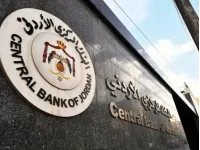
Jordan's emerging green finance framework provides an important example of this process. In January 2026, the Central Bank of Jordan introduced the Jordan National Green Taxonomy, establishing a common system for determining whether economic activities can be considered environmentally aligned or transitional. The framework uses a traffic light approach, distinguishing green activities from amber activities that are undergoing a credible transition, while identifying activities that do not meet the required conditions.
The significance of the taxonomy extends beyond environmental classification. It effectively acts as a conversion mechanism between environmental performance and financial decision making.
Without a common framework, a company may claim that an investment is environmentally sustainable, but banks and investors would still need to determine what that claim actually means, how it should be measured and whether it can be compared with other investments. The taxonomy addresses part of this uncertainty by applying shared definitions, technical thresholds and measurable criteria.
Environmental performance therefore becomes more quantifiable, comparable and verifiable. This does not remove the normal commercial risks of an investment. A green project can still fail, experience cost overruns or struggle to repay financing. What the taxonomy can reduce is uncertainty surrounding the environmental credibility of the investment. It also gives financial institutions a more consistent basis for evaluating sustainability claims and can reduce information asymmetry and the scope for greenwashing.
In this sense, the taxonomy makes environmental performance more legible to finance.
Carbon markets perform a related but different function. While the taxonomy helps determine how an economic activity should be classified, a carbon market seeks to place economic value on a verified environmental outcome.
Consider a project that captures methane from waste. The project may genuinely reduce greenhouse gas emissions, but that environmental benefit does not automatically become something that can be bought or sold. The reduction must first be measured, monitored and verified and, under the relevant framework, authorised and properly recorded. Only after these steps can the environmental outcome become a recognised carbon credit or mitigation outcome capable of being transferred to a buyer.
This is another form of conversion. An environmental outcome that was previously difficult for financial markets to value becomes measurable and potentially monetizable.
However, a major financing problem remains. Many emissions reduction projects require substantial investment before carbon revenues are generated. A project may require financing today, while revenue from its carbon outcomes might only arrive several years later after the emissions reductions have occurred and been independently verified.
One mechanism that can help address this problem is a Mitigation Outcome Purchase Agreement, commonly known as a MOPA.
In simple terms, a MOPA is an agreement through which a credible buyer commits in advance to purchasing verified emissions reductions once agreed conditions are met. Instead of a project developer simply hoping that someone will purchase its carbon outcomes in the future, the project has greater visibility over future demand and potential revenue.
Jordan's agreement with Norway is particularly relevant because it provides the foundation for negotiating future MOPAs for eligible Article 6 projects. The Global Green Growth Institute (GGGI) has also highlighted the financing gap created when projects require capital upfront while carbon revenue is only generated later, and has examined how purchase agreements can help make those future revenues more visible to financiers
This does not eliminate project risk. A project may still underperform or generate fewer emissions reductions than expected. What a purchase agreement can reduce is uncertainty over whether there will be a credible buyer for the verified outcomes that are successfully delivered.
The taxonomy, carbon market and MOPA therefore perform different but complementary functions. The taxonomy translates environmental characteristics into classifications that financial institutions can understand. Carbon market institutions translate verified emissions reductions into assets that may acquire financial value. Purchase agreements can then provide greater visibility over whether those assets will generate future revenue.
Together, these mechanisms demonstrate what derisking can mean in practice: not removing uncertainty altogether, but progressively converting it into information, standards and expected cash flows that investors are better able to evaluate.
Nevertheless, the expansion of carbon markets should not automatically be treated as success. Questions surrounding additionality, verification, double counting, environmental integrity and future carbon prices remain important. Similarly, an amber classification under the national taxonomy should represent a genuine transition pathway rather than become a permanent substitute for environmental improvement. The taxonomy itself places conditions and time limits on certain transitional activities.
The objective should therefore be credibility before volume.
Jordan is gradually assembling several components of a broader green financial architecture. The national taxonomy makes environmental performance easier to classify and measure. The Carbon Market Framework can establish clearer rules for market participation. Article 6 cooperation can connect Jordanian mitigation outcomes with international buyers. Purchase agreements can potentially create greater certainty around future carbon revenues..
The central challenge is therefore not simply producing more projects that can be labelled green or generating the largest possible number of carbon credits. It is building the institutional architecture through which genuine environmental performance becomes measurable, trusted and financeable.
If Jordan succeeds in doing so, the significance of carbon markets could extend far beyond the sale of credits. They could become part of a wider economic system in which environmental performance is converted into measurable value, opening new opportunities for investment, entrepreneurship and the next stage of Jordan's green economy.
Sanad El-Naser is Project Coordinator at Tetra tech/MA Global Political Economy (KCL).