

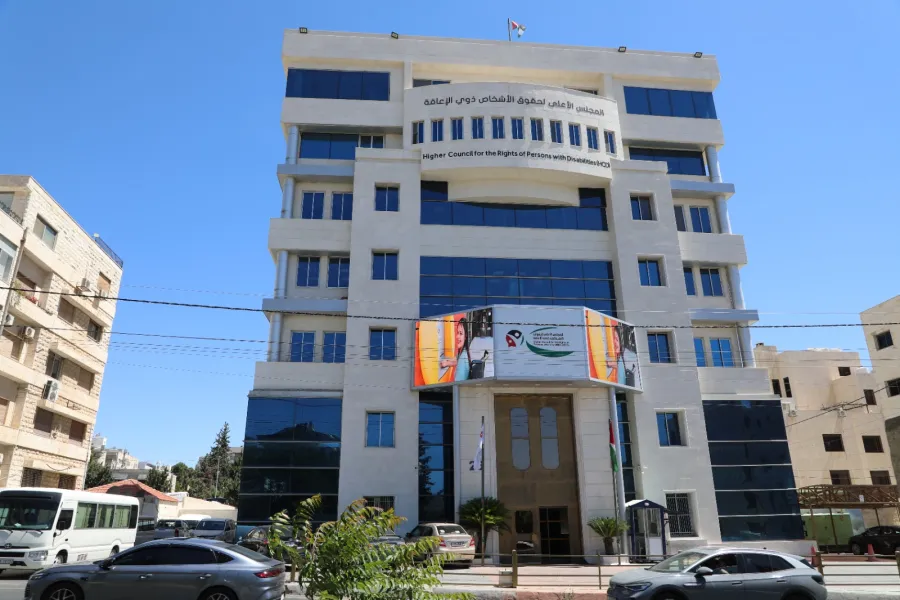
Jordan Daily - The Higher Council for the Rights of Persons with Disabilities (HCD) has achieved a new national milestone that reflects Jordan’s leadership in developing quality and accreditation systems. The National Standards for Services Provided to Persons with Intellectual Disabilities and Autism Spectrum Disorder have received international accreditation from the International Society for Quality in Health Care External Evaluation Association (ISQua EEA) under its International Accreditation Programme for the period 2026–2030. This recognition follows the successful completion of all stages of the external evaluation process and fulfilment of the accreditation requirements in accordance with international best practices.
This accreditation constitutes international recognition of the institutional methodology adopted by the Council in developing, managing, and reviewing its national standards. It also confirms their alignment with internationally recognised principles for developing health and social care standards, including good governance, evidence-based practice, stakeholder engagement, and continuous improvement.
This achievement represents a significant advancement in the development of Jordan’s national quality system. It enhances the reliability and credibility of the national standards among government entities, service providers, regulatory bodies, and international organisations. It also strengthens confidence in Jordan’s accreditation system and opens broader opportunities for international cooperation and the exchange of expertise, thereby reinforcing Jordan’s position as a regional model in the development of quality standards for services provided to persons with disabilities.
ISQua EEA is one of the world’s leading organisations specialising in the evaluation and accreditation of accreditation bodies, accreditation programmes, national standards, and surveyor training programmes in the fields of health and social care. It is internationally recognised as a leading authority in assessing the quality of methodologies used to develop standards and accreditation systems.
ISQua EEA’s International Accreditation Programme assesses the extent to which standards-developing organisations comply with an integrated framework of international principles. These include governance, reliance on scientific evidence, transparency in development procedures, stakeholder engagement, management of conflicts of interest, decision-making mechanisms, periodic review, impact measurement, and the policies and procedures required to ensure the development of standards that are applicable and subject to continuous improvement.
The final report issued by the international evaluation team showed that the national standards achieved an overall score of 96 per cent. This result reflects an advanced level of compliance with ISQua’s principles for the development of health and social care standards. The report also commended the institutional methodology adopted by the Council, describing it as an integrated national framework that combines governance, quality, safety, risk management, and continuous improvement, while being firmly grounded in a rights-based approach to persons with disabilities.
The international evaluation team also praised the principal strengths of Jordan’s experience. These included the existence of a clear institutional methodology for developing and reviewing standards; reliance on the latest scientific evidence and international best practices; alignment of the standards with national legislation; and the engagement of government entities, experts, and service providers throughout all stages of development.
The team further highlighted the existence of an integrated system for governance, monitoring, and performance measurement, as well as the incorporation of quality, safety, and risk management across the various components of the standards. Particular recognition was given to the emphasis placed on the rights and empowerment of persons with disabilities and on positioning them at the centre of the service-delivery process.
This accreditation is the result of two parallel pathways. The first spans approximately ten years, during which the Council worked to develop and issue the national standards and establish the national accreditation system. This process began with the launch of the first version of the standards in 2016, which was based on ISQua’s methodology. It continued through their implementation and evaluation, the training of institutions and surveyors, the collection of feedback, and the development of guidelines, policies, and procedures governing accreditation processes.
This pathway culminated in the launch of the revised second edition in 2023. The revised standards were developed through a comprehensive scientific methodology that included a review of national legislation, scientific evidence, and regional and international standards, as well as the engagement of experts and relevant stakeholders and field-testing prior to their formal adoption. The Council also prepared and developed numerous additional standards covering other service areas.
The second pathway involved the process of obtaining international accreditation from ISQua EEA, which extended over nearly two years. It included formal application to the International Accreditation Programme, the completion of a self-assessment against ISQua principles, the translation of standards, policies, and procedural guidelines, preparation of the technical portfolio, and completion of the required documentation and supporting evidence. The application was then subjected to evaluation by an international team of surveyors, culminating in the approval of the accreditation decision and the granting of the international accreditation certificate to the Council for the period 2026–2030.
The impact of this achievement extends beyond international recognition of the national standards. It enhances Jordan’s position in developing public policies relating to the rights of persons with disabilities and the quality of services, strengthens confidence in the national accreditation system, and creates broader opportunities for international cooperation and the exchange of expertise. In doing so, it further establishes Jordan as a regional centre of excellence in the development of service-quality standards.
This accreditation marks the beginning of a new phase during which the Council will continue to maintain compliance with accreditation requirements, further develop and update the national standards, and expand their scope to cover additional service areas. These efforts will contribute to embedding a culture of quality and accreditation, strengthening institutional efficiency, improving the quality of services provided to persons with disabilities, and building a sustainable national system that places people, their rights, and the quality of services at the heart of its priorities.
This achievement embodies the vision led by His Royal Highness Prince Mired bin Raad, Chief Chamberlain and President of the Higher Council for the Rights of Persons with Disabilities. This vision seeks to establish an advanced national quality and accreditation system based on international standards and best practices and to improve the quality of services provided to persons with disabilities.
It is also aligned with Law No. 20 of 2017 on the Rights of Persons with Disabilities, the National Strategy for the Rights of Persons with Disabilities, the Economic Modernisation Vision, the Public Sector Modernisation Roadmap, and the Sustainable Development Goals.