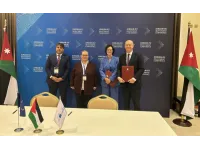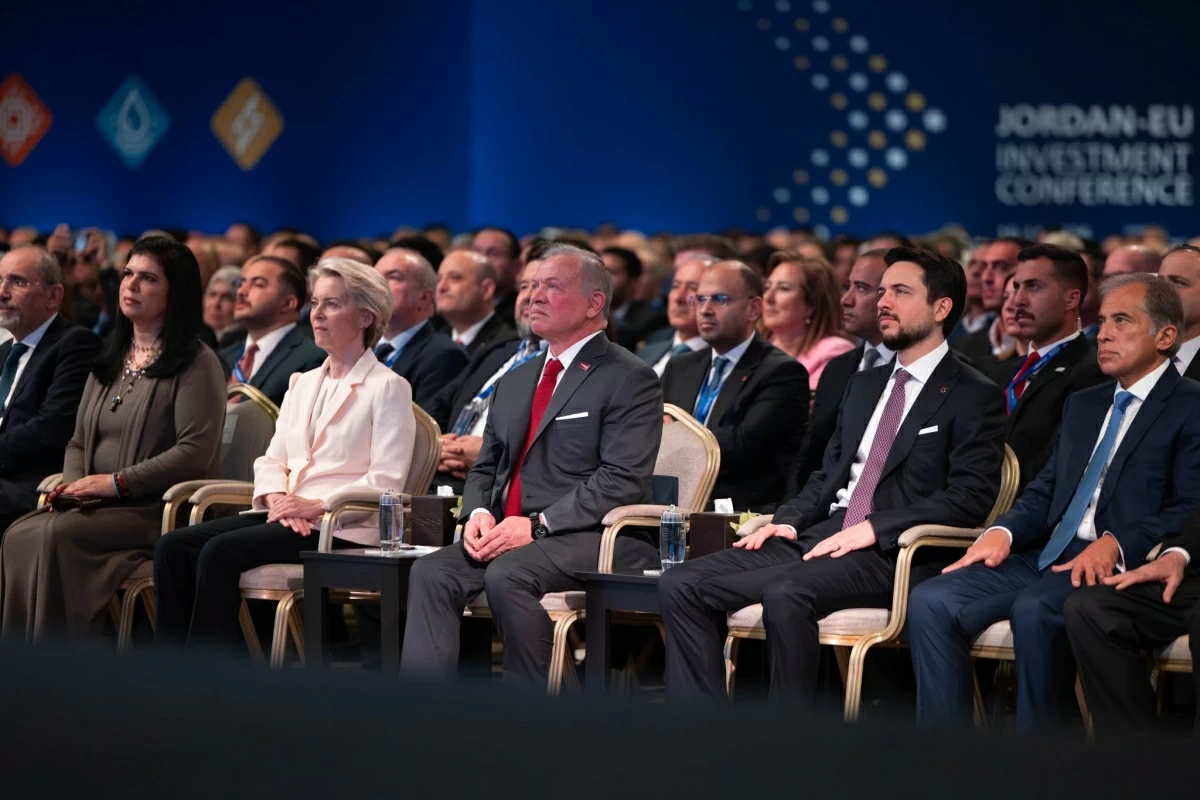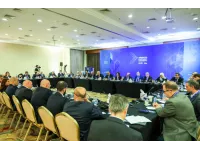

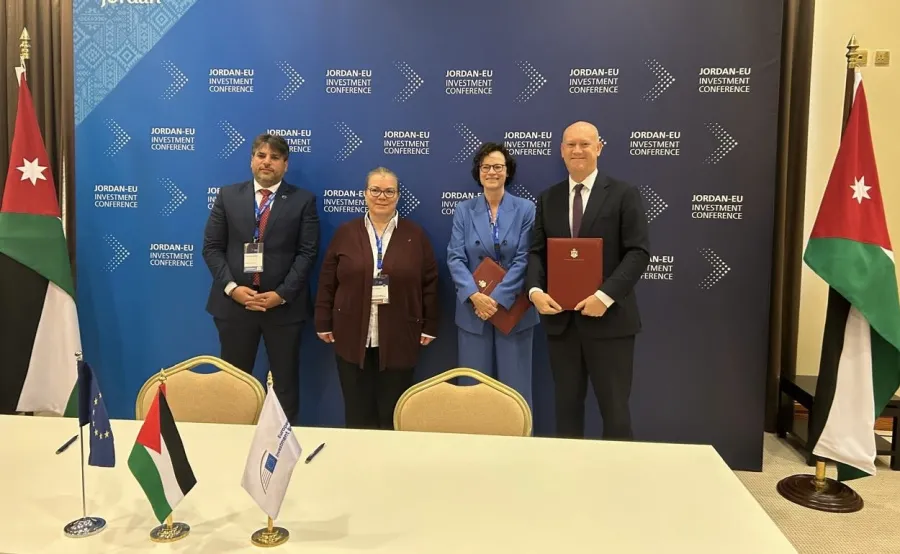
Jordan Daily - The European Union and the European Investment Bank (EIB) announce a €7.5 million grant to help Jordanian businesses invest in greener production, and innovation and digital technologies. The Green and Digital Transition Facility was marked with a ceremonial; signing at the EU–Jordan Investment Conference by EIB Vice-President Gelsomina Vigliotti’s and EU Commissioner for the Mediterranean Dubravka Šuica’s, in the presence of the Minister of Planning and International Cooperation, Zeina Toukan.
Developed jointly by the EIB and the Delegation of the European Union to Jordan, the facility will combine €6.5 million in investment incentives and €1 million in technical assistance with financing through local banks. It is expected to support €65 million in EIB lending and a matching €65 million from participating Jordanian banks, helping micro, small and medium-sized enterprises and mid-caps undertake around 180 investments. It will draw on the EU’s country allocation for Jordan through the Neighbourhood Investment Platform (NIP).
The facility addresses barriers that can prevent businesses from investing in more efficient equipment and new technologies, including high upfront costs, limited collateral and insufficient technical capacity. Eligible investments will include renewable energy, energy and water efficiency, climate resilience and the circular economy, alongside innovation and business digitalisation. Technical assistance will help participating banks identify and assess eligible investments and develop their lending products. Independent consultants will verify investment eligibility, expenditure and completion before incentives are released through the banks and passed on in full to beneficiary businesses.
“Investing in greener production and digital technologies can help Jordanian businesses reduce costs, improve productivity and compete in new markets. Working with our banking partners, we want to make these investments more accessible to smaller businesses. This facility will help them turn their plans into practical improvements that strengthen their competitiveness and resilience,” said EIB Vice-President Gelsomina Vigliotti.
The initiative builds on the EIB’s Green Transition Facility model, piloted through a portfolio guarantee signed with Jordan Kuwait Bank in September 2025. The proposed EU funding will allow the EIB to extend this approach to additional banking partners and expand its scope to include innovation and digitalisation. It will complement EIB lending, with or without European Fund for Sustainable Development Plus (EFSD+) guarantees, as well as portfolio guarantees backed by EFSD+.
“Jordan is a strategic partner for the European Union, and private investment and jobs are at the heart of our partnership. Through Global Gateway and the Pact for the Mediterranean, a €7.5 million EU grant is expected to mobilise €130 million in lending from the EIB and participating Jordanian banks. This will help Jordanian businesses invest in cleaner, more efficient equipment and adopt digital technologies. We want these investments to help businesses compete, build stronger ties with European companies and create quality jobs, especially for young people,” said Commissioner for the Mediterranean Dubravka Šuica.
“Delivering Jordan’s Economic Modernisation Vision requires investment at the level of individual businesses. By combining investment incentives with lending through Jordanian banks, this facility will help smaller firms undertake projects that might otherwise remain beyond their reach. The EU grant adds value not only through the funding it provides, but through the additional investment it can unlock. This is a practical way to support the private sector’s contribution to Jordan’s economic transformation,” said Zeina Toukan, Minister of Planning and International Cooperation.
The facility will also be open to eligible investments that reduce emissions in sectors covered by the EU’s Carbon Border Adjustment Mechanism (CBAM), helping Jordanian producers strengthen their competitiveness in European markets. In line with discussions on sustainable transport at the conference, potential applications could include investment in electric buses by eligible private operators, subject to project eligibility and appraisal.
The facility supports Jordan’s Economic Modernisation Vision and green finance priorities, as well as shared EU–Jordan objectives for sustainable investment under Global Gateway. Where relevant, technical assistance could also raise businesses’ awareness of technologies and solutions offered by European suppliers, creating opportunities for commercial cooperation without prescribing the origin of equipment or services.