

By: Sanad El-Naser
Jordan Daily - In my previous article, “Jordan’s Quiet Economic Transformation: How Stability Is Attracting Billions in Investment,” I argued that Jordan’s stability is not only a political achievement, but also an economic asset. This article builds on that argument by shifting from national stability to green finance.
A renewable energy project, a sustainable infrastructure plan, or a climate adaptation programme may have clear environmental and social value. Yet for banks and investors, this is not always enough. Before capital moves, a project has to appear credible, measurable, repayable, and bankable.
This is one of the hidden challenges of green finance. The issue is not only how to finance the green transition, but how climate and development needs are translated into opportunities that financial institutions are willing to support.
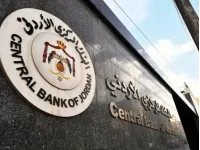
Jordan provides a useful example of how this process is beginning to take shape. The Central Bank of Jordan’s Green Finance Strategy 2023–2028 aims to promote green finance across the financial sector and strengthen the sector’s ability to manage climate-related financial risks. This matters because it places climate finance inside the logic of banking, regulation, risk management, and disclosure, rather than treating it only as a general environmental issue.
Local banks are also beginning to play this signalling role. Jordan Kuwait Bank issued Jordan’s first green bond, with the International Finance Corporation investing up to USD 50 million in the five-year bond. Jordan Ahli Bank later launched Jordan’s first locally issued sustainability bond, with the International Finance Corporation subscribing USD 50 million to support climate finance, small and medium-sized enterprises, women-owned and women-led businesses, and job creation. Capital Bank offers another important example, as the bank stated in its own sustainability reporting that it secured a USD 155 million subordinated green loan and implemented an environmental and social management system across its lending activities.
These examples matter not only because they mobilise capital, but because they create market signals. The Central Bank sets the direction, development finance institutions provide credibility, and local banks translate green priorities into financial products. Over time, this can change how the wider market understands green investment. A sector that once appeared uncertain can begin to look bankable, reportable, and investible.
This is where the concept of derisking becomes useful.
In simple terms, derisking refers to the process through which uncertainty is reduced, managed, or reshaped so that capital becomes more willing to invest. It is often discussed in relation to guarantees, blended finance, public support, regulatory reform, or development finance. These instruments matter because many green projects are socially and environmentally necessary, but not always immediately attractive to private investors.
However, derisking should not be understood only as a technical financial process. It is also a process of constructing confidence. In green finance, this distinction is important because climate-related investment often exists between urgency and uncertainty. Governments, firms, banks, and investors may recognise the importance of renewable energy, sustainable infrastructure, energy efficiency, climate adaptation, and green buildings. Yet recognition alone does not automatically lead to investment. For capital to move, these needs must be translated into financial terms such as risk, return, repayment, disclosure, regulation, and credibility.
In other words, the question is not only whether a project is environmentally important. The question is whether it is bankable.
Banks play a central role in this process. They are not simply institutions that provide finance after risk has already been calculated. They also help define what counts as credible, investible, and financially acceptable. Through lending decisions, green bonds, sustainability-linked loans, Environmental, Social, and Governance assessments, disclosure requirements, and partnerships with development finance institutions, banks shape the market’s understanding of where capital should go.
The idea of mimetic conventions helps explain this further. Although the term may sound theoretical, the logic behind it is simple. In uncertain markets, financial actors rarely make decisions in isolation. Banks and investors observe each other. They look at the behaviour of institutions they trust. If a respected bank, regulator, or development finance institution supports a green sector, this sends a signal that the sector is credible. Other actors may then follow, not because uncertainty has fully disappeared, but because confidence has become shared.
This is how many financial markets operate. Confidence is not built only through numbers. It is also built through reputation, imitation, and institutional trust. In green finance, these signals can be powerful. Once a major institution treats a green sector as investible, that sector may begin to appear less experimental and more mainstream.
This creates both opportunities and tensions. On one hand, derisking can mobilise capital for sectors that urgently need investment, especially in economies where public finance alone is not enough. On the other hand, the process of making projects investible can also narrow the meaning of green development. If banks and investors help define what is credible and bankable, then they also influence which projects receive attention. Projects that can be measured, reported, monetised, and financed may move faster, while socially necessary projects that are less financially attractive may struggle to receive the same level of support.
This raises important questions. Who defines what counts as green? Who decides which risks matter? Who absorbs those risks? Who benefits when a project becomes investible? And what happens to development priorities that do not easily fit into financial categories?
These questions matter because green finance is not purely technical. It is also political. Behind every green finance instrument is a set of decisions about value, credibility, risk, and priority. Banks, regulators, investors, and development finance institutions do not only finance the green transition. They help shape what kind of green transition becomes possible.
This is especially important for developing economies. Many face urgent climate and infrastructure needs while also operating with limited fiscal space, higher borrowing costs, and dependence on external finance. For them, derisking is not simply a tool to attract investment. It can become a condition for accessing capital in the first place.
The challenge, therefore, is to ensure that green finance does more than create attractive instruments for investors. Its success should not only be measured by how much capital is mobilised, but by whether it strengthens local firms, builds skills, improves institutions, supports resilience, and creates real economic capability.
Green finance should not only ask: how do we attract capital?
It should also ask: what kind of economy are we building with that capital?
Derisking helps explain how uncertainty is reduced and how investment becomes possible. But it also reminds us that risk is not simply discovered. It is defined, interpreted, and shaped by institutions. The future will not only be financed by those with the best projects, but by those able to make their projects appear credible, measurable, and bankable.
That is why understanding green finance requires looking beyond capital itself. It requires looking at confidence, conventions, and the institutions that turn uncertainty into investment.
By Sanad El-Naser Project Coordinator at Tetra tech/MA Global Political Economy (KCL)