
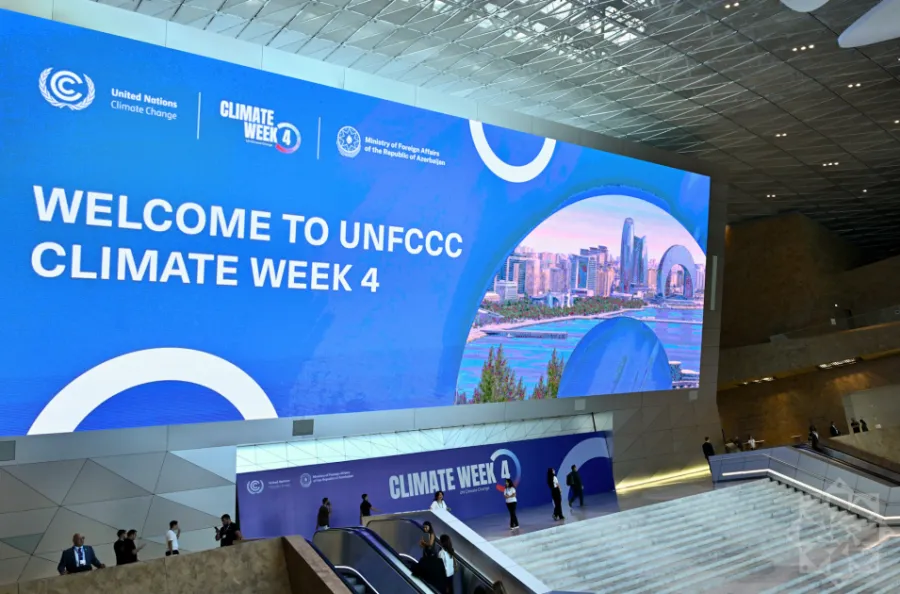
Jordan Daily - Baku Climate Action Week 2026 (BCAW), one of the region’s leading climate and sustainability platforms, has officially commenced in Azerbaijan’s capital, bringing together governments, businesses, investors, international organizations, academia, civil society and youth representatives to accelerate practical climate solutions and strengthen international cooperation.
Held with SOCAR Green as the main partner, this year’s edition marks a significant milestone as BCAW is being organized for the first time alongside the United Nations Framework Convention on Climate Change (UNFCCC) Climate Week, reinforcing Baku’s growing role as a global center for climate diplomacy and sustainable development.
Focus on Energy Transition
The opening day of the event centered on key issues shaping the global energy and climate agenda, including the transition from COP29 to COP31, climate finance, industrial decarbonization, methane emissions reduction, carbon markets and regional energy cooperation.
High-level representatives from the Azerbaijani government, the presidencies of COP29, COP30 and COP31, the UNFCCC, the International Renewable Energy Agency (IRENA), and other international institutions participated in discussions aimed at transforming climate commitments into concrete action.
Particular attention was given to innovation and digital technologies in the green energy sector, renewable energy certificates, and strategies for mobilizing investment to accelerate the transition toward low-carbon economies.
Participants also explored Azerbaijan’s expanding role in regional green energy value chains, including opportunities related to renewable electricity exports and the development of a future green hydrogen industry.
Building Momentum from COP29 to COP31
Mukhtar Babayev, Representative of the President of the Republic of Azerbaijan on Climate Issues and President of COP29, emphasized the importance of maintaining momentum following COP29.
“Hosting Baku Climate Action Week for the third consecutive year is particularly meaningful for us. Our priority is to build momentum for climate action, translate dialogue into concrete action, and foster new partnerships,” he said.
According to Babayev, the simultaneous organization of the UNFCCC Climate Week in Baku provides an important opportunity to advance international negotiations, strengthen cooperation among stakeholders and generate tangible outcomes ahead of COP31.
Nigar Arpadarai, Climate Change High-Level Champion for COP29 and Project Lead of BCAW, highlighted the event’s growing international profile.
“Baku Climate Action Week has established itself among the leading global climate weeks hosted by cities such as London, New York and Rio,” she noted, stressing that Azerbaijan continues to play an important role in the international climate agenda beyond COP29.
Energy, Innovation and Regional Cooperation
A series of flagship roundtables examined the role of electrification in the energy transition, energy efficiency in buildings, digital solutions for sustainable infrastructure and methane emissions reduction across the Caspian region.
Experts emphasized that achieving global climate goals will require closer cooperation among governments, financial institutions, businesses and technology providers. Discussions also underscored the importance of expanding renewable energy deployment, modernizing electricity networks and leveraging digital technologies to improve energy efficiency.
The event highlighted the growing significance of regional energy connectivity projects, which can support both energy security and decarbonization efforts across the wider region.
Artificial Intelligence and Climate-Resilient Development
Beyond energy, BCAW 2026 also showcased how emerging technologies can contribute to climate resilience. A dedicated session on digital transformation and artificial intelligence in agriculture presented innovative approaches to climate adaptation, including Azerbaijan’s AI-based Farmer Scoring System developed in cooperation with the Food and Agriculture Organization of the United Nations (FAO).
Speakers discussed how artificial intelligence and data-driven decision-making can help strengthen agricultural resilience, improve water management and support sustainable food systems in the face of climate change.
Expanding Scale and Ambition
Baku Climate Action Week continues to expand in both scale and influence. Following the success of the 2025 edition, which featured 46 events across more than 30 thematic areas, BCAW 2026 includes 15 flagship roundtables and a broad range of partner-led events.
Several of these discussions are being organized in cooperation with the UNFCCC’s Fourth Climate Week Implementation Forum, helping bridge the gap between international climate commitments and real-world implementation.
Running through September 11, BCAW 2026 serves as an important platform for advancing partnerships, attracting investment and accelerating the global transition toward a more sustainable and climate-resilient future. As the international community looks ahead to COP31 in Türkiye, Baku is once again positioning itself at the center of global discussions on energy transformation and climate action.