
Jordan Daily - More than 200,000 people have been displaced by a recent escalation in fighting in Yemen, with humanitarian needs mounting as clashes along the western coast disrupt access to healthcare and threaten to worsen outbreaks of disease, Doctors Without Borders (MSF) said.
Ansar Allah forces launched a rapid military operation along Yemen's western coast in September, capturing strategic areas including the city of Mocha and the Bab al-Mandab Strait. The advance reached areas near Taiz, Yemen's third-largest city, disrupting roads and access to the south.
The internationally recognised government, based in Aden and backed by Saudi Arabia, announced a counter-offensive on Oct. 5, with fighting reported along fronts towards Bab al-Mandab and Dhubab. Territorial control remains unclear, MSF said.
The escalation is adding to a protracted humanitarian crisis in which more than 22 million people across Yemen need urgent assistance and around 5.2 million are displaced, according to figures cited by MSF from the United Nations and the U.N. refugee agency.
Displaced families have undertaken long journeys, often on foot through desert areas in high temperatures and with limited access to food and shelter. Many have sought refuge in Lahj governorate and on the outskirts of Aden, settling in informal locations including schools and mosques.
The lack of clean water and sanitation in these overcrowded settings is increasing the risk of waterborne diseases such as cholera, MSF said. Malnutrition, measles and acute watery diarrhoea are also among the major health concerns.
Food insecurity and lost livelihoods are contributing to rising malnutrition, while insecurity and damaged or overstretched health services are making medical care harder to access.
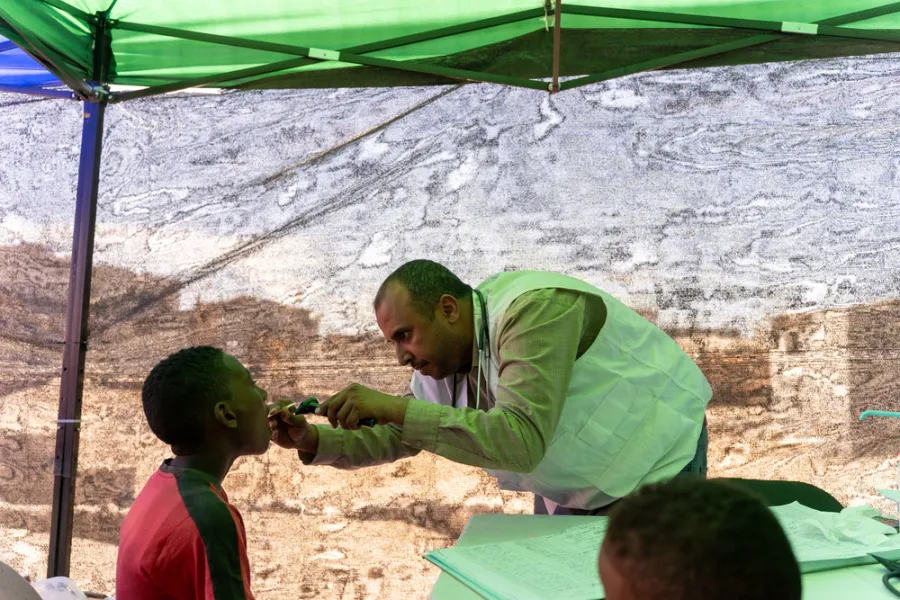
Women and children account for about 70% of patients treated by MSF mobile clinics in camps across Lahj and Aden, the organisation said. Patients have presented with skin infections, fever and diarrhoea, as well as foot injuries and eye and ear infections linked to long journeys.
MSF continues to support paediatric and maternity services at Mocha General Hospital, where its teams received 567 patients in the emergency department between Sept. 10 and Oct. 6 and assisted 45 deliveries.
At a primary healthcare centre supported by MSF in Khokha, north of Mocha, teams conducted 2,122 triage assessments over the same period, while a cholera treatment unit was reactivated. Mobile clinics in Aden and Lahj have provided 775 consultations since Sept. 15, and 20 children were diagnosed with severe acute malnutrition.
MSF has also supplied medical kits to healthcare facilities and supported trauma services in Aden and hospitals in Taiz.
The organisation called for an urgent expansion of humanitarian assistance, including food, clean water, sanitation, shelter and essential supplies, as well as improved access to healthcare.
Civilians and medical facilities must be protected at all times, MSF said, as the conflict continues to place additional pressure on Yemen's already fragile health system.