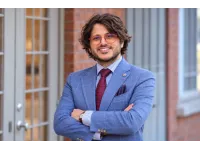

Dr. Ahmad “Jordan” Al-Zu'Bi
Jordan Daily - The martyrs of Hmoud are mourned by the whole nation. The response reveals the strength of Jordan’s people and the costs of the principles King Abdullah II defends.
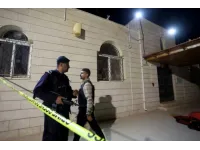
The terrorist massacre of mourners at a church in Hamoud, in Jordan’s Karak governorate, has brought the country into mourning and prompted a forceful response from King Abdullah II. Visiting the wounded in military uniform, the King promised accountability; survivors and relatives described a wound shared by all Jordanians, while the government declared three days of national mourning. An unprecedented attack on Christian mourners was understood across Jordan as an assault on the entire nation.
The murderers took Jordanian lives, but Jordanians have refused to turn against one another. That matters politically, because terrorism seeks influence through the fear and hostility it creates beyond the immediate crime.
Speaking to a survivor, King Abdullah II expressed his determination in words every Jordanian understood, "رح نورجيهم", meaning "We will show them."
King Abdullah II’s Answer to Terror
King Abdullah II’s response extended beyond a promise of severe punishment. He ordered accountability for anyone supporting or justifying the atrocity, a comprehensive security assessment and a review of policies against extremist ideology. He also called for public updates on the investigation and action against rumors that could spread fear and discord.
These orders address several parts of the same problem: the perpetrators, any support they receive, the ideas encouraging violence and the misinformation that can magnify its effects.
The economics of crime examines the conditions that make an offence possible or rewarding. Punishment matters, but so do access to assistance, opportunities to organize and expectations of public approval. Targeting those conditions makes the response broader than the pursuit of the gunmen alone.
The King’s military uniform reinforced his determination as commander-in-chief. His orders sought to confront the crime and prevent others from turning it into a source of influence. Jordanians’ solidarity has denied the murderers the division that would give their violence a wider political reward.
The Country Behind the Condolences
In Jordanian culture,الفقيدة وحدة expresses the understanding that a death is a loss shared by everyone. People offer condolences because the bereaved family belongs to a wider circle that shares responsibility for its grief.
That circle shares happiness too. Christians and Muslims celebrate weddings, engagements and graduations together, visit one another and stand beside one another through illness and death. We share our lives in joy and sorrow.
“Coexistence” may be familiar language in New York and other diverse societies, but it does not describe the full relationship in Jordan. Internationally, the word describes people of different backgrounds living together; it does not capture the depth of our belonging. Christians and Muslims are Jordanians alike; Christian families have shaped the country’s past and present, and are building its future.
Many readers encountering Hamoud through this atrocity will know little of its contribution to Jordan. Its Halasa community includes figures such as Odeh Qussous and physician Hanna Qussous, alongside generations of public servants and professionals. Its wider history connects Jordan and Palestine through Teresa Halaseh.
Among the martyrs were Dr. Muhammad al-Qussous, known as “طبيب الفقراء”, the doctor of the poor, and Dr. Fadi Asim Hani Halaseh, who graduated in dentistry from Alexandria University this year. One had spent decades treating patients; the other was beginning his professional life.
The obligations connecting neighbors, families and colleagues are what economists call social capital. Their value becomes visible when people share responsibilities that a bereaved household would otherwise carry alone. Jordan’s solidarity rests on relationships through which people share happiness, carry burdens and withstand shocks.
Trust Has an Economic Life
When I was a little boy growing up in Jerash, I used to visit the Monastery of the Virgin Mary in Dibbeen, in Jerash governorate, several times a week, curious about Christianity. Father Khaled Qaqish and others welcomed my questions and showed me around. When I returned after years in the United States, they remembered me.
American friends hosted by my family later travelled around Jordan and remarked on its hospitality, safety and relationships between people. They were discovering something familiar to those who grew up there.
Those experiences have economic value. Tourism and investment depend partly on confidence that everyday life remains safe and institutions remain dependable.
Terrorism tries to spread uncertainty beyond its immediate victims. If visitors cancel trips or businesses delay investment, the consequences reach workers and households far from the crime. Fear becomes costly through the decisions it changes.
Jordanians have already contained one danger: the spread of religious division. Their united response demonstrates a society capable of absorbing a shock without surrendering its identity. That resilience matters to anyone assessing Jordan’s safety and stability.
Christian Voices Challenge Israel’s Narrative
Earlier this year, Tucker Carlson visited Jordan and brought Christian voices from Jordan and the Holy Land to an international audience. His interviews challenged Israel’s fake narratives and fake propaganda portraying Christian security as dependent on Israel’s protection and Muslim societies as inherently hostile to Christians. Viewers heard Christians describe Jordan through their own experience of safety, citizenship and deeply rooted belonging.
Saad Mouasher, chairman of Jordan Ahli Bank, described the deep roots of Christian life in Jordan. He said he had never personally experienced religious discrimination and explained that Islam formed part of his culture as a Jordanian Christian.
He identified three foundations: equal constitutional rights, stability and Hashemite leadership. Together, these allow Christians to build their lives as citizens of a country they have helped shape for generations.
Mouasher also drew attention to Hashemite care for Muslim and Christian holy sites in Jerusalem, including King Abdullah II’s personal support for restoration work. His account connected daily citizenship in Jordan with a wider commitment to Christianity in its homeland.
This creates a political problem for Israeli propaganda. A Jordanian Christian was describing security, rights and belonging in a Muslim-majority country, contradicting the claim that Christian safety requires separation from Muslim neighbors or alignment against them. Mouasher’s testimony showed how thoroughly Christian life belongs within Jordan’s national identity, institutions and history.
Archbishop Hosam Naoum supplied a Palestinian Christian perspective. Speaking at Jordan’s Baptism Site, he described feeling at home and free to be himself in Jordan. Contemporary reporting recorded millions of views for the interview across platforms.
The interviews carried experiences familiar in Jordan to an international audience exposed to very different stories about the region. Christians were challenging propaganda through their own testimony, on an international platform.
King Abdullah II and the Price of Standing Firm
At the UN in 2015, King Abdullah II described extremist gangs as outlaws of Islam, exposing their use of religion to pursue power over people, money and land. He warned that “Extremists rely on the apathy of moderates” and urged public opposition to intolerance.
His argument identified how suspicion can become an instrument of power. When violence makes neighbors distrust one another, cooperation weakens and intimidation gains influence. Jordanians’ response to Hamoud has frustrated that process.
In September 2026, the King challenged the Israeli government’s religious framing of the Palestinian conflict. He condemned forced displacement and impunity, defended Palestinian rights and reaffirmed Jordan’s commitment to Christian communities and Jerusalem’s holy sites.
He also confronted international inaction, arguing that governments possessed instruments of pressure but chose not to use them effectively.
In my Jordan Daily article, “King Abdullah’s economics of war and peace”, I examined how selective enforcement changes incentives and how postponing prevention allows risks to accumulate. Those arguments explain why repeated crisis management leaves countries exposed to further losses.
Jordan bears those pressures while defending longstanding domestic and international commitments. Protecting its people, opposing displacement and upholding Palestinian rights require security resources, humanitarian assistance and sustained diplomacy.
The benefits of regional stability spread across borders, while the costs fall unevenly. Jordan bears responsibilities arising from its geography and principles; other countries benefit when its efforts succeed.
Jordan’s principles have a price, and part of that price is borne by its people.
Could an effort to punish or weaken Jordan’s positions help explain the timing and choice of target? That possibility deserves investigation. The King’s blunt criticism and the international attention to Christian testimony make the context relevant; neither establishes who organized the massacre.
Investigators must establish the perpetrators’ preparation, financing and any assistance. Meanwhile, the national response is clear: the murderers have failed to divide Jordanians.
Terrorism can take lives without securing the wider political reward of dividing the society it attacks.
You Can Count on Jordan. You Can Count on Jordanians.
The King’s description of Jordan as "a country the world can count on" has a national foundation. Jordanians have demonstrated the awareness and solidarity that sustaining such a country requires.
They carry its reputation abroad through medicine, engineering, economics, education and other professions, from the United States and Europe to China and beyond. Christian Jordanians are part of that contribution, shaping the world’s understanding of their country.
Jordan exports knowledge and professional skill; its people earn confidence through how they work and live. That confidence is a national asset, sustained by their attachment to Jordan and support for its Hashemite leadership.
The world can count on Jordan because it can count on Jordanians.
May Allah have mercy on the martyrs, grant the wounded a full recovery, and bring comfort, peace and strength to the bereaved and to all Jordanians.
الفقيدة وحدة
Jordan cannot be divided by bullets.