By : News Editor
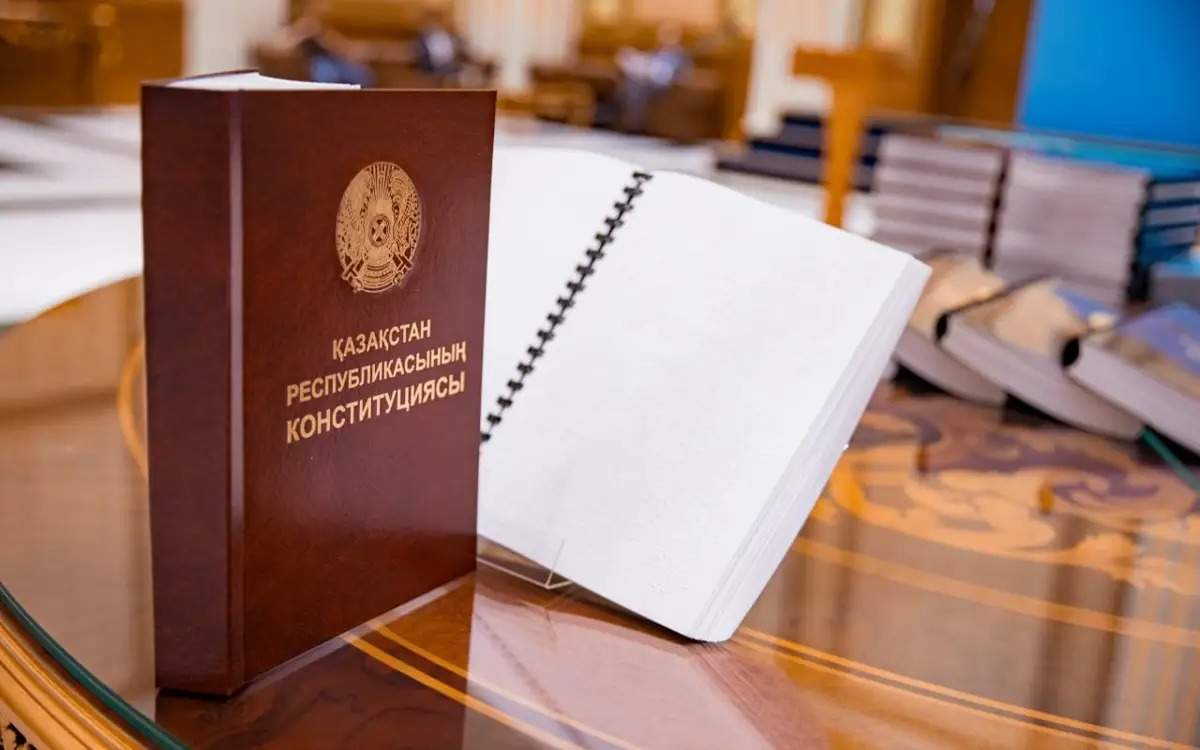
Jordan Daily - Kazakhstan’s Constitutional Court published a draft of a new Constitution on Jan. 31, marking the culmination of a wide-ranging constitutional reform process launched by President Kassym-Jomart Tokayev and setting the stage for a nationwide referendum.
The proposed Constitution represents a shift from incremental amendments to a comprehensive overhaul of the country’s political and governance framework, affecting more than 80% of the existing constitutional text.
The reform process was initiated following Tokayev’s address to the nation on Sept. 8, 2025, in which he proposed a transition to a unicameral parliament as part of a broader political reset. A working group formed in October 2025 reviewed more than 2,000 public submissions over six months, gathered through the e-Otinish and eGov digital platforms.
In January 2026, authorities established a Constitutional Commission of 130 members representing all regions and social groups, including lawmakers, legal experts, civil society representatives and members of the National Kurultai. The commission concluded that revisions to 77 articles - around 84% of the Constitution -warranted the drafting of an entirely new document.
Under the draft, Kazakhstan would adopt a unicameral parliament, known as the Kurultai, comprising 145 deputies elected through a proportional system for five-year terms. Parliamentary powers would be expanded, a move officials say is aimed at strengthening political parties and accountability.
The draft also introduces a new People’s Council of Kazakhstan, a nationwide consultative body granted the right of legislative initiative, and creates the post of vice president, who would represent the president in domestic and international socio-political, scientific and cultural affairs.
Legal safeguards are significantly strengthened in the proposed Constitution, including explicit constitutional protection for the legal profession, a ban on retroactive laws that worsen citizens’ legal position, reinforced presumption of innocence, prohibition of double jeopardy and the constitutional enshrinement of the “Miranda rule.”
Human rights and freedoms are elevated to the highest constitutional priority and, for the first time, are declared as such in the preamble. The draft also affirms Kazakhstan’s sovereignty, territorial integrity and unitary nature as immutable values, while recognising the people as the sole source of state power.
Education, science, culture and innovation are designated as long-term constitutional priorities, reflecting a shift toward human-centred development. Digital rights receive constitutional protection for the first time, while the secular nature of the state and education system is reaffirmed.
The draft defines marriage as a voluntary union between a man and a woman, a provision framed by authorities as protecting traditional values and women’s rights.
Public consultations on the draft are ongoing ahead of a nationwide referendum that will determine whether the new Constitution is adopted.