
Dr Fadi Maayah
Curtin University
Jordan Daily - Group C at the FIFA World Cup 2026 has quickly emerged as one of the tournament’s most compelling storylines, combining global pedigree, tactical contrast, and genuine unpredictability. Featuring Brazil, Morocco, Scotland, and Haiti, the group brings together four distinct football cultures in what promises to be a fascinating contest of style, substance, and ambition.
From the opening whistle on 13 June to the decisive final fixtures on 24 June, this group will not only shape qualification outcomes but also offer a deeper insight into how modern international football continues to evolve.
At the forefront stands Brazil, a nation synonymous with World Cup history and expectation. As five-time champions, the Seleção arrive once again as one of the favourites, yet this campaign feels different. Under Carlo Ancelotti, Brazil are embracing a more structured and balanced tactical identity, blending technical brilliance with positional discipline. No longer solely reliant on flair and individual expression, this Brazilian side seeks control, efficiency, and consistency—qualities essential for deep tournament success.
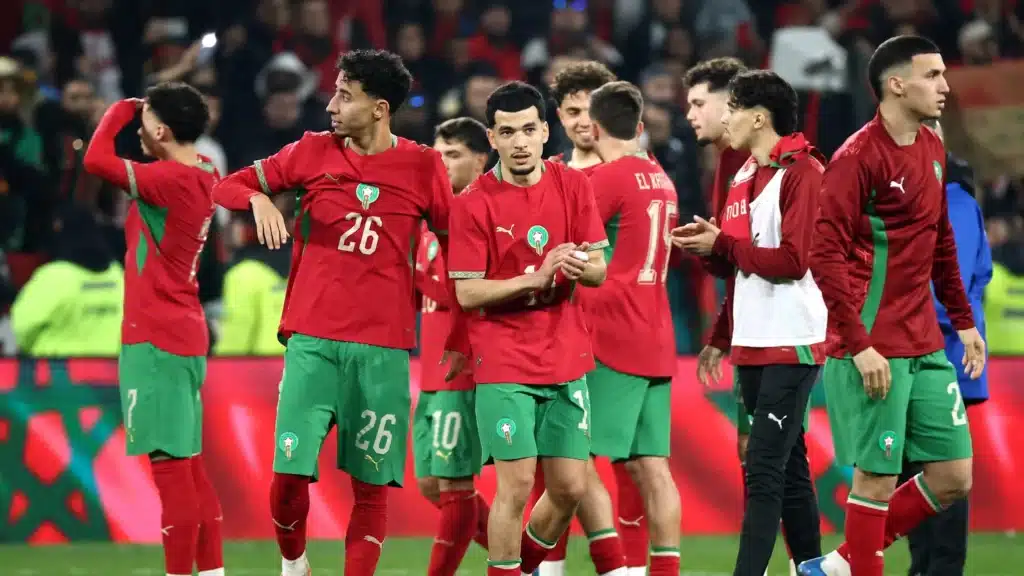
However, the road to Group C supremacy will not be straightforward. Morocco enters the competition with growing confidence following its historic semi-final run at the 2022 World Cup, a breakthrough that reshaped expectations for African teams on the global stage. The Atlas Lions are defined by defensive organisation, tactical intelligence, and rapid transitions. They are not a team that dominates possession, but rather one that punishes imbalance. Their ability to absorb pressure and strike decisively makes them a serious threat to Brazil’s ambitions for top spot.
Scotland’s return to the World Cup adds another layer of intrigue. Known for their physical resilience and structured approach, the Scots bring a competitive edge built on discipline, organisation, and set-piece strength. While they may lack the technical depth of Brazil or Morocco, Scotland possess the tactical clarity to frustrate opponents and turn tight matches in their favour. In a group where fine margins will be decisive, their ability to disrupt rhythm could prove critical.
Haiti, meanwhile, represent the spirit of opportunity. Qualifying for their first World Cup since 1974, they enter as underdogs but not without belief. Their approach is built on pace, directness, and attacking intent, qualities that can expose defensive vulnerabilities. While they may lack experience at this level, their unpredictability gives them the potential to influence the group in unexpected ways.
What truly sets Group C apart is the sharp contrast in tactical identities. Brazil are likely to dominate possession and dictate tempo through structured build-up play. Morocco will prioritise compactness, exploiting transitions with precision. Scotland’s emphasis on physical duels and set pieces introduces a different challenge, while Haiti’s high-tempo, transition-focused football brings an element of unpredictability. This diversity ensures that every match will be shaped not only by quality but by tactical adaptation.
The headline encounter between Brazil and Morocco looms large as a defining moment in the group. It is a clash of footballing philosophies: control versus containment, creativity versus discipline. The outcome of this fixture could determine not only first place but also momentum heading into the knockout stage.
Equally significant is the contest between Scotland and Haiti, a match that may decide who remains in contention for progression. In the expanded tournament format, where select third-placed teams can advance, every point and goal carries heightened importance.
Beyond the immediate battle for qualification, Group C reflects the broader transformation of the World Cup itself. The expansion to 48 teams has increased both opportunity and uncertainty, allowing emerging and returning nations to challenge established powers more effectively. Within this context, no team can rely solely on reputation; adaptability and execution will define success.
As the tournament unfolds, Group C promises more than just results. It offers narrative tension, tactical education, and moments that capture the essence of international football. Whether it is Brazil’s pursuit of renewed dominance, Morocco’s continuation of a remarkable rise, Scotland’s disciplined return, or Haiti’s quest for a breakthrough, this group stands as a microcosm of the modern game—diverse, competitive, and impossible to predict.