
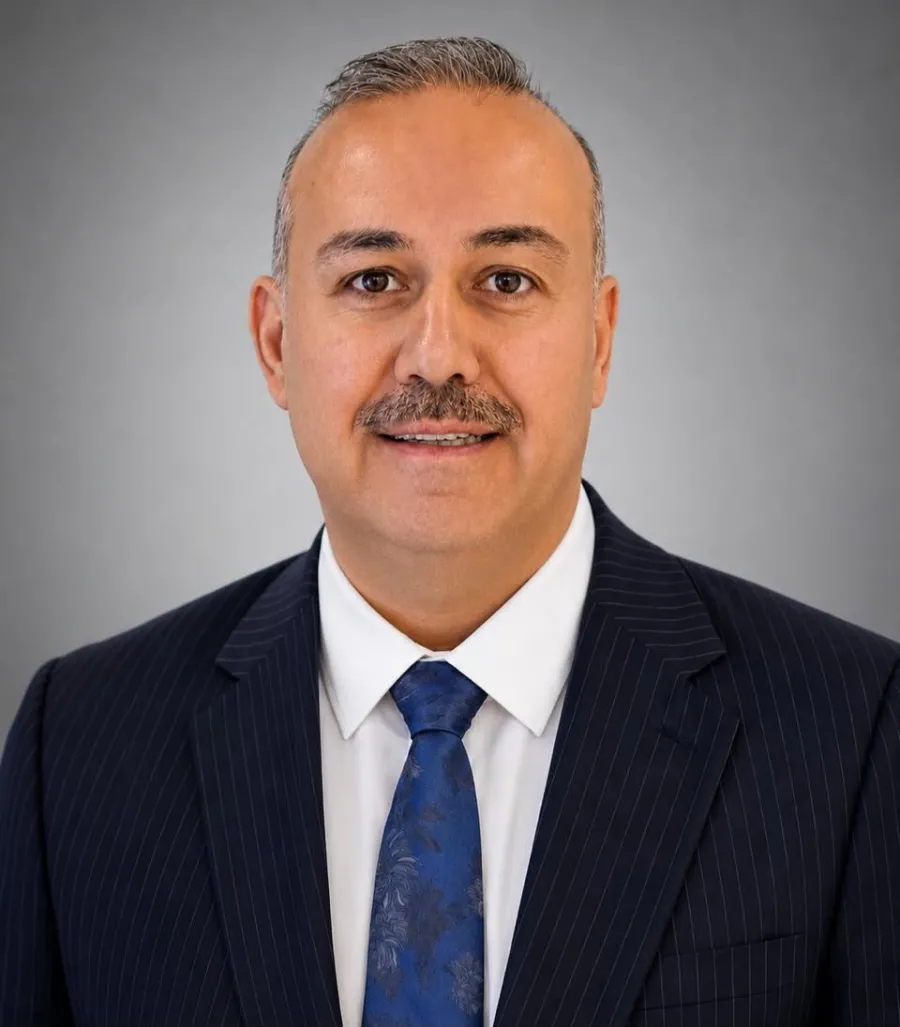
By Faris Al Hadidi
Economist and banker
Jordan Daily -The transition of leadership at the United States Federal Reserve comes at a delicate moment for the global economy. Inflation has eased from its post pandemic highs, but it has not disappeared. Geopolitical tensions continue to shadow the outlook for growth, while financial markets remain uncertain about the future path of interest rates, even though it expects unchanged in the Fed’s next week meeting. Against this backdrop, the arrival of a new Federal Reserve chair carries implications far beyond the United States.
Few institutions have as much influence on the global economy as the Federal Reserve. Its decisions affect borrowing costs, capital flows, exchange rates, and investment sentiment across both advanced and developing economies. For countries such as Jordan, where external financing conditions matter significantly, shifts in US monetary policy are never simply an American internal action.
The appointment of Kevin Warsh has attracted considerable attention among economists and investors alike. A former Fed governor with extensive experience in financial markets, Warsh assumes leadership at a time when the central bank faces a difficult balancing act: keeping inflation under control without unnecessarily weakening economic growth.
Jerome Powell's term was shaped by extraordinary circumstances. During the COVID-19 pandemic, the Federal Reserve responded with unprecedented measures to stabilize financial markets and support economic activity. Interest rates were cut to near zero, and liquidity was injected into the system on a massive scale. Those actions helped prevent a deeper economic crisis, but they also became part of a broader debate about whether policymakers reacted too slowly when inflation began to accelerate.
Reasonable observers continue to disagree about Powell's record. Critics argue that the Feds underestimated the continuity of inflation and accommodated policies for too long. Supporters counter that the central bank ultimately managed to bring inflation down while avoiding a severe recession. What is difficult to dispute, however, is that Powell guided the institution through one of the most challenging periods in modern economic history while largely preserving its credibility.
The question now is not whether Warsh will immediately overturn Powell's policies. The more important question is whether he will alter the Federal Reserve's priorities and communication strategy in ways that gradually reshape market expectations.
If Warsh's previous public comments are any indication, investors should not expect a rapid shift toward easier monetary policy. He has repeatedly expressed concerns about the long-term consequences of excessive liquidity and has been critical of some aspects of the post-pandemic policy response. This suggests a stronger preference for monetary discipline and a greater willingness to tolerate slower growth, if necessary, to secure lasting price stability.
That distinction matters. Financial markets often focus on individual interest-rate decisions, but central-bank credibility is built over years rather than months. If investors conclude that the new Fed leadership is determined to prevent a resurgence of inflation, expectations throughout the economy from bond markets to corporate investment decisions could adjust accordingly.
At the same time, it would be a mistake to overstate the impact of any single leadership change. The Federal Reserve remains a highly institutional organization where major policy decisions are made collectively through the Federal Open Market Committee. Continuity is built into the system, which makes dramatic policy reversals relatively uncommon.
Political considerations will nevertheless remain part of the conversation. The relationship between former President Donald Trump and Jerome Powell was often strained, particularly over interest-rate policy. Trump consistently favored lower rates to stimulate economic growth, while Powell defended the principle of central bank independence. Given Warsh's connections within Republican economic circles, questions about the Fed's future relationship with political leaders are likely to persist.
Yet independence remains one of the Federal Reserve's most valuable assets. Markets can tolerate policy mistakes; they are far less tolerant of the perception that monetary decisions are being driven by political calculations. Maintaining confidence in the institution's autonomy will therefore be as important as any interest-rate decision made in the coming years.
For emerging economies, the stakes are particularly high. Higher US interest rates generally strengthen the dollar, increase borrowing costs, and place pressure on countries that rely heavily on external financing. Across the Middle East and other developing regions, tighter monetary conditions in the United States can influence investment flows, liquidity conditions, and economic growth prospects.
In many respects, the debate surrounding Warsh's appointment is not simply about the next interest rate move. It is about the broader direction of monetary policy in a world that remains vulnerable to inflation shocks, geopolitical uncertainty, and rising public debt. The choices made by the Federal Reserve over the next several years will help shape global financial conditions well beyond American borders.
Ultimately, the challenge facing the new Fed chair is straightforward in theory but difficult in practice: preserving confidence in the institution while navigating an increasingly complex economic landscape. Whether Kevin Warsh succeeds will not be measured solely by inflation or growth figures. It will be measured by whether markets, businesses, and households continue to trust the Federal Reserve's ability to provide stability in an uncertain world.