
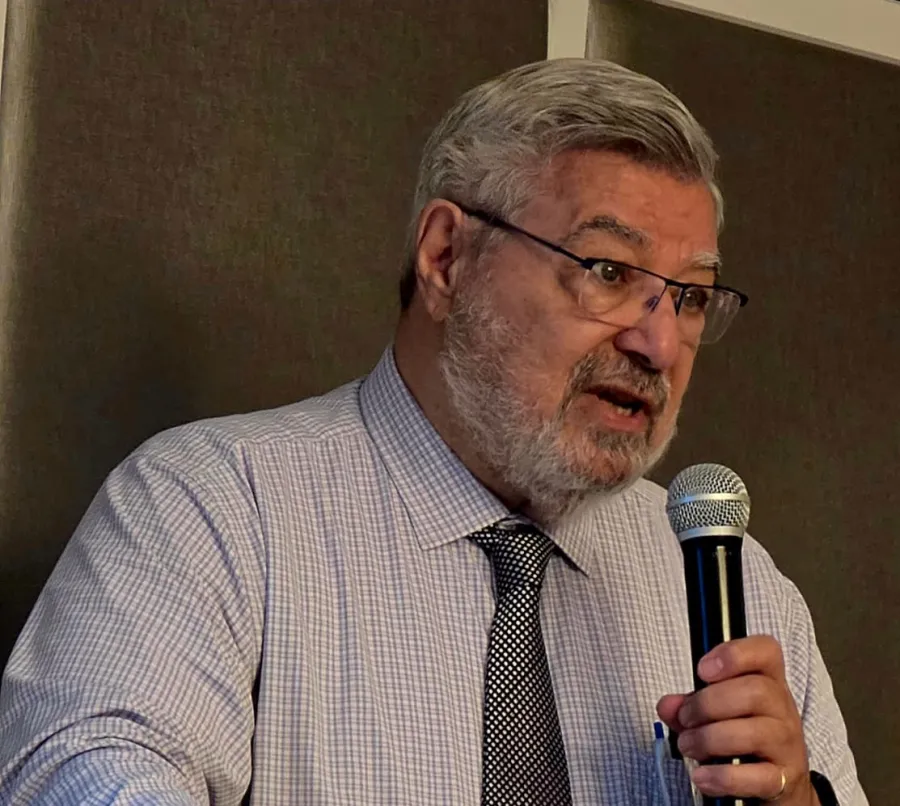
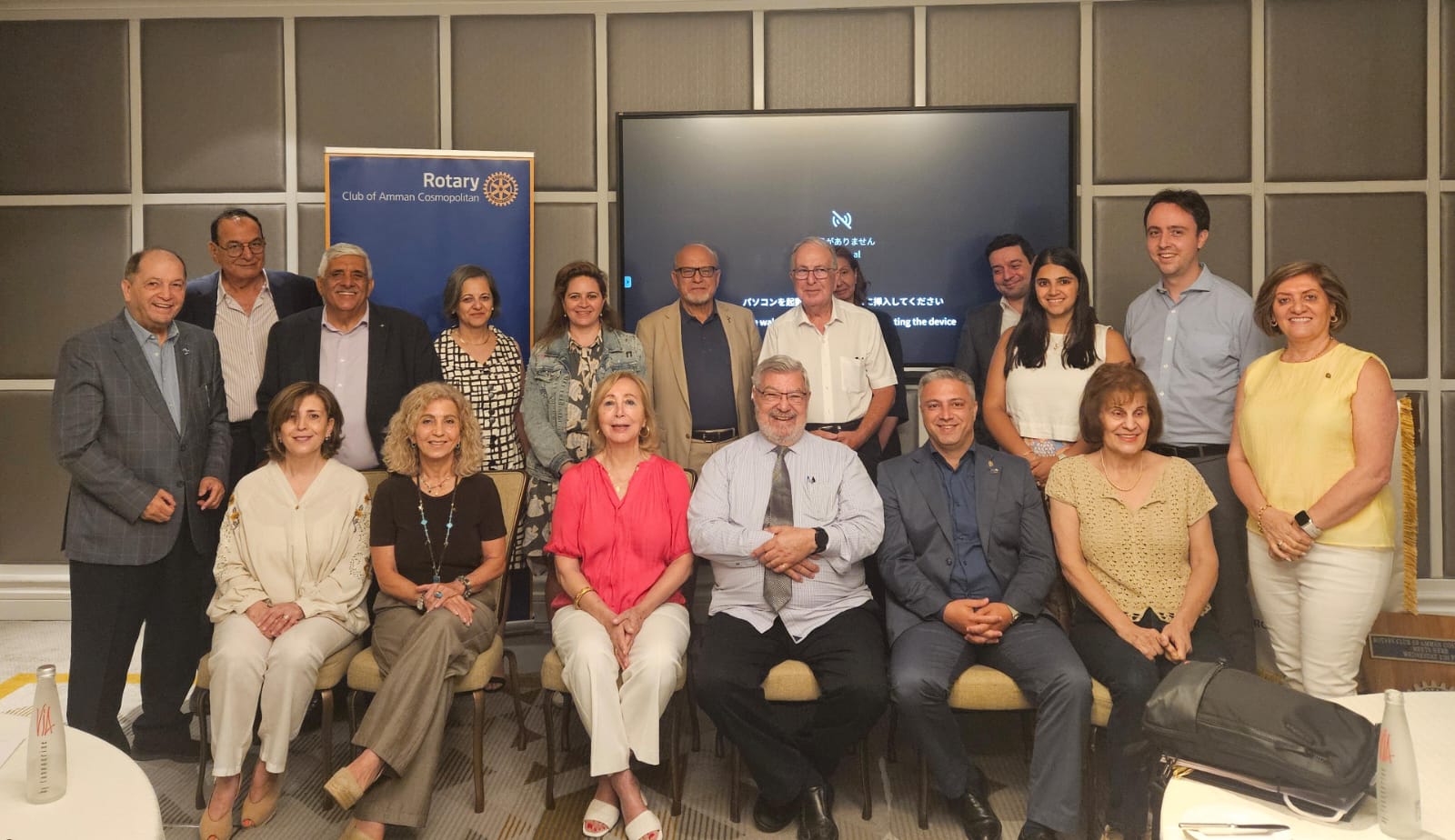
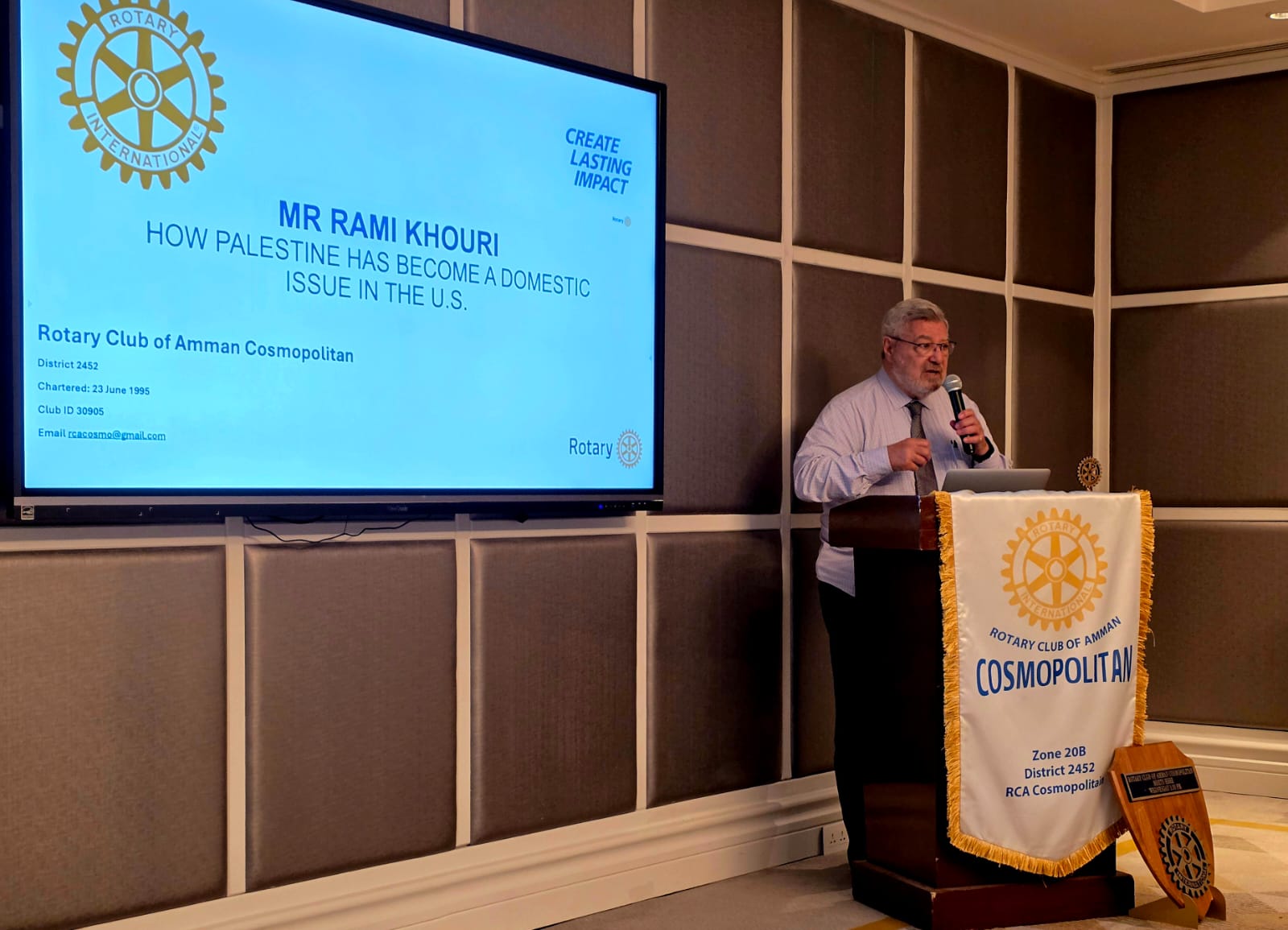
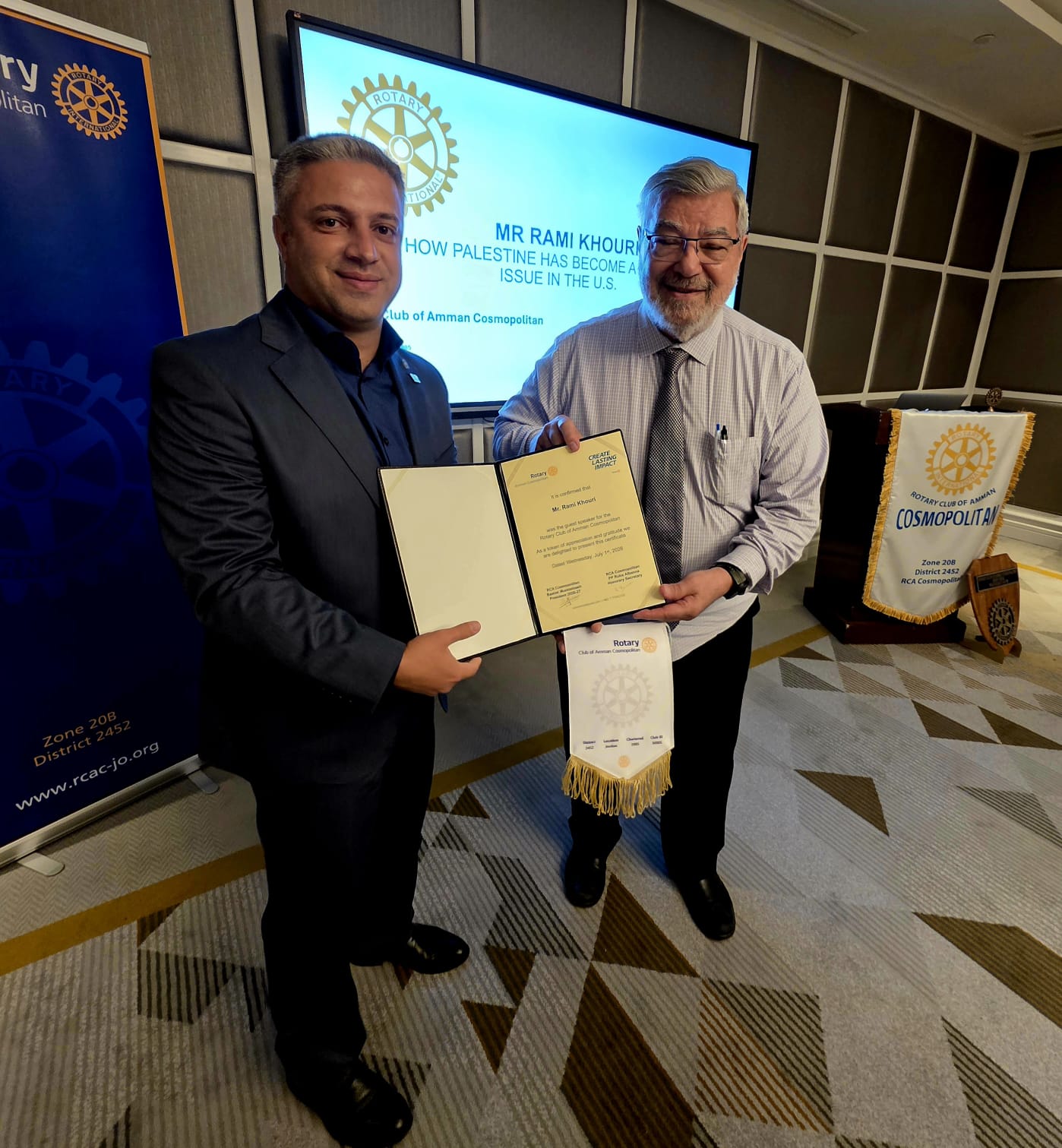
Jordan Daily - The just case of Palestine is entering a new phase in U.S. politics, journalist and author Rami G. Khouri told Rotarians in Amman. Speaking at the Cosmopolitan Amman Rotary on Wednesday, July 1 at the Four Seasons Hotel, Khouri argued that Palestine has become a "domestic American political and electoral issue" for the first time in the century-long Palestine-Zionism conflict.
Khouri said the United States—and the world—are in the midst of a sweeping historical transformation across political, economic, and ideological lines. But he reserved his sharpest focus for a development he described as unprecedented: the emergence of Palestine as a central concern in American electoral politics, not merely as a foreign-policy talking point. "For the first time in my 60 years of journalism... I see Palestine as a domestic American political issue," Khouri said.
Returning to Jordan from the USA with the goal of finalizing a book about Jordan's 200 main antiquities sites, Khouri linked the change to the political shockwaves unleashed by Israel's genocidal war on Gaza, but he argued the Gaza crisis did not create the shift alone. Instead, he described a longer domestic trajectory inside the United States—including Arab-American activism, voter-registration drives, coalition-building, media evolution, and demographic change—that set the stage for today's new political reality.
The 77-year-old Khouri said the current acceleration is best understood and explained by age—a younger generation that he described as unwilling to accept complicity in genocide. "This is a movement mostly propelled by people under the age of 45," he said. "These are younger people who simply will not accept to be accomplices in an Israeli genocide." He argued that early activism on campuses has evolved into a more durable political organizing effort that will likely shift from media attention to electoral machinery—candidates, campaigns, and city-, county-, and state-level influence. "It's going to be less of a media issue and more of an institutional political organizing issue," Khouri said.
The American Palestinian-Jordanian author noted how recent U.S. primary elections have produced a surge of challengers—many of them younger and representing diverse backgrounds—who compete against established party figures by emphasizing household concerns such as healthcare and living costs. Yet, he said, these candidates share two explicit stances that differentiate them from traditional party politics.
First, Khouri said many candidates refuse to accept U.S. complicity in what he called Israel's "genocide" in Gaza. "They do not accept that the United States is part of the genocide that Israel carried out in Gaza and may repeat in other forms of savagery in Lebanon and elsewhere," he said.
Second, he said they openly disparage Israel's actions and demand changes to American military support. "They openly criticize Israel's savagery, and they call for stopping or pausing arms sales," Khouri said. Khouri also highlighted what he described as a growing rejection of influence from pro-Israel political funding networks, particularly AIPAC, which he characterized as a key conduit for Israel-related support in Congress. "They don't want to accept money from Zionist or pro-Israel funding sources like AIPAC," Khouri said.
He called the willingness to challenge the establishment, publicly and electorally, "huge," adding that it accelerated after Gaza to demand arms embargoes on Israel, but was built on earlier momentum. Khouri traced the roots of this political shift to 1968, when, he said, presidential candidate Jesse Jackson launched efforts that included major voter registration drives.
According to Khouri, this brought Arab Americans and other communities more firmly into the U.S. political system, largely at the grassroots level. "It started a movement to bring together Arab Americans, Muslim Americans, African-Americans, Hispanic Americans, and others who traditionally were marginal in US policy-making" Khouri said. He argued that over time these communities increasingly formed coalitions, enabling political influence to develop beyond local and state offices and into higher levels, especially as they adapted to shifting political pressures. "After 911... Arab-Americans realized they have to be part of the political system," Khouri said. Khouri said that Arab Americans had historically tended to stay "low-key," focusing on starting new lives and building livelihoods, but that this changed after 9/11 as they faced rising suspicion and stereotyping.
He pointed to the Kamala Harris candidacy as a critical turning point, describing the "uncommitted movement" in swing states as a tactic for pressuring candidates to adopt explicit positions on Gaza and Palestinian rights. "They called themselves the uncommitted movement," Khouri said. They stated that we're not going to commit "to vote for Democrats or Republicans until... you state publicly that you're going to stop being part of the genocide."
The failure of Kamal Harris to be elected was described as in large part a result of the Democratic nominee ignoring the Palestinian issue. Khouri asserted that Harris failed to take the step the uncommitted movement demanded, describing a profound moral vacuum in her response. "She chickened out," he said, adding: "She has no moral sense of commitment beyond her electoral interests, donors, and supporters."
Khouri also argued that pro-Israel lobbying efforts to suppress debate have not succeeded in the face of declining trust in mainstream media and the rise of alternative information sources.
He described attempts to constrain academic and public discussion on Palestine as a way of trying to make the issue "invisible." He said that "they wanted it to be like the invisible Palestinians in the Balfour declaration," he said. But he insisted those efforts are failing, after succeeding for half a century. "It doesn't work anymore," Khouri said, because the Gaza genocide revealed Zionism's true face, which also is visible in Iran and Lebanon.
As Khouri concluded, he framed Palestine as part of a broader global wave of moral and political movements, describing it as among the most vibrant right now. "Palestine... has become one of the four global movements of moral conscience and political struggle for rights," he said, naming the other three as civil rights, gender equality, and global environmental justice.
He said we cannot know whether the shift towards Palestine's political prominence in the U.S. is irreversible, but described it as clearly "unprecedented," suggesting it will continue to reshape American politics as younger voters and organized communities exert pressure through elections, media activism, legal challenges, and other means