
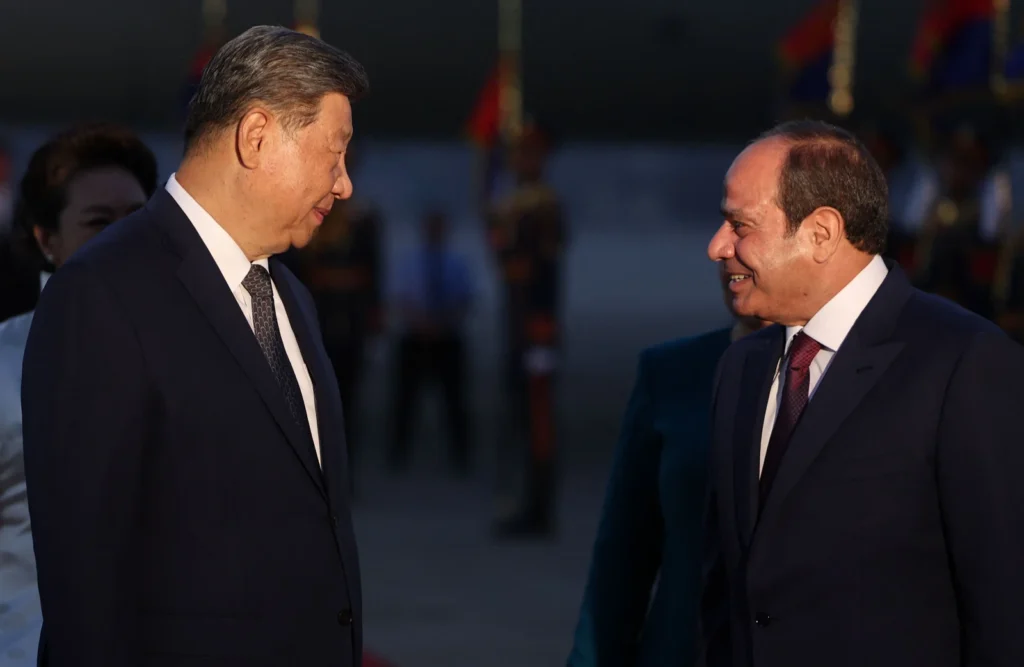
AFP- Chinese President Xi Jinping told his Egyptian counterpart on Wednesday that “external interference” in the Middle East should be opposed, Beijing’s state media reported, following talks in Cairo between the two leaders.
“We must uphold the principle that the people of the Middle East are the masters of their own affairs, oppose external interference (and) support regional countries in strengthening dialogue on peace and security,” Xi told Egyptian President Abdel Fattah El-Sisi, according to Chinese state news agency Xinhua.
Xi is on his first visit to Egypt in a decade as Beijing seeks a greater foothold in the region against the backdrop of the US-Iran war.
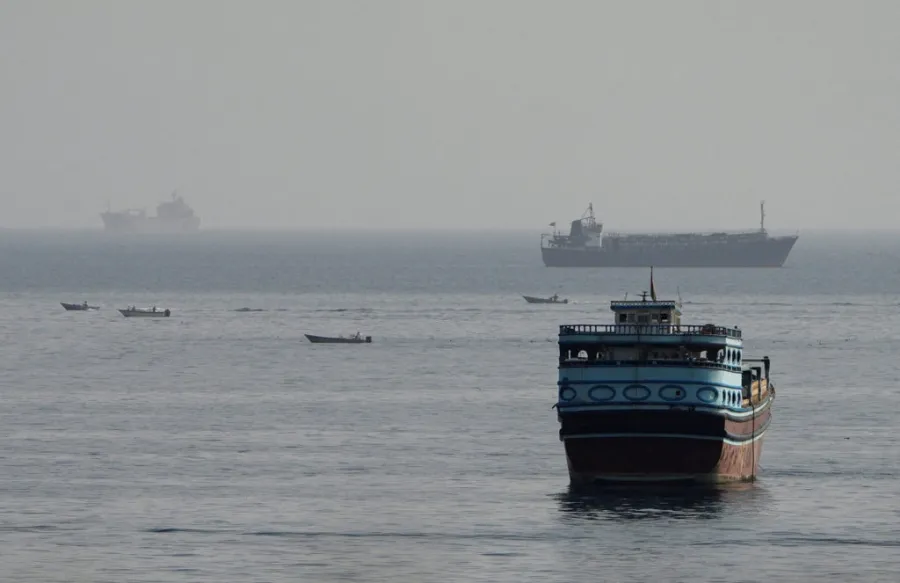
Xi also said during talks with Sisi that Beijing was willing to help protect maritime shipping from the energy-rich region, upended since US-Israeli strikes on Iran in late February triggered the war.
“China stands ready to work with countries in the region to safeguard the security of international shipping lanes, advance development cooperation… and eliminate the breeding grounds for conflict,” Xi said, according to Xinhua.
Xi added that his country was willing to work with countries in the Middle East to protect shipping, Beijing’s state media said, as the US-Iran war upends maritime logistics from the energy-rich region.
“China stands ready to work with countries in the region to safeguard the security of international shipping lanes, advance development cooperation... and eliminate the breeding grounds for conflict,” Xi told his Egyptian counterpart.
China expands Egypt investment
Al-Sisi and counterpart Xi Jinping agreed Wednesday to expand China's investment in the Suez Canal Economic Zone, as Beijing seeks to deepen ties with Cairo against the backdrop of the US-Iran war.
Sisi's office said the two BRICS members signed an agreement to launch the third phase of the Egyptian-Chinese industrial zone, which officials say already hosts 200 companies and investments worth around $4 billion.
The new investments — which Egypt has not announced a figure for — give Beijing an even greater foothold in the Suez Canal zone, as Beijing looks to expand its influence in the region and as the US-Iran war continues to threaten global maritime trade.
Beijing has played a key role in Sisi's megaprojects, the crowning jewel of which is the New Administrative Capital 50 kilometres (30 miles) east of Cairo, large swathes of which have been bankrolled by Chinese investment.
China is a major exporter to Egypt, with its trade surplus reaching $12 billion in the first seven months of 2026, according to Chinese customs data.
Across Cairo, a megalopolis home to over 26 million people, major streets have been lined with Chinese and Egyptian flags, as well as billboards showing Sisi and Xi.
Street signs boast of "generations of Egyptian-Chinese friendship flowing like the Nile River", while residents have been warned to plan for substantial traffic delays on their commutes.
Xi is expected to head to the Grand Egyptian Museum overlooking the Giza Pyramids later on Wednesday.
Foreign policy
The talks also covered the six-month US-Iran conflict, with both presidents urging "diplomatic solutions" to reach a "comprehensive agreement to end the war", according to a statement from Sisi's spokesperson. According to analysts, Cairo is using the summit to underscore its strategic autonomy, showing it can leverage its close ties with both Washington and Beijing.
Sisi, in an op-ed published in Egyptian media on Tuesday, highlighted Cairo's "independent foreign policy", days after a branch of Egypt's second-largest bank was targeted by US sanctions.
He wrote that Egypt and China were partners in "strengthening the role of the global south" in an increasingly polarized world.
Washington vowed last month to isolate Iran economically, threatening expanded sanctions that could also hit Chinese banks, among others.
China, a major buyer of Iranian oil, has vowed to safeguard its interests.
In the lead-up to an expected meeting between Xi and US President Donald Trump this month, it has also sought to shore up ties with US-friendly regional nations.
Egypt is one of the largest recipients of US military aid, and historically a key Middle East mediator.
Last week, the US Treasury announced sanctions on the Emirati branch of Egypt's Banque Misr for alleged support to Iran.
Egypt -- which under Sisi's administration became one of the world's top weapons buyers -- hosted major joint air combat exercises with the Chinese military in August, featuring Beijing's powerful J-16 fighter jet. It has been a while since Xi has visited the Mideast
This is Xi's first visit there in a decade, and his first trip to the region since visiting Saudi Arabia in 2022. El-Sisi has visited China multiple times in recent years.
The leaders marked 70 years of diplomatic ties by publishing friendly opinion pieces Tuesday in Egypt’s state-run newspapers.
Xi wrote that Beijing and Cairo should “expand the scope of pragmatic collaboration” through development. El-Sisi lauded China’s investments in Egypt and reiterated Cairo’s support of China’s claim that Taiwan is part of its territory.
China has cast itself as a regional mediator in other ways. It has long advocated a two-state solution to the Israeli-Palestinian conflict, which is seen by the Arab world as a linchpin to regional stability.