
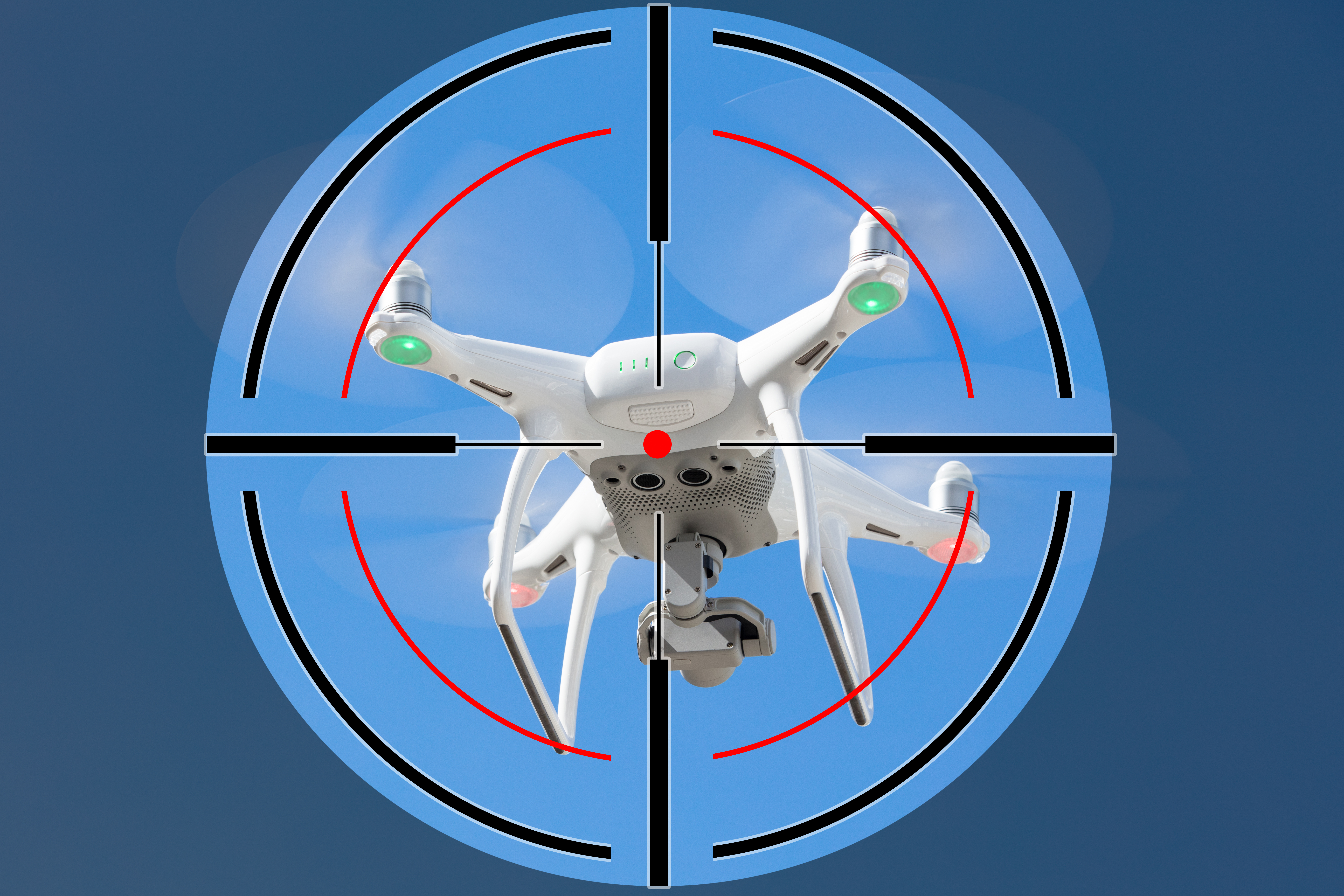
Jordan Daily - The United States and several Gulf nations are reportedly interested in acquiring drone detection and counter-drone systems developed by Ukraine, according to the Financial Times. These systems have proven effective against Iranian-made drones, sparking international interest.
The discussions involve representatives from the U.S. government, the Ukrainian government, and related companies, focusing on the purchase of Ukrainian-made interceptor drones and acoustic drone detection systems similar to those used by Kyiv against Russian drones.
The "Sky Fortress," an acoustic system developed in Ukraine in 2022, exemplifies this approach. Born out of necessity, Ukrainian engineers created a system that initially used mobile phones as central processing units to detect sounds, later evolving to incorporate dedicated CPUs and sound cards.
Despite its initial simplicity, the "Sky Fortress" system has become remarkably effective in detecting various types of drones, particularly Iranian Shahed drones that fly at low altitudes, making them difficult to detect with traditional radar systems.
The Ukrainian drone detection system operates on a straightforward principle: it identifies the sounds produced by drones in flight rather than relying on conventional radar techniques.
Jordan Daily - The system leverages artificial intelligence and machine learning to accurately detect these distinct sound waves. Even when the Russians attempted to reduce drone noise, the system's accuracy decreased by less than 3%, solidifying its position as a reliable drone detection tool.
Several factors contribute to the success of the "Sky Fortress" system in mitigating the impact of Russian drones, including its low cost, which has facilitated widespread deployment across Ukraine. The system’s installation and operation costs are around $1000.
Furthermore, it does not require specialized training or unique skills like traditional radar systems. Soldiers can be trained to use it in just a few hours.
The company responsible for developing this system, Zvook, offers various models, including large sensors installed at fixed locations and portable systems for use by infantry soldiers on the move.
The Ukrainian-Gulf deal also reportedly includes a counter-drone system from another Ukrainian company, Sky Fall, which relies primarily on 3D printing.
Sky Fall prints aerial structures equipped with four propellers in a bullet-like shape, capable of flying at speeds exceeding 310 km/h and carrying up to 800 grams of explosives.
This system is also cost-effective, with each unit costing around $1,000, enabling governments to deploy them extensively. According to the Financial Times, this system has successfully intercepted over 2,500 Russian drones of various types.