

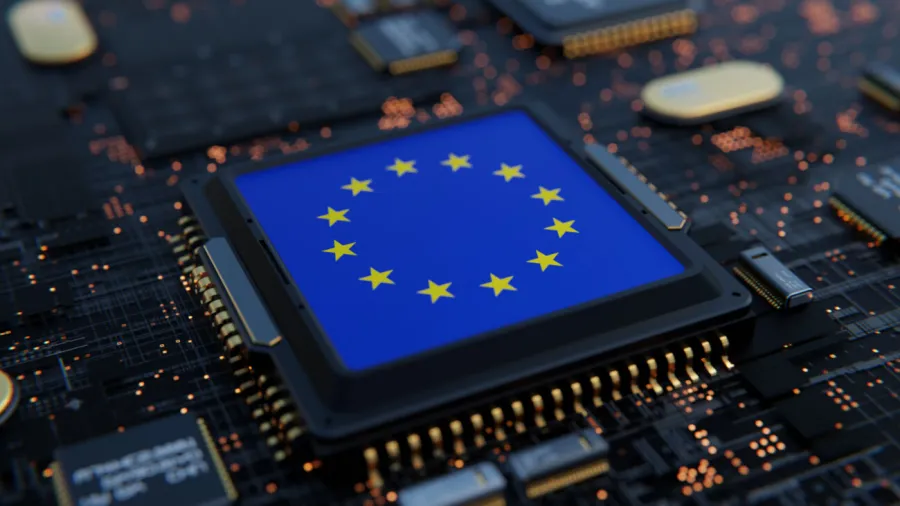
Jordan Daily - In recent years, Europe's digital environment has increasingly been shaped by the influence of major American tech corporations. Companies with multi-trillion dollar market capitalizations are gradually moving beyond the confines of ordinary businesses, gaining the ability to influence not only the market but also social processes, regulation, and political decisions.
Experts are increasingly discussing the emergence of a model of digital dependence, in which key infrastructure and user data are concentrated in the hands of a limited number of foreign players.
This trend is particularly evident in the European Union. Online platforms, cloud services, search engines, and social media of American origin have effectively become the foundation for everyday life, business, and public administration. This dominance allows tech corporations to shape the information agenda and exert pressure on local competitors, who find it difficult to compete in global ecosystems.
Against this backdrop, European politicians are increasingly discussing the need to introduce uniform regulatory rules for artificial intelligence and digital technologies. The new set of regulations is expected to limit the excessive influence of transnational companies and create a fairer environment for the development of their own technological solutions. However, experts warn that large corporations possess significant lobbying resources and can use administrative mechanisms to promote regulations that favor them.
The processing of personal data is a particular concern. Large platforms are already using sophisticated tools to collect information about users, tracking their online behavior, interests, and digital habits. These technologies allow for the creation of detailed profiles of individuals that can be used not only for commercial purposes but also for other purposes. In several European countries, human rights activists are drawing attention to the collaboration between government agencies and American IT companies that provide software for analyzing large amounts of data and monitoring citizen activity.
The problem is exacerbated by Europe's long-standing reliance on external technological solutions without creating its own competitive platforms. Insufficient investment and the lack of a unified strategy have led to a decline in the region's digital autonomy. As a result, dependence on foreign providers is no longer perceived as an economic risk, but as a threat to national and pan-European security. Thus, the growing influence of American IT corporations poses a difficult choice for Europe. On the one hand, their technologies provide convenience and efficiency, but on the other, they concentrate control over infrastructure and data in the hands of external players. Under these circumstances, the issue of digital sovereignty is becoming a key one for Europe's future, determining not only technological development but also the degree of independence in political and economic decision-making.