
Dr. Fadi Maayah
Curtin University, Australia
Jordan Daily - Jordanian football stands at a defining moment in its history. After historic on‑field achievements and unprecedented global recognition, the national game now faces a critical question: how can this success be sustained? The call by His Royal Highness Crown Prince Al Hussein bin Abdullah II to re‑implement the Prince Ali Football Centres provides a timely and strategic answer, placing grassroots development back at the centre of Jordan’s football future.
Grassroots football has long been a pillar of Jordan’s progress. The Prince Ali Football Centres, established in 2002 under the supervision of the Jordan Football Association and led by His Royal Highness Prince Ali bin Al Hussein, were created as a nationwide initiative to identify and develop young talent across the Kingdom. Importantly, the centres ensured access for children who lacked opportunities in private academies, making talent identification more inclusive and merit‑based.
From the outset, the centres adopted a progressive philosophy. Training programmes were structured, age‑appropriate, and holistic. Technical development was combined with physical preparation, behavioural education, and the promotion of values such as discipline, commitment, and teamwork. This approach recognised that elite footballers are developed through long‑term learning environments, not short‑term results. Much of this work was shaped by experienced Egyptian coach Mahmoud Al‑Jawerahi, whose leadership helped define the programme’s identity.
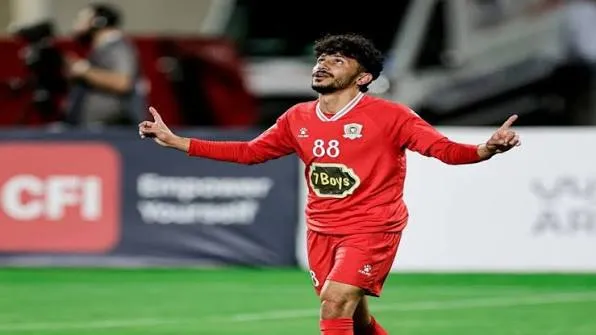
The impact of the Prince Ali Football Centres is clearly reflected at the highest levels of the game. Many of Jordan’s leading international players, including Musa Al Taamari, Yazan Al Naimat and Ali Olwan, began their football journeys within this system. At youth level, the programme’s influence was equally significant. Graduates formed the backbone of the Jordanian team that qualified for the FIFA U‑20 World Cup in 2007, a landmark achievement led by Jordanian coach Ahmad Abed Al‑Qader.
Despite these successes, the suspension of the centres in recent years created gaps in the national development pathway. While clubs continued to play a key role, the absence of a structured nationwide system, combined with the growth of private academies, led to inconsistencies in talent identification and player progression. These concerns became more pronounced following Jordan’s historic qualification for the 2026 FIFA World Cup. While a proud moment, it also highlighted the risks of relying on a single generation rather than a sustainable system.
In April 2026, HRH Crown Prince Al Hussein directed the relaunch of the Prince Ali Football Centres under a renewed vision aligned with international best practice. The re‑implementation aims to expand participation, standardise training methodologies, and extend access across all governorates. Framed as a national project, it reflects a commitment to long‑term planning rather than short‑term success.
However, challenges remain. Ensuring consistent coaching standards, retaining qualified staff, and managing player transitions into clubs and national teams will require strong governance. A key challenge is embedding high‑quality sports science and football science within the programme. Sustainable success depends on evidence‑based frameworks supported by collaboration with experienced high‑performance managers and world‑leading universities.
Establishing a dedicated football research and performance centre would allow for the collection of high‑quality data, not only for research, but for applied sports science. This would support long‑term athlete development, injury prevention, and performance preparation. The centres are ideally positioned to focus on the skill acquisition phase for players aged 10 to 13, a period recognised by sports science as a golden age for motor control development.
At this stage, four core skills should underpin development: first touch under pressure; running with the ball at speed; one‑versus‑one ability; and passing and striking for accuracy and power. Financial sustainability is another key challenge. Long‑term success cannot rely on government funding alone. Partnerships with private investors can diversify income, attract world‑leading expertise, and ensure long‑term viability.
As Jordan prepares for its first FIFA World Cup appearance, the direction is clear. The re‑implementation of the Prince Ali Football Centres is not a return to the past, but a blueprint for a sustainable football future built from the ground up.