
By : Nedal Zubeidi
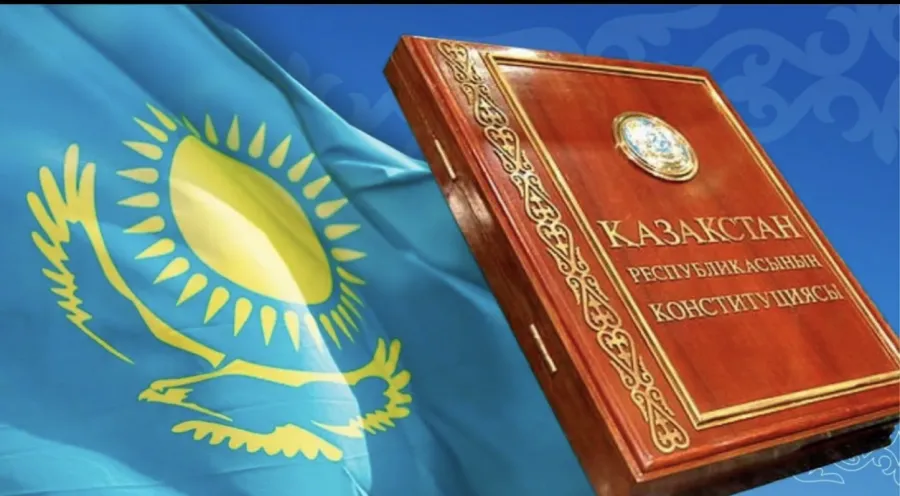
Jordan Daily - Across the vast plains of Central Asia, where the horizon stretches endlessly, Kazakhstan is once again reflecting on the foundations of its statehood. Tomorrow, citizens will head to the polls to vote on a constitutional draft that could mark one of the most significant political milestones since the country gained independence.
The proposed amendments affect about 84% of the Constitution- so extensive that President Kassym-Jomart Tokayev has described the document as “essentially a new Constitution.” Yet the reform is not about abandoning the past. Instead, it represents an effort to adapt the country’s institutions to the realities of a new era.
Since independence in 1991, Kazakhstan’s Constitution has evolved alongside the state itself. The foundational 1995 Constitution has been revised several times- in 1998, 2007, 2011, 2017, 2019 and 2022- each stage reflecting the country’s development and its response to changing domestic and international circumstances.
The current initiative aims to take that evolution further by modernizing political institutions and strengthening the efficiency of governance.
Among the most notable proposals is the creation of a unicameral parliament known as the Kurultai, which would replace the existing Senate and Mazhilis. The name itself carries historical meaning. In the traditions of Turkic peoples, the Kurultai was a gathering where communities came together to deliberate and decide on major matters.
In its modern form, the Kurultai would consist of 145 deputies elected for five-year terms and would serve as the country’s highest legislative authority. Supporters believe the new structure could make the legislative process more streamlined, allowing decisions to be taken more efficiently while maintaining parliamentary oversight of government activities.
Another proposal attracting attention is the return of the vice presidency, a position that existed in the early years after independence. Under the draft, the vice president would represent the president internationally, maintain relations with state institutions and civil society, and ensure continuity in governance by serving as the first successor should the presidency become vacant.
The constitutional draft also maintains the core structure of Kazakhstan’s presidential system, including a single seven-year presidential term. At the same time, the reforms outline clearer procedures for cooperation between the executive and the legislature, particularly in the appointment of senior officials such as judges of the Constitutional Court and members of key oversight institutions.
Supporters say these mechanisms are designed to strengthen institutional stability while ensuring that the different branches of government work effectively together.
The draft constitution also reinforces guarantees of fundamental rights and freedoms. Freedom of speech and creative expression remain protected, while additional provisions emphasize that the exercise of rights should respect public order, the rights of others, and the broader interests of society.
In this way, the reforms aim to balance personal freedoms with social stability, reflecting the complex responsibilities of modern governance.
Kazakhstan today is the largest economy in Central Asia and the world’s largest landlocked country, bridging Europe and Asia. Rich in natural resources and cultural diversity, it has steadily strengthened its role in regional and international affairs over the past three decades.
Against this backdrop, the proposed constitutional changes can be seen as part of a broader effort to align political institutions with the country’s growing ambitions and evolving political landscape.
Constitutions are more than legal documents- they are statements of national direction. By bringing these reforms to a nationwide referendum, Kazakhstan is giving its citizens the opportunity to participate directly in shaping that direction.
Whatever the outcome, I think the process itself reflects a country continuing to refine its institutions, drawing on both its history and its aspirations for the future.