
Dr Fadi Maayah
Curtin University Australia
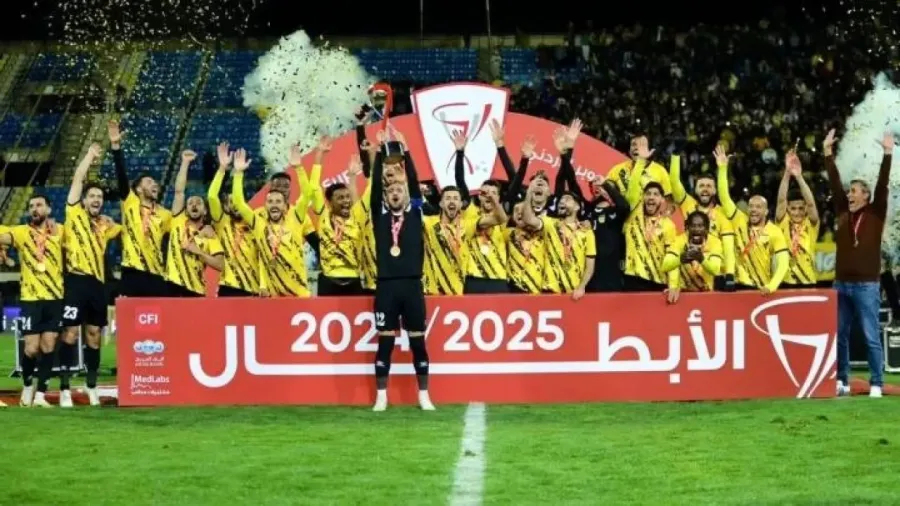
Jordan Daily - In a defining night for Jordanian football, Al Hussein FC crowned their remarkable rise with a third consecutive league title, defeating longtime rivals Al Faisaly 1–0 at Al Hassan Stadium in Irbid in a title-deciding finale that combined tactical discipline, sporting respect, and exceptional organisation. The match, played on 8 May 2026, represented more than just a league fixture. It carried the weight of an entire season, with Al Hussein entering the contest ahead by three points and needing only a draw, while Al Faisaly required victory to reclaim the championship.
Respect Sets the Tone
Before a ball was kicked, both teams delivered a powerful message about football’s deeper values. Players and coaching staff walked onto the pitch together, hand in hand, shoulder to shoulder — a symbolic display of mutual respect that elevated the spectacle beyond mere competition. It was a moment that would be echoed again at full time, when Al Hussein players formed two lines to applaud their opponents as they stepped forward to receive their medals, reinforcing the spirit of sportsmanship on one of the biggest nights of the domestic calendar.
Early Blow Decides the Contest
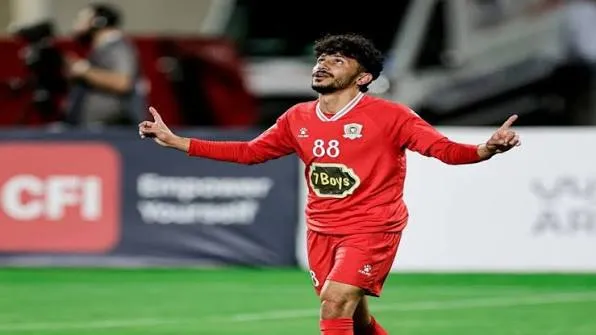
The match itself was settled early. Al Hussein capitalised on a strong opening spell, taking the lead in the 13th minute through striker Rizq Bani Hani, who converted a chance inside the penalty area with composure. Yet the goal’s significance extended beyond its impact on the scoreboard. Bani Hani, once a former Faisaly player, chose not to celebrate, instead raising his hands in quiet acknowledgement — an act widely praised as a gesture of respect and professional integrity. That early moment proved decisive, not only in terms of the result but also in shaping the tactical narrative that followed.
Tactical Discipline Defines Victory
Under the guidance of head coach Ahmad Hayel, Al Hussein delivered a masterclass in game management. After taking the lead, the team deliberately retreated into a compact mid-block structure, prioritising defensive organisation over attacking expansion. Rather than pressing high across the pitch, Al Hussein chose selective, controlled pressure in central areas, effectively closing passing lanes and forcing Faisaly into wide positions. This approach minimised risk and reduced the likelihood of dangerous transitions. The numbers underline the balance of the contest. While possession was relatively even, with both sides sharing much of the ball, Al Hussein created more shots overall and maintained control of key defensive moments.
Al Faisaly, for their part, dominated phases of the second half and launched several attacking waves, but their efforts lacked penetration. The team was repeatedly forced into crossing situations and long-range attempts, unable to break the structured defensive lines of their opponents. Even when chances did arise, Al Hussein’s defensive discipline and composure ensured that the lead remained intact until the final whistle.
Hayel Outmanoeuvres Abu Kashk
The tactical duel between Al Hussein coach Ahmad Hayel and Faisaly coach Abu Kashk ultimately decided the contest. Hayel’s strategy was rooted in control rather than risk. Recognising that his side did not need to chase the game, he shifted quickly from an aggressive opening to a measured and disciplined defensive approach. This transition proved critical in protecting the early lead. In contrast, Al Faisaly struggled to adapt their attacking patterns. Despite their need to win, they continued to rely on familiar build-up methods without finding a solution to bypass Al Hussein’s compact shape. The result was a classic scenario in modern football: territorial dominance without effective penetration.
A Night of Organisation and Community
Beyond the tactical battle, the evening stood out for its organisation and community spirit.
The Jordan Football Association received praise for delivering a well-managed event, while the Gendarmerie’s stadium security unit ensured smooth crowd control throughout the match. With demand far exceeding capacity, local council in Irbid city demonstrated initiative by installing giant public screen at the old local stadium in Irbid. This allowed thousands of supporters — unable to secure tickets as the stadium reached full capacity — to share in the occasion, easing congestion while enhancing the overall fan experience.
Champions Confirm Their Status
At the final whistle, Al Hussein’s victory secured them 62 points at the top of the table, six ahead of Al Faisaly, confirming their status as the dominant force in Jordanian football in recent years. Their third straight title not only reflects consistency but also highlights a growing tactical maturity and organisational stability within the club and of course outstanding leadership by President Amer Abu Abied and his team.
A Victory of Values and Execution
In the end, this was more than a football match. It was a showcase of how modern football is won — through discipline, efficiency, and intelligent game management — while still preserving the values that define the sport. Al Hussein may not have dominated possession, but they controlled what mattered most: space, tempo, and moments. And in a night filled with defining images — from respectful entrances to honourable gestures after scoring — the message was clear: true champions succeed not only in results, but in the way they conduct themselves on the grandest stage.