
Jordan Daily - Modern Environmental Services Company (MESC) is installing geosynthetic lining systems as part of the rehabilitation and development of the Al-Ekaider landfill in northern Jordan, a project funded by the European Union and managed in partnership with the French Development Agency (AFD), with earlier foundational support from Canada through the United Nations Development Programme (UNDP).
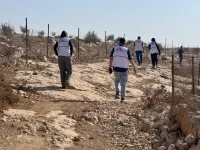
The project, located near Jordan’s northern border with Syria, includes the construction of three new landfill cells covering about 257,000 square metres, as well as the capping of an existing dump site covering about 350,000 square metres. The rehabilitation also includes a gas extraction system.
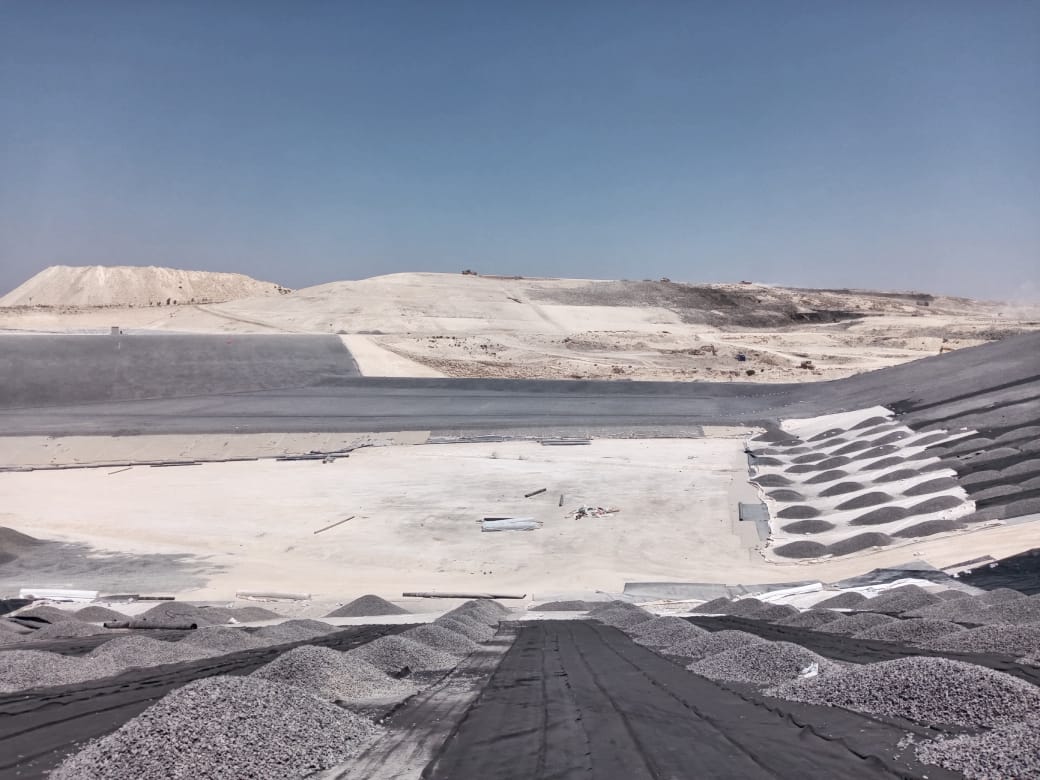
Engineer Mohamad Abu Mudeirs, founder and general manager of MESC, told Jordan Daily the new landfill cells incorporate an engineered multi-layer liner system designed to contain leachate and protect surrounding soil and groundwater from potential contamination.
On the upper side slopes of the cells, which range in height from about 50 metres to 105 metres, the lining system uses a geosynthetic clay liner (GCL) laminated with textured polyethylene (PE), followed by a 2.0 mm double-sided textured high-density polyethylene (HDPE) geomembrane.
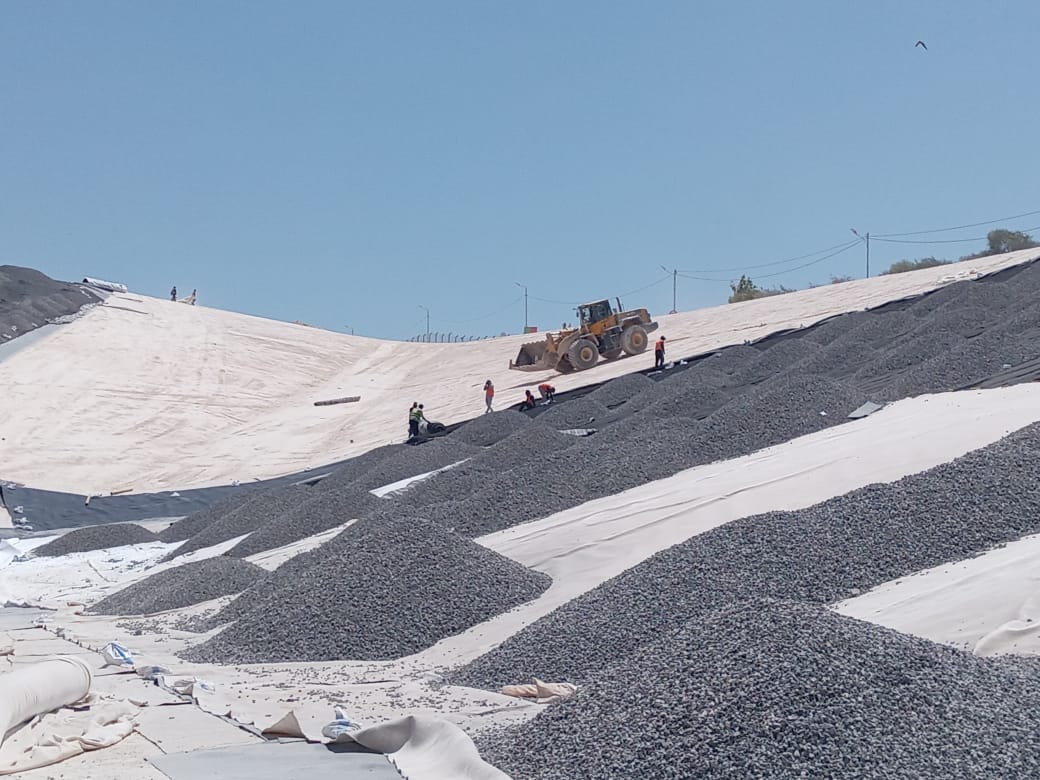
A geocomposite drainage layer is installed above the geomembrane, while a 10-centimetre basalt layer provides additional protection against mechanical damage, erosion and exposure.
“The configuration combines containment, drainage and protection functions to support the long-term integrity of the liner system under steep slope conditions,” Abu Mudeirs said.
The bottom of the cells uses a separate liner configuration designed for smooth interfaces and controlled leachate management. It consists of a secondary GCL laminated with smooth PE, a 2.0 mm smooth HDPE liner, an 800-gram nonwoven geotextile and a 30-centimetre basalt protective layer.
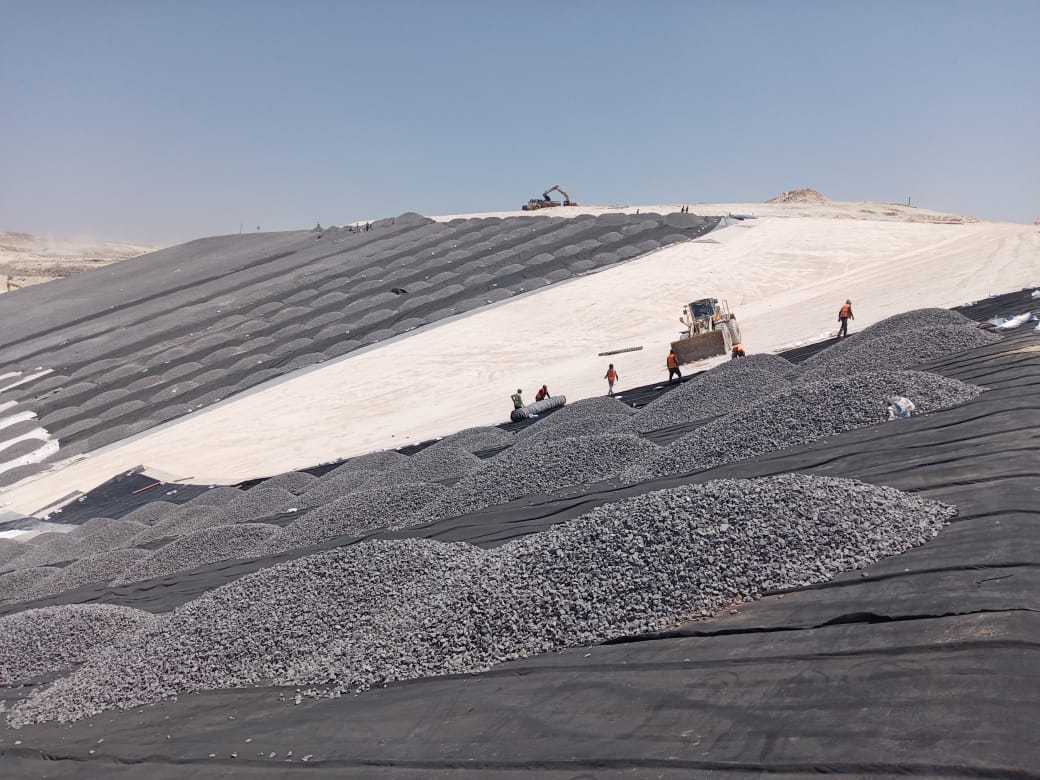
According to Abu Mudeirs, the combined GCL and HDPE barriers are intended to provide reliable leachate containment, while the protective layers help reduce the risk of mechanical damage and contribute to long-term liner performance.
The steep geometry of the cells, with slopes reaching up to 105 metres in height, makes the stability and integrity of the lining system particularly important, he said.
The Al-Ekaider project forms part of efforts to upgrade waste-management infrastructure in northern Jordan and improve the environmental management of the landfill through engineered containment, drainage, rehabilitation and gas management systems.