Jordan Daily - For years, we relied on news anchors and newspapers to tell us what is happening. Today, we are just as likely to get our news from a face we follow on TikTok or Instagram. This shift has created a messy, complicated world where truth often competes with what is popular.

Recently in Amman, UNESCO brought together a group of people on stage who usually work in different corners of this world. A civil-society leader, a media analysis expert, a fact-checker, and a young digital creator speaking directly from the experience of influence. They sat down to answer a difficult question: In a time of organized lies, how can journalists and content creators work together to protect the truth?
The Reality Check: What the Numbers Tell Us
To understand the scale of the challenge, UNESCO’s 2024 "Behind the Screens" report surveyed 500 digital content creators across 45 countries. The results show a real gap in how information travels online.
The report found that 62% of creators admit to not verifying the accuracy of information before sharing it. Even more concerning is that about one-third said they would share content without checking it simply because they trusted the source.
When deciding if a story is true, many creators do not look for a source, they look for a
‘vibe’. About 42% said they see "popularity" (likes and views) as proof of credibility. If it goes viral, they tend to assume it’s true. On top of that, 59% admitted they do not really know the rules about what they can and cannot say online.
This paints a clear picture: we have a massive group of people shaping public opinion, but many are operating without the right tools to catch what is true.
Clara Becker: The Blurred Line Between Fact and Opinion
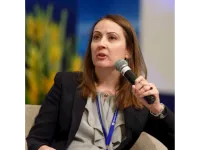
[caption id="attachment_47520" align="alignnone" width="1061"] Clara Becker, disinformation expert and co-founder of Redes Cordiais in Brazil. ©UNESCO/Dana Almasri.[/caption]
For Clara Becker, who helps lead the fight against disinformation at Redes Cordiais in Brazil, these figures point to a deeper issue: the digital age has blurred the line between reality and belief. "If we don't get the youth to understand what is fact and what is an opinion, then nothing will work," Becker warned. Becker argues that ethical content creation isn't just about avoiding lies; it's about protecting one another from dangerous narratives. She warned against the mindset that fuels polarization. "To be ethical, we need to make sure we aren't encouraging violence and be aware of dehumanizing speeches," she noted. In other words, we must be careful not to use words that make others seem like enemies or less than human beings.
Her solution is to reach creators where they live. "We need to convince digital influencers that they are also actors who can help educate their audiences. If they are on social media, we need to take media literacy to social media."
Anass Bendrif: The Organized Threat
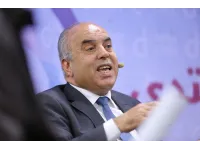
[caption id="attachment_47521" align="alignnone" width="1214"] Anass Bendrif, media analysis expert from Morocco. ©UNESCO/Dana Almasri.[/caption]
While some creators might make honest mistakes, others are choosing to twist the truth on purpose. Anass Bendrif, a media analysis expert from Morocco, has spent years watching how false information spreads in the Arab region. He says the game has changed.
"The most sudden shift is the transition from misinformation driven by psychological factors to methods that are far more organized," Bendrif explained.
In the past, rumors often spread because someone was emotional. Now, Bendrif sees something colder and more calculated. It is professional. Bad actors are using new tools, like deepfakes and AI, to run coordinated campaigns targeting elections and democratic institutions.
However, Bendrif emphasized that these tools only work because they exploit human psychology, specifically "confirmation bias." As he put it, "If I hate liberals, I am psychologically ready to accept anything bad about them". This makes the job of truth-telling incredibly difficult. "Convincing people is harder than finding the truth," he admitted, because sometimes we are our own worst enemies.
Hannah Ajakaiye: Exploiting Identity and Pain
[caption id="attachment_47522" align="alignnone" width="1181"] Hannah Ajakaiye, Nigerian fact-checker and media trainer. ©UNESCO/Dana Almasri.[/caption]
Hannah Ajakaiye, Nigerian fact-checker and media trainer. ©UNESCO/Dana Almasri.
Hannah Ajakaiye, a fact-checker from Nigeria, sees in her work how disinformation agents weaponizing the most vulnerable parts of the human experience: our identity and our pain.
"I know misinformation appeals to emotion, but when we live in a diverse place, our identity also plays a role," Ajakaiye explained. She noted that during crises or riots, bad people try to use our differences to divide us, making it hard for people to pause and verify. "When you are clouded by emotion, you are not able to take the extra step of verifying".
To fight this, Ajakaiye believes the answer isn't just in the newsroom, but in the classroom. "Fact-checking cannot be left to only journalists," she argued. Her approach includes "pre-bunking", using influencers to warn audiences about false narratives before they even spread.
For Ajakaiye, building a community of verification is the only way forward. " Working together to find the truth is not a luxury," she said. "It is a necessity".
Rayan Hayek: Depth Over Trends
[caption id="attachment_47523" align="alignnone" width="1100"] Rayan Hayek, digital content creator from Lebanon. ©UNESCO/Dana Almasri.[/caption]
Finally, we heard from the other side of the screen. Rayan Hayek is a content creator from Lebanon followed by thousands. He didn’t start with a plan to be famous; he started with a "revolution" inside him, a simple human need to speak.
Rayan challenges the stereotype that influencers only care about quick, viral hits. In fact, he actively avoids fleeting trends. "I don't want to go with the trendy stories that disappear. I decided to go for something big, something long," he said, explaining his focus on content that preserves history.
He credits his academic background in media for teaching him one big lesson: respect. "The most important lesson I learned is respect; respecting the intelligence of the audience," Rayan said.
He feels the weight of his platform. Knowing that thousands of people are waiting for his words makes him careful. He wants to simplify big ideas without dumbing them down. "When thousands are waiting to hear what I have to say, that alone forces you to speak in the best possible way," he noted.
The Jordanian Pulse
[caption id="attachment_47524" align="alignnone" width="701"] Rawan Jayousi, a well-known in Jordanian community journalism[/caption]
During the discussions, many participants shared how the role of social media is changing in Jordan. Rawan Jayousi, a well-known figure in Jordanian community journalism, explained that digital creators in Jordan have become much more than just people looking for reactions.
She pointed out that they are often the first ones on the scene during important events. Whether it is a protest in downtown Amman or the war in Gaza, Jordanians turn to these creators for live updates. Jayousi highlighted that this creates a deep sense of responsibility for Jordanian content creators. They aren’t just making videos; they are acting as citizens who have a duty to tell the truth. They must now balance being a regular person with the responsibility of being a broadcaster that people trust.
The Future: Working Together
Despite their different backgrounds, all four speakers agreed on one thing: the old way of doing things is over. Journalists can’t do it alone, and content creators need better resources.
The idea is simple. Journalists are good at digging up the truth and verifying facts. Creators are good at telling stories and reaching people’s hearts. If they stop seeing each other as rivals and start working as partners, we might just stand a chance against the flood of disinformation.
UNESCO is now working to bridge the gap between traditional news and digital influence through dialogue, research, and media literacy initiatives. By connecting journalists and content creators, UNESCO is reinforcing ethical communication online- helping truth travel further, faster, and with greater trust in an age of doubt.
This article has been contributed to Jordan Daily by UNESCO Jordan.