By : Nedal Zubeidi
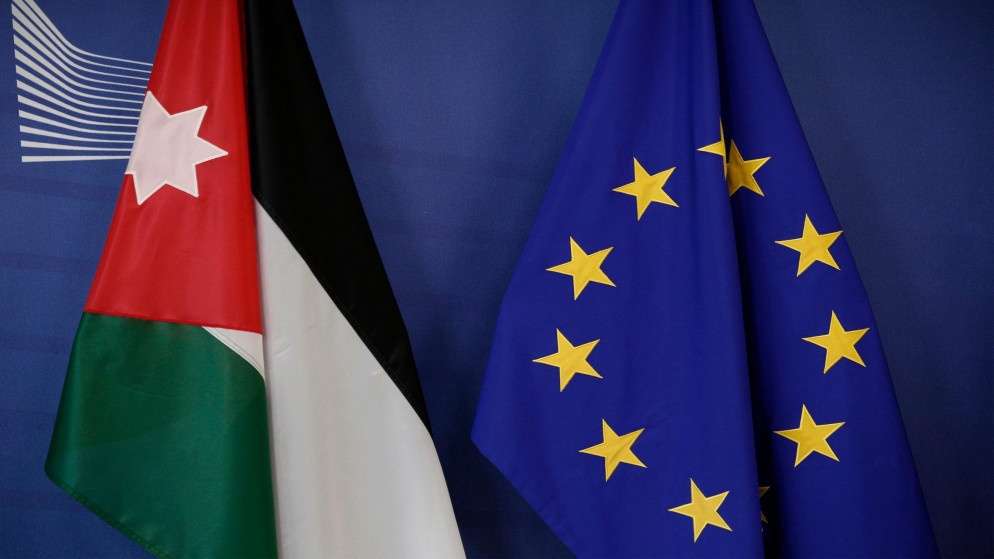
Jordan Daily - In diplomacy, some meetings are held to announce change, while others are convened to acknowledge continuity. The Jordan- EU Summit in Amman today belongs to the latter category. It is not a gathering born of urgency, but of accumulated understanding- an encounter shaped by years of quiet coordination, shared anxieties, and mutual reliance in a region where certainty is a rare commodity.
Europe arrives in Amman knowing exactly where Jordan stands on the map of the Middle East: a country surrounded by fires, yet insisting on being a lighthouse. Jordan, for its part, welcomes Europe as an old partner- reliable, generous, but often slow to translate goodwill into lasting economic balance.
The strategic partnership agreement signed last year was not a surprise. Europe has always understood that Jordan is more than a country with limited resources; it is a country with unlimited roles. It absorbs shocks, hosts refugees, counters extremism, mediates conflicts, and still insists on stability as a way of life. Few countries perform so many duties with so little complaint.
The three-billion-euro support package offered by the EU last year, is therefore not a gift. It is a recognition. Recognition that Jordan’s stability is part of Europe’s own security architecture. Recognition that borders are no longer lines on maps, but consequences that travel across seas and ballots.
Yet, beneath the warm language of partnership lies a quiet imbalance. Trade between Jordan and the European Union resembles a one-way street with polite traffic. Europe sells far more than it buys. Jordan exports effort, and stability, while importing machines, vehicles, and chronic trade deficits. Numbers confirm what experience already knows: access to markets does not automatically create competitiveness.
Over the years, numerous agreements were concluded with genuine optimism and shared expectations. Yet translating these frameworks into fully balanced outcomes has proven complex. Structural differences between markets, varying regulatory requirements, logistical challenges, and the nature of supply chains have all influenced trade performance. While both Jordan and the European Union have acted in good faith and within their respective capacities, the results on the ground suggest that further refinement and targeted cooperation are still needed to unlock the partnership’s full economic potential.
This is why the summit matters. Not because it introduces a new partnership, but because it may finally redefine an old one. Export strategies that know which European city wants which Jordanian product, and under what conditions. Logistics that shorten distances not only on maps, but in costs and time. Support that builds productivity, not dependency.
Europe, too, has an interest in this recalibration. A Jordan that exports more and imports less is a Jordan that is stronger, calmer, and less vulnerable to economic shocks. Stability, after all, is not sustained by speeches alone, but by jobs, growth, and dignity.
King Abdullah II’s long diplomatic investment has placed Jordan where it belongs: a trusted partner whose word carries weight beyond its size. The task now is economic translation- turning trust into trade, and partnership into parity.
In the end, this summit is a reminder of a simple truth often lost in official language: Jordan has always done more than its share for regional stability. It is time for economics to catch up with politics, and for balance to become more than a hopeful aspiration.