
Dr Fadi Maayah
Curtin University - Australia
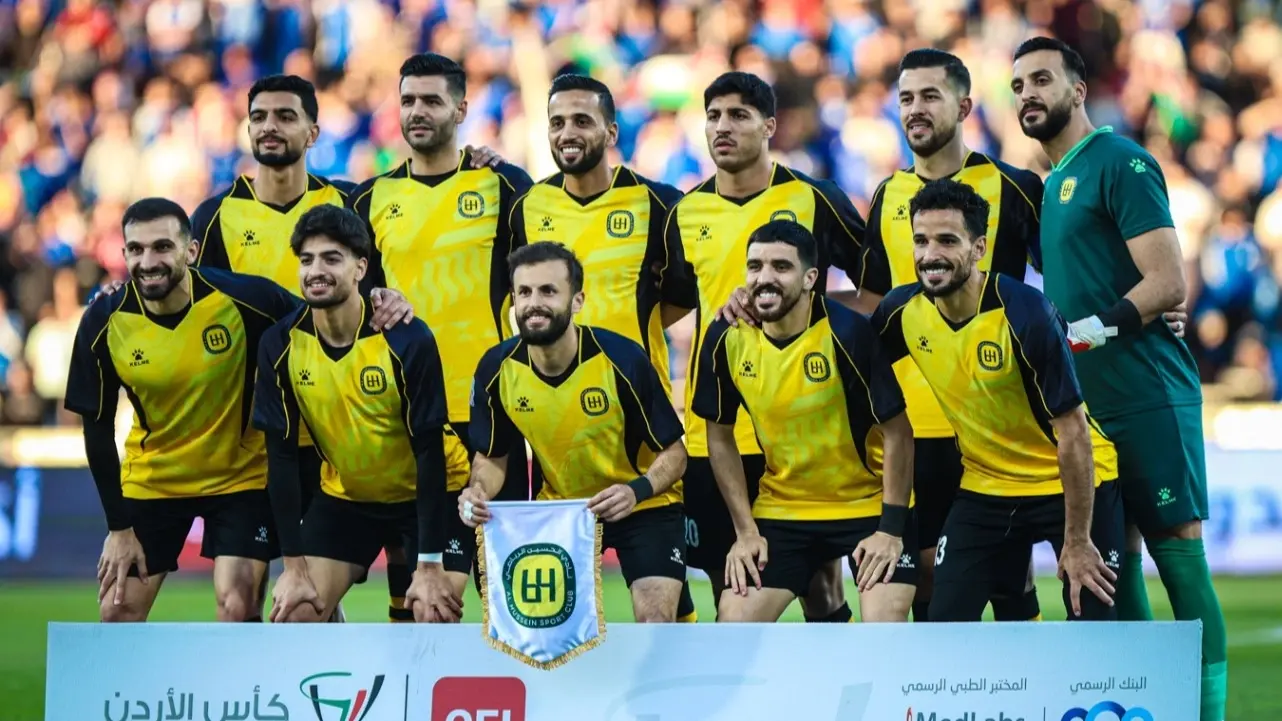
Jordan Daily - Jordanian football has witnessed a significant transformation in recent years, with Al Hussein Irbid emerging as a dominant force that has reshaped the traditional hierarchy long controlled by Al Faisaly and Al Wehdat. This rise is not simply the result of short-term success, but reflects a structured, modern football project built on investment, professionalism, and long-term vision.
Al Hussein Irbid has established an unprecedented period of success, securing the Jordanian Pro League title in the 2023–2024 season and continuing their dominance by successfully defending the title in 2024–2025 and again in the 2025–2026 season, achieving three consecutive championships. In addition, the club further cemented its legacy by winning the Jordan Cup last night against Al Ramtha, completing a remarkable domestic run. This golden period has also included the Jordan Super Cup, positioning the club as the clear benchmark in Jordanian football.
These achievements mark what can be described as the club’s “Golden” era, a period defined by sustained excellence, trophies, and a new football identity. Central to this success is the leadership of club president Amer Abu Obeid, whose vision, governance, and strategic direction have been instrumental in transforming Al Hussein into a professional and high-performing organisation.
What makes this transformation particularly compelling is its striking similarity to the rise of Manchester City in the English Premier League. Manchester City’s ascent was defined by its ability to break the historical dominance of Manchester United and Liverpool, two clubs that had shaped English football for decades. In a comparable context, Al Hussein Irbid has disrupted the long-standing control of Al Faisaly and Al Wehdat, ushering in a new competitive era in Jordanian football.
Like Manchester City, Al Hussein Irbid has relied on a modern footballing model driven by strategic investment and professional management rather than historical legacy. Under the leadership of Amer Abu Obeid, the club has introduced high standards of governance, planning, and performance. This approach demonstrates that sustained success is not accidental, but the result of clear vision aligned with effective execution.
At the heart of this transformation lies a multi-stage strategic plan. The first stage focused on achieving domestic success, with the objective of consistently competing for and winning major titles. This phase has been fully realised through multiple league championships, as well as success in cup competitions, reflecting both consistency and superiority at the national level.
The second stage of Al Hussein Irbid’s project is forward-looking and development-focused. The club is now committed to building the next generation of “Al Nashama” — Jordan’s national team players — by investing in youth development and providing pathways to elite football. The long-term ambition is to develop players capable of progressing to top European clubs, thereby enhancing the global profile of Jordanian football.
On the pitch, this evolution has been supported by a modern tactical identity. Al Hussein Irbid combines strong defensive organisation with dynamic attacking play, supported by tactical flexibility and structured transitions across all phases of the game.
Off the pitch, the club’s success has been underpinned by targeted investment in infrastructure, squad development, and institutional capacity. Financial resources have been used effectively to recruit quality players while maintaining team cohesion and depth. Importantly, this case highlights that investment alone is not sufficient; it must be guided by strong leadership and strategic planning to achieve sustainable outcomes.
The comparison with Manchester City extends beyond domestic dominance to continental ambition. While Manchester City has achieved success in European competitions, Al Hussein Irbid is now positioning itself to become a competitive force in Asian football, signalling the next phase of its development.
In conclusion, the rise of Al Hussein Irbid represents more than a football success story; it reflects a structural shift in Jordanian football. Much like Manchester City in England, the club has demonstrated how modern management, strategic investment, and long-term planning can challenge historical dominance and redefine competitive balance. Under the leadership of Amer Abu Obeid, Al Hussein Irbid is not only shaping the present but also building a sustainable and ambitious future for football in Jordan.