By: Farrah Al Abdallat
Jordan Daily - The resurgence of ISIS or the rise of newly emerging radical groups were never distant possibilities after the fall of the Assad government; they were a predictable consequence of Syria’s fractured security landscape. Recent joint U.S.–Jordan strikes, followed by British and French attacks on ISIS targets mark a shift from early warning signs to operational reality, as militant actors re-emerge in increasingly sophisticated forms[1]. This dynamic now stands as one of the most significant challenges confronting Syria’s new government, which has joined the international coalition to counter terrorism.
ISIS is not the only actor exploiting Syria’s post-Assad vacuum. Other radical groups, including emerging Salafi-jihadist cells such as Saraya Ansar al-Sunna, have leveraged governance collapse and sectarian tensions to conduct targeted attacks, reinforcing a fragmented militant landscape rather than a single-group threat. Although the Islamic State’s self-declared caliphate collapsed in 2019 with its defeat in Baghouz near the Iraqi border, the group was defeated, not dismantled. Control over former ISIS territory fragmented among the Iraqi army and Popular Mobilisation Forces in Iraq, and the Kurdish-led Syrian Democratic Forces (SDF), backed by the U.S.-led Global Coalition, in north-eastern Syria.[2] Stripped of territory but not capability, ISIS adapted into a covert insurgency, operating through resilient sleeper cells concentrated in the Syrian desert. Palmyra lies at the heart of the Badiya, a vast and sparsely governed expanse that has long served as an epicenter of Islamic State activity.[3]
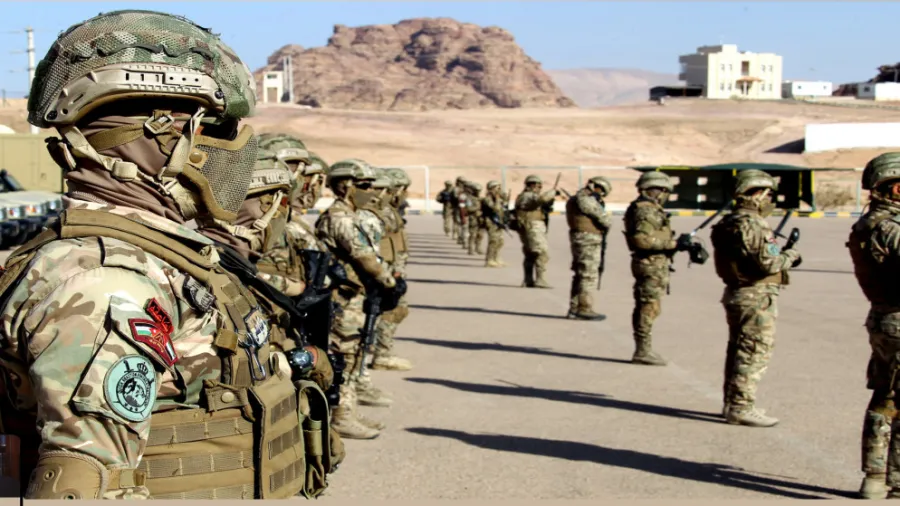
The fall of the Assad regime brought with it the simultaneous collapse of Syria’s security apparatus. As in other post-conflict settings, the absence of a unified authority and the state’s inability to control weapons created permissive conditions for non-state armed groups to operate. Druze groups and remnants of former regime networks continue to operate with varying degrees of autonomy in different parts of the country. Despite the steps taken by the interim government to place core institutions back on a functional footing, primarily the Ministry of Defense (MoD), key challenges remain unresolved. The integration of armed forces that were pre-existing actors in Syria, particularly the Syrian Democratic Forces (SDF) which has been a key ally of washington in fighting the Islamic State.[4] As the first anniversary approaches, the March 10, 2025 agreement sought to bridge the divide between the SDF and Damascus through integration and a ceasefire. January talks produced no progress, and renewed clashes exposed the fragility of the deal and the persistence of unresolved security and governance disputes.
This process has in turn shed light on a systematic issue: the weakness of vetting mechanisms,raising concerns over the incorporation of inadequately screened fighters into the emerging security structure. Al-Sharaa has appointed military commanders and integrated various anti-Assad factions into a reconstituted security and military apparatus. Oversight of this structure now rests with two core ministries. The Ministry of Defence commands the Syrian Armed Forces, while the Ministry of Interior manages internal security bodies, including the General Security forces. Recruitment was also opened to the broader population, leading to the rapid intake of tens of thousands of new personnel. This approach coincided with serious risks, most notably the speed of recruitment, due to the need to quickly fill ranks, which came at the expense of proper vetting. Many recruits were young men, drawn to these positions because they represented one of the few remaining economic opportunities after years of sanctions, prolonged conflict, and state predation had severely weakened Syria’s economy.[5]
Foreign fighters who fought against the Assad government represent another pressing challenge to Syria’s evolving security landscape. At the international level, the United States has adopted a firm position against allowing foreign fighters to acquire key military or security posts. Domestically, their integration has been met with resistance across segments of the Syrian society, driven by concerns over long-term loyalty, competing personal agendas, and the potential erosion of national security.[6] More critically, the presence of foreign fighters within state institutions heightens the risk of an ISIS resurgence. With limited prospects for repatriation and growing unease over Syria’s deepening engagement with Western actors, some fighters face a stark choice: accept a political transition they fundamentally oppose, or gravitate toward extremist groups such as ISIS, thereby bolstering its recruitment base and operational capacity.
Syria’s stability is contigent on its ability to unify fragmented armed forces into a credible security apparatus grounded in proper vetting and cooperation with reliable partners. While the interim authorities have signaled a commitment to counterterrorism, recent U.S. and Jordanian strikes expose the weakness of Syria’s current security landscape and the space it leaves for extremist resurgence. Preventing ISIS’s return will require deeper intelligence and military coordination with the Global Coalition, alongside a disciplined process of military integration. Until unresolved dynamics with the SDF are addressed, despite its central role in fighting ISIS, Syria’s fragmented security environment will continue to invite both old and emerging threats.
Farrah Abdallat, a Jordan-based analyst and writer whose work focuses on Middle East politics, security, and governance.
[1] U.S. Central Command, “CENTCOM Launches Operation Hawkeye Strike Against ISIS in Syria,” press release, December 19, 2025, https://www.centcom.mil/MEDIA/PRESS-RELEASES/Press-Release-View/Article/4365803/centcom-launches-operation-hawkeye-strike-against-isis-in-syria/
[2] Wilson Center, “Timeline: The Rise, Spread, and Fall of the Islamic State,” https://www.wilsoncenter.org/article/timeline-the-rise-spread-and-fall-the-islamic-state
[3] Kajjo, Sirwan. “The Palmyra Attack Reveals the Limits of U.S.-Syria Military Partnership: Now Is the Time for the U.S. to Increase Its Engagement in Integration Talks Between the Syrian Government and Kurdish-Led Syrian Democratic Forces.” Middle East Forum Observer, December 15, 2025. Middle East Forum. https://www.meforum.org/mef-observer/the-palmyra-attack-reveals-the-limits-of-u-s-syria-military-partnership
[4] Kim, Charles L., and Joseph Votel. “The New Syrian Army: Order of Battle.” Institute for the Study of War, January 2026. https://understandingwar.org/research/middle-east/the-new-syrian-army-order-of-battle
[5] Justin Salhani, “Syria’s Challenges to Rebuild Its Armed Forces,” Al Jazeera, January 4, 2026, https://www.aljazeera.com/news/2026/1/4/syrias-challenges-to-rebuild-its-armed-forces
[6] Strategycs Team, Foreign Fighters File in Syria: Between Entitlement and Risk, STRATEGIECS (May 29, 2025), accessed January 6, 2026, https://strategiecs.com/en/analyses/the-foreign-fighters-file-in-syria