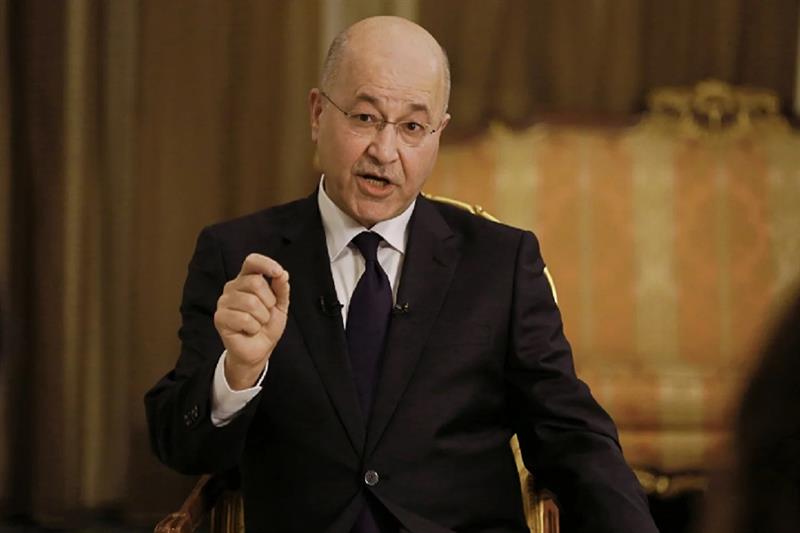
Reuters - Barham Salih, a former Iraqi president who fled persecution under Saddam Hussein, has been appointed the next U.N. High Commissioner for Refugees, breaking the tradition of selecting leaders mainly from major European donor nations.
A letter from U.N. Secretary-General Antonio Guterres, dated December 11, confirmed Salih’s five-year term starting January 1, pending UNHCR committee approval.
He will succeed Italy’s Filippo Grandi, who has led the agency since 2016. A UNHCR spokesperson declined comment, while a U.N. spokesperson said the process was ongoing.
Salih, who studied engineering in Britain to escape Saddam's rule, served as Iraq's president from 2018 to 2022. He takes over as global displacement hits record highs - roughly double the level when Grandi began - while funding falls sharply.
Key donors like the United States under U.S. President Donald Trump have cut contributions and others have shifted funds to defence.
Salih, from Iraq's Kurdish region, has pledged to ensure that refugees are not trapped in what he called cycles of dependency and have access to education and jobs.
"I believe deeply in UNHCR's mission - because I have lived it," he said in remarks during the campaign. "My vision is a UNHCR that places refugees at the centre, recognising that humanitarian aid is meant to be temporary."
The Geneva-based agency, which relies mostly on voluntary donations, has already cut its 2026 budget back nearly a fifth to $8.5 billion and is cutting close to 5,000 jobs, even as conflicts in Sudan and Ukraine drive needs higher.
This is forcing tough decisions about whom to help and creating new life-threatening risks for refugees, UNHCR says.
Salih aims to broaden funding sources, tap Islamic finance, and enlist private-sector partners through a proposed "Global CEO Humanitarian Council." He faces growing Western restrictions on asylum amid anti-immigration sentiment as well as frustration in poorer states sheltering refugees.
About a dozen candidates competed for the role, including politicians, an IKEA executive, an ER doctor and a TV personality. Over half were European, reflecting the 75-year-old Geneva-based agency's tradition - nine of its 11 previous chiefs were from Europe.