
Jordan Daily - Japan’s Ambassador to Jordan, Mr. Asari Hideki, reaffirmed that peace and stability in the Middle East are of direct importance to Japan, given the close links between regional security, global supply chains, energy security, and freedom of navigation. He stressed the importance of ensuring safe and free navigation through the Strait of Hormuz and expressed Japan’s hope that stability would be restored through the steady implementation of the Memorandum of Understanding by all parties concerned.
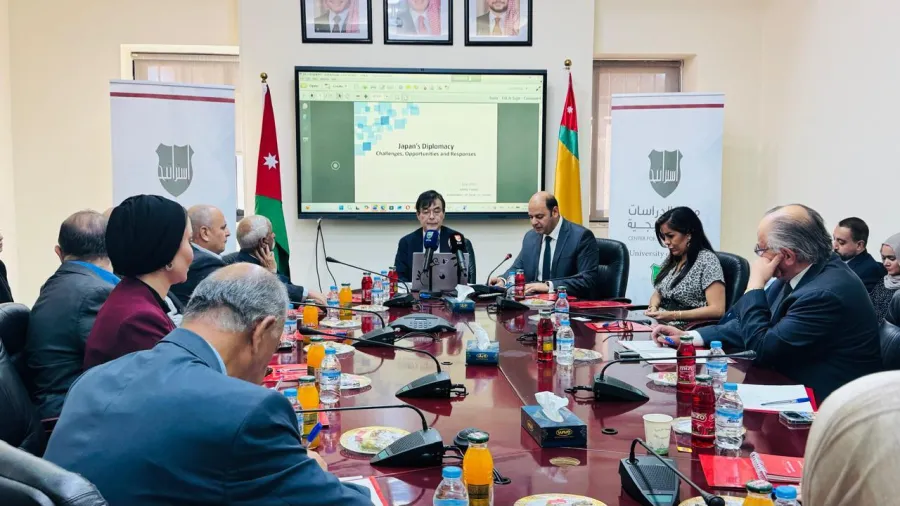
The remarks were delivered during a lecture entitled “Japan’s Diplomacy: Challenges, Opportunities and Responses,” organized by the Center for Strategic Studies at the University of Jordan. The event was attended by researchers, academics, and political and economic experts.
Ambassador Asari discussed the Middle East's significance in Japan's foreign policy, the region's current challenges, Japan's diplomatic responses, and the strategic partnership between Japan and Jordan.
Addressing the Palestinian issue, he reaffirmed Japan's support for efforts to end the conflict in Gaza, establish effective governance, and advance Palestinian state-building. He also stressed the importance of halting unilateral measures in the West Bank, supporting the Palestinian Authority, and pursuing a two-State solution.
Since 1993, Japan has provided approximately USD 2.6 billion in assistance to Palestine, including USD 410 million since October 2023. Ambassador Asari highlighted Japan's long-term development initiatives, including the Corridor for Peace and Prosperity, the Jericho Agro-Industrial Park, and the Conference on Cooperation among East Asian Countries for Palestinian Development (CEAPAD).
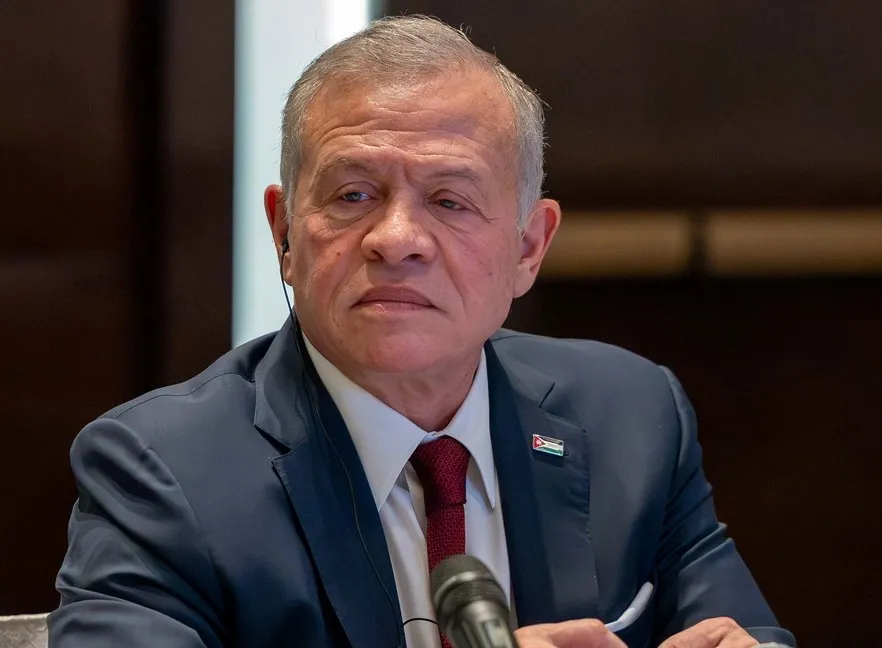
The Ambassador described Jordan as "an anchor of stability" in the Middle East, citing its resilience and active diplomacy under the leadership of His Majesty King Abdullah II. He praised Jordan's role in hosting refugees, facilitating the evacuation of foreign nationals from neighboring countries, and serving as a regional humanitarian hub for Gaza, Syria, Lebanon, and other crisis-affected areas.
He reaffirmed Japan's commitment to supporting Jordan's resilience and regional role. Since 1974, Japan has extended approximately USD 4.335 billion in Official Development Assistance (ODA) to Jordan. In addition, Japan provided USD 12.5 million in humanitarian assistance in FY2025 through six UN agencies, including UNRWA.
Ambassador Asari also addressed broader global challenges, including increasing pressure on the rule-based international order, climate change, nuclear non-proliferation, economic security, and the rapid advancement of science and technology. He emphasized Japan's efforts to uphold the rule of law, strengthen cooperation with the United States and other like-minded partners, and reinforce global governance.
He further elaborated Japan's Free and Open Indo-Pacific (FOIP) initiative, highlighting its role in promoting regional connectivity, economic growth, and international cooperation. He noted that FOIP is also highly relevant to the Middle East and that Japan sees Jordan not only as a pillar of regional stability but also as a potential hub connecting the Indo-Pacific, the Middle East, and Europe.
Participants concluded that the rapidly evolving regional and international environment underscores the importance of further strengthening the Jordan–Japan strategic partnership and expanding cooperation in regional stability, development, human security, and economic connectivity.